
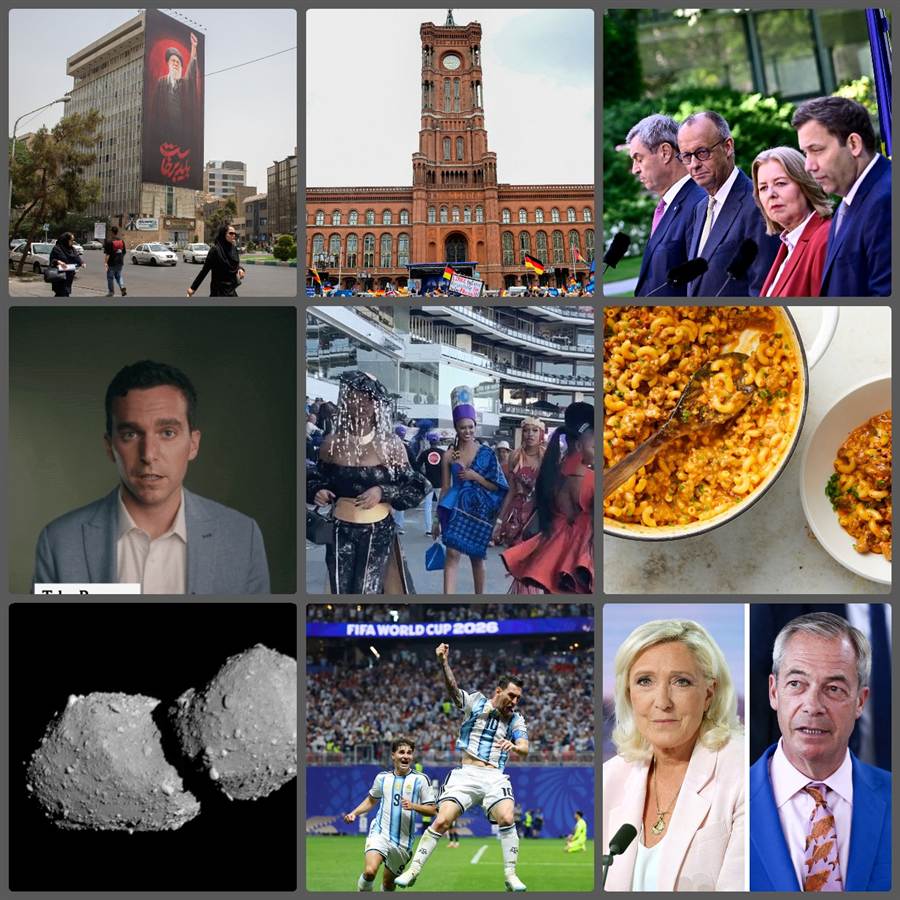
| July 8, 2026 | By Katrin Bennhold |
Good morning, world. I first wrote about far-right populism when it wasn’t a major force in European politics. I interviewed Marine Le Pen in 2008. I met Nigel Farage in 2015 and covered Alternative for Germany, AfD, that same year. At that point, many observers still considered it unthinkable that any of them would come to power.
Fast forward a decade and all three are the most popular political forces in their countries. And as Le Pen and Farage made clear just yesterday, despite investigations into their finances, they still see themselves as being on a march to victory.
So far, centrist parties have failed to stop them. But today, Jim Tankersley, my successor as Berlin bureau chief, writes about — bear with me — a 34-point reform package designed to do just that. An inspiring rallying cry it is not. But as Jim writes, the German government is making a bet that voters will reward politicians for doing something, however unflashy. (I’m not so sure.)
Also:
| U.S. strikes on Iran Farage resigns A snapshot from space |
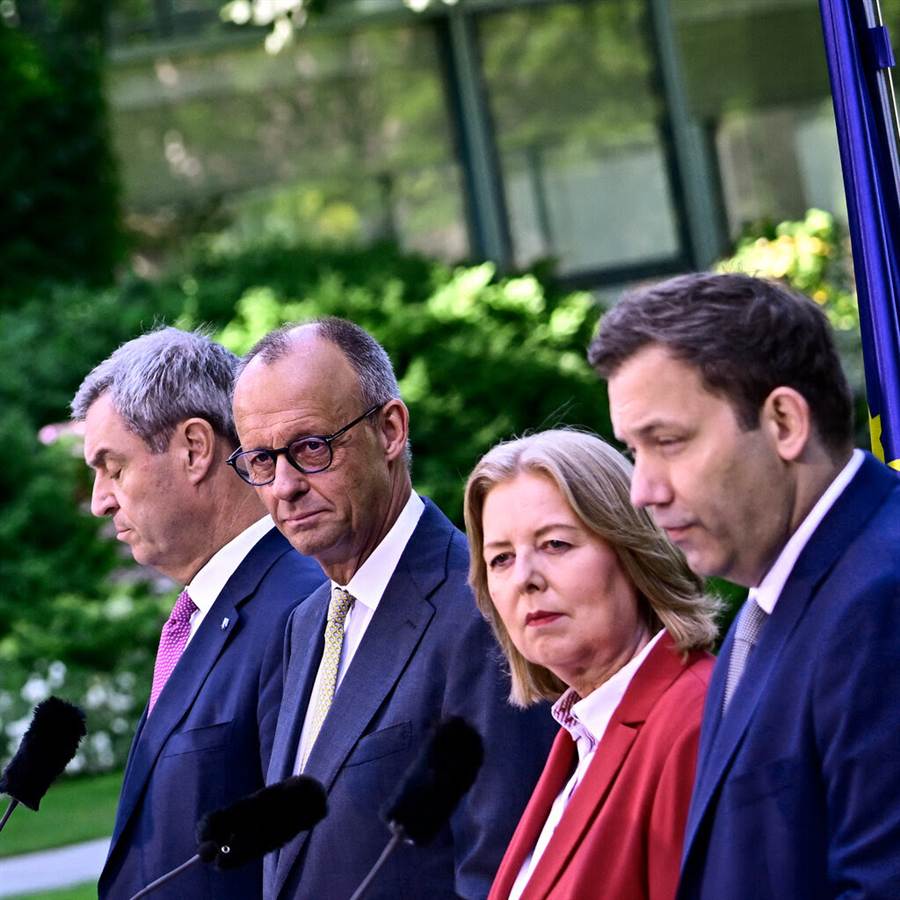
| Germany’s chancellor, Friedrich Merz, and his coalition partners are trying to hold off far-right challengers. Tobias Schwarz/Agence France-Presse — Getty Images |
The politics of doing something
By Jim Tankersley
The German government unveiled a 34-point plan last week to reignite the nation’s sputtering economy. It arrived late, to mixed reviews from experts and the public. Its details — pension reforms and modest tax cuts, among others — are not exactly political red meat, except perhaps among the most techno-minded of technocrats.
That made the bold promises that have accompanied the package all the more striking. This plan, officials have suggested, could be a blueprint for stopping the far right’s momentum — not just in Germany, but across Europe.
Chancellor Friedrich Merz, a conservative, and his center-left coalition partners are desperately trying to hold off far-right challengers they see as threats to Germany’s democratic system, who appeal to voters feeling battered by rising prices, slowing economic growth and growing ruptures in the fabric of their societies. Merz and his allies believe the only way to prevail is to show that the political center can deliver results and govern effectively.
This is why the fate of the package, and German voters’ response to it, will be watched so closely across the continent.
Elsewhere, centrist parties are also trying to contain populist rivals. The German experience will provide clues as to whether such parties can regain the trust of voters with policies that chip away at problems by applying incomplete or imperfect solutions — or whether, at this point in 2026, that kind of politics is what anyone actually wants anymore.
A game changer?
The package is a series of measures that, supporters say, will revitalize the stagnating German economy and lift the spirits of a country saddened by much more than its early ouster from the World Cup.
These include efforts to shore up public pensions by raising the national retirement age, and a modest tax cut for middle-income families, offset by marginally higher taxes on high earners. The package also cuts regulations, loosens some labor laws and generally tries to goad Germans into working more.
Smart economists differ on how much of an economic lift those measures will add up to. Some say there could be a real boost to growth. Others say they’re too watered down to matter much.
The political outcome, though, might depend less on the details of the policies and more on how they will be perceived — whether they give voters the sense that centrist parties are still capable of improving things for ordinary people.
Betting on action
Europe’s political leaders have two wildly diverging theories on how to solve people’s biggest problems.
The first says simple solutions — deporting enough immigrants, say, or cutting enough government — are being blocked by corrupt or incompetent elected officials. Remove them, and those solutions can be implemented, and will improve things. This view is gaining fans from Britain to Germany, where support for far-right populist parties is surging.
 |
| Supporters of the far-right AfD party at a rally in Berlin last month. Tobias Schwarz/Agence France-Presse — Getty Images |
The alternative theory, espoused by the centrists who still govern much of Europe, is that solutions require difficult choices, which large swaths of the electorate might very well hate. (One provision of Merz’s plan, for example, has already drawn intense public backlash: a move to force workers to get a doctor’s note on their first day of calling in sick from their jobs. It’s an attempt to address the problem of absenteeism; it also risks annoying a lot of people.)
It can add up to an eat-your-vegetables philosophy. But something I hear frequently in my reporting is that centrists believe their difficult solutions will, with time, improve life in Europe, and that voters will ultimately reward them for it.
It was that theory that brought Merz and his coalition partners, the Social Democrats, together late last week in Berlin. They announced a whole bushel of vegetables.
Merz frequently says it will take time to solve Germany’s problems, but that solving them is the only way to hold off the AfD. He knows how fragile the compromise he helped broker appears. Business groups dislike some elements of the plan. Labor groups dislike other parts. Loud enough opposition could doom it before it passes Parliament.
And even if it passes, voters could recoil. They could decide these plans are the wrong sort of vegetables — too focused on shoring up public budgets and encouraging longer work hours, perhaps, and not focused enough on saving jobs threatened by automation and global competition.
The government’s bet, though, is that these plans will demonstrate that it can still solve problems.
“The citizens of our country want decisions and they do not want disputes, and that is exactly what we have delivered,” Merz said. “I perceive an enormous willingness in the public to leave stagnation behind and dare to make a new start.”
We’ll find out if he’s right.
| MORE TOP NEWS |

The U.S. strikes Iran and blocks its oil sales
The United States yesterday struck several targets in Iran, hours after it revoked a waiver that allowed the sale of Iranian oil around the world. These were a dual response to what the Pentagon said were Iranian attacks on three commercial ships transiting the Strait of Hormuz hours earlier.
The re-imposition of sanctions on Iran’s oil sales rescinds a major concession contained in the temporary cease-fire reached last month.
Also in Iran, Ayatollah Ali Khamenei’s funeral moved from Tehran to Qom, the country’s center of Shiite religious education, in the latest step in a weeklong funeral.
Farage resigns, Le Pen runs for president
Yesterday, two cases reflected global tensions between populist leaders and watchdog institutions.
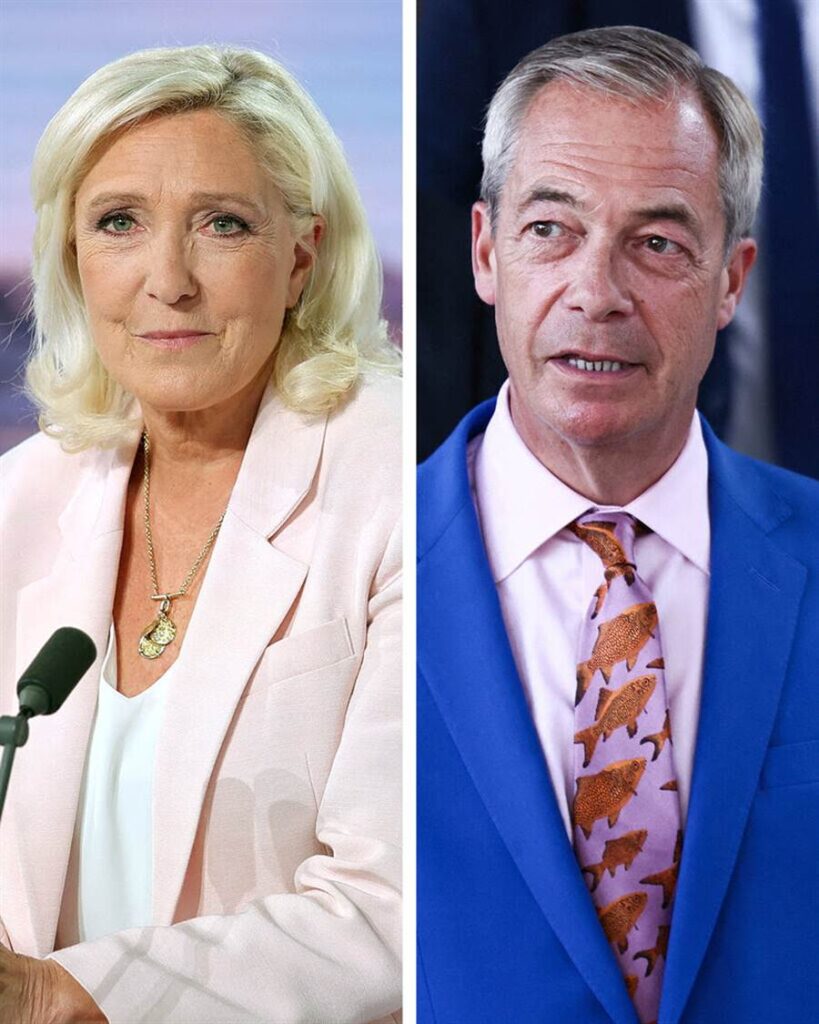
Nigel Farage, the leader of the U.K.’s right-wing Reform Party, unexpectedly announced that he would resign from Parliament and run for his seat again, after a series of damaging revelations about undisclosed gifts. He appears to be calculating that a win would quiet critics and allow him to position himself as the victim of a campaign by the political establishment.
Elsewhere, Marine Le Pen, the French far-right leader, announced that she would run for president, in a stunning turnaround, after a court shortened a ban on her seeking public office.
Le Pen, who will be making her fourth bid for the presidency, is the front-runner in the race to succeed Emmanuel Macron. She also plans to appeal the latest court decision, which requires her to wear an electronic monitor under house arrest for one year, for an embezzlement conviction.
| OTHER NEWS |

| As soon as President Trump landed at the NATO summit in Ankara, the meeting’s center of gravity shifted to where he likes it best: himself, our White House correspondents write.My colleague Tyler Pager, who covers the White House and is in Ankara, explains how Trump’s priorities differ from those of other NATO leaders. Watch the video.Macron pressed on with a visit to Damascus after explosives went off near his hotel, injuring a Syrian minister and 18 other people. |
| Prince Harry lost his privacy lawsuit against the publisher of The Daily Mail.The I.O.C. lifted its suspension of Russia, clearing the way for the country to take part in the 2028 Summer Olympics.A woman suspected of a bomb attack on a Ukrainian businessman and his family in Monaco last week has been found dead.The president of Zimbabwe signed into law a bill that extends his term by two years, a move critics argue tightens his autocratic grip on power. |
WHAT ELSE IS HAPPENING
| A man who scaled a tall concrete tower in Melbourne, Australia, to paint a huge cartoon bird surrendered to the police after a standoff.Coco Gauff battled to her first Wimbledon semifinal, Naomi Osaka was eliminated and the men’s defending champion, Jannik Sinner, advanced. Read a quarterfinal recap. |
TOP OF THE WORLD
The most clicked link in your newsletter yesterday was about the World Cup all-nighter in London.
| WORLD CUP |

Argentina makes a stunning comeback
It looked as if Argentina, led by Lionel Messi, was headed out of the World Cup until an incredible late comeback against Egypt. It overcame a two-goal deficit to knock out Egypt, 3-2. Elsewhere, Switzerland defeated Colombia on penalties after a grueling goalless draw. It is the final nation to progress to the quarterfinals.
Quarterfinals: There are only eight teams left in the tournament and each is only two wins away from a place in the final. Take a look at the bracket and our writers’ predictions.
| COSMIC PHOTO OF THE DAY |

Torifune
A Japanese spacecraft flew by the asteroid Torifune over the weekend and snapped a picture— and it turns out that it’s not one asteroid, but two. Torifune is what’s known as a contact binary, a pair of asteroids that have managed to get so close, in a surprisingly gradual and nonviolent way, that they have stuck together. A planetary scientist commented: “Yeah, that’s weird.”
| MORNING READ |
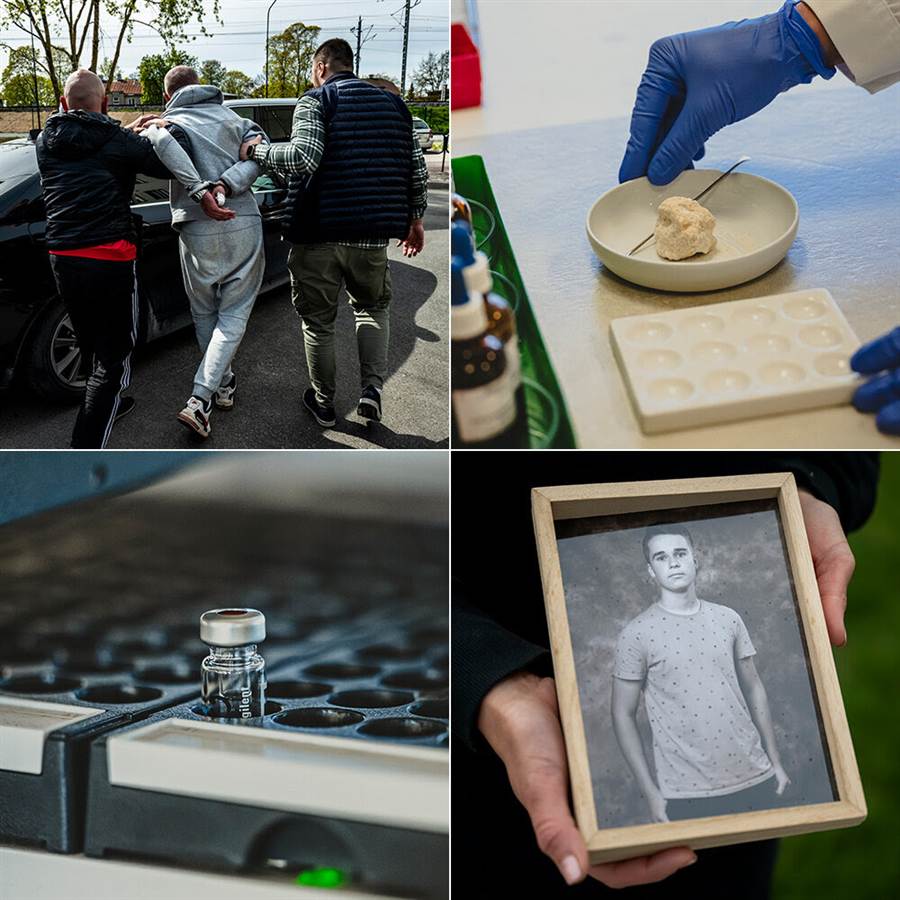
Estonia won its war on fentanyl. After recording Europe’s highest overdose rate in 2002, the country passed new laws, cracked down on crime groups and expanded help for addicts. By 2018, it had lowered its rate of fentanyl overdose deaths by more than 70 percent.
But the new synthetic drugs that came next were even deadlier, more addictive and harder to treat or quit. “We wish we still had a fentanyl problem,” one official said. Read more about the drug war that is only just beginning.
| AROUND THE WORLD |

Racing past apartheid
The most lucrative horse racing event in Africa, the Durban July, has become about much more than racing. Many Black attendees, barred from elite spaces during apartheid, see it as a celebration of their place in high society.
The music, fashion, food and ostentatious displays of wealth make it possible to briefly forget the economic and social hardships that continue to define life for many South Africans. Check out the scene at the track.
| RECOMMENDATIONS |
Explore: Home swapping is a popular travel trend. But is it worth it?
Watch: Here are the best new shows and movies to stream in July, including a science-fiction thriller.
Diagnose: A poorly understood form of migraine is “the most common disease you’ve never heard of.”
Listen: In her new album, “Confessions II,” Madonna shines a light on the troubles she has danced away.
| RECIPE |
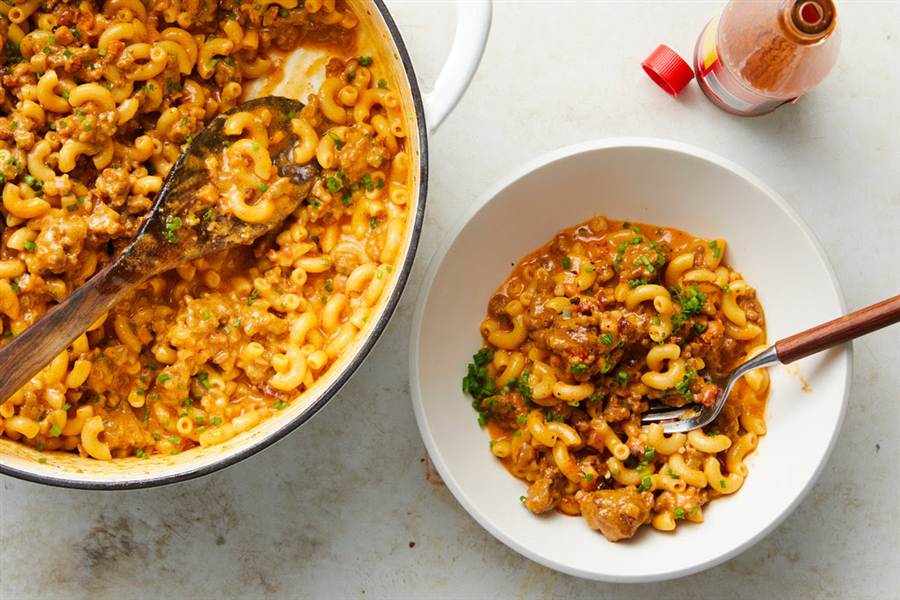
This recipe turns leftover ground beef into a complete weeknight dinner. The entire dish is made in one pot and melds the comfort of macaroni and cheese with the complexity of a good Bolognese.
