

| August 4, 2026 | By Katrin Bennhold |
Good morning, world. Who pays if your home is damaged by debris that has fallen from space?
That might seem, for the moment, like an academic question. But it won’t be for long. Human beings are hurling more objects into space than ever before. And some objects that are sent up to space don’t always stay there.
Today, my colleague Selam Gebrekidan writes about the growing perils of space junk.
Also:
| Iran-Oman talks on the strait Andy Burnham’s TikTok The world’s oldest bank |
When flaming chunks of metal crash into Earth
By Selam Gebrekidan
One December afternoon in 2024, the sky tore open and a fiery hunk of metal came hurtling down.
It plunged into a patch of farmland about three hours south of Nairobi, Kenya. Residents of a nearby village found a giant ring, heavier than a horse, lodged into the earth. They watched it cool from a glowing ember to a dull gray. They guarded it, taking the occasional selfie, until officials from the capital swarmed the village.
The ring had once connected parts of a rocket. It was supposed to have burned up on its return to Earth.
“This is an isolated event,” the Kenya Space Agency said in early 2025.
Not exactly.
More space debris is raining down on Earth than ever before — one effect of the frenetic race among governments and companies like SpaceX to reign over the skies.
“The re-entries happen each and every day,” said Mariusz Slonina, who heads space situational awareness operations for the Polish Space Agency. Huge objects that weigh a ton or more now arrive about once a week, he said.
Much of the debris incinerates in the atmosphere or splashes down in the ocean. But when it does not, it plummets to the ground, uncontrolled and unpredictable. And there’s only going to be more of it in the years to come.
 |
| A photo released by Turkish state media shows a part that had once connected sections of a rocket. The object fell from the sky near Mukuku, a village in Kenya, in 2024. Anadolu, via Getty Images |
What goes up sometimes comes down
A good rule of thumb: The more objects humans launch into space, the more debris we will have to dodge on Earth. And lately, we’ve been launching a lot of objects into space.
More than 300 rockets launched last year, nearly four times as many as 10 years ago.
Humans have put around 16,000 or so satellites into orbit; Elon Musk’s SpaceX, which owns a majority of them, has applied to launch one million more.
For now, people are more likely to be struck by lightning than by falling space junk. (The only documented case of a person being hit by debris is an Oklahoma woman in the 1990s. She survived relatively unharmed.) But the odds are changing.
In 2024, discarded hardware from the International Space Station crashed into a Florida home. Early last year, parts of a SpaceX rocket landed near a shopping mall and an airport in western Poland.
Months later, a defunct Chinese satellite barreled down over Tenerife, one of the Canary Islands of Spain. The three-metric-ton satellite sent shock waves across the region before fragmenting and burning in the air.
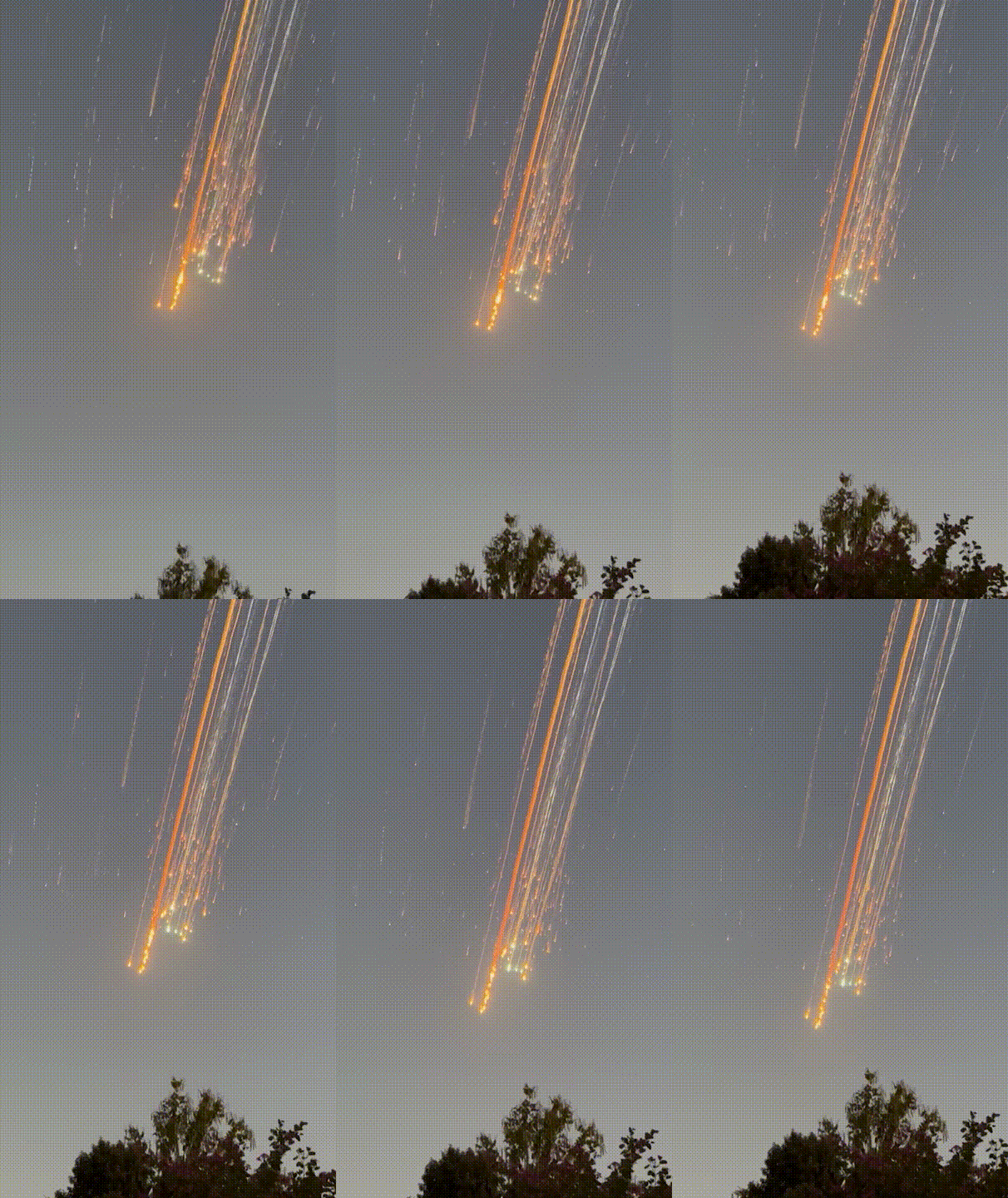
If objects are in free fall, even the best rocket scientists cannot accurately predict where they will land or whether they will fully incinerate. In January, a glowing fireball pierced the atmosphere over Europe. It was the upper stage of a Chinese rocket, which had been out of control since it launched the previous month.
For four days, space agencies watched it with alarm. It was so heavy, about 11 metric-tons, that they did not expect it to burn up in the atmosphere.
In the end, the debris splashed down somewhere in the Indian or Pacific Oceans — it’s not clear which.
Next time, we may not be so lucky.

| Falling debris from a failed SpaceX test flight as seen from the Bahamas last year. Victor Breaux, via Storyful |
Who pays if space junk hits your house?
The patchwork of regulation currently governing rocket launches and orbital junk is no match for the pace of space development.
In the United States, the Federal Communications Commission requires companies to report on the risk of casualties from falling satellites, but the agency focuses mostly on regulating radio frequencies. The Federal Aviation Administration, which oversees launches, proposed a rule to regulate the disposal of orbital debris, but it withdrew the idea in January after the space industry pushed back.
The United Nations liability convention gives countries the right to compensation if another state’s space object hurts people or damages property. Another treaty, called the Rescue and Return Agreement, allows governments to be paid for the cost of returning space objects.
But the treaties were written in the early space age, when countries were more concerned about astronauts becoming prisoners of war or technology being stolen. The treaties are now being applied in a more commercial environment, one U.N. official said. (The U.N. issued guidelines for space debris in 2007, when there were far fewer satellites. Those guidelines are nonbinding.)
Back in Kenya, the impact of the ring cracked nearby homes, Daniel Maanzo, a Kenyan senator who represents the area, told me.
The Kenyan authorities took months to confirm that the ring was part of a French rocket that had launched an American television satellite. Kenya’s government has not formally requested compensation from France, the French Foreign Ministry said. It hasn’t even shared the information with village residents, Maanzo said.
As for payment? According to Maanzo, “there was no compensation.”
| MORE TOP NEWS |
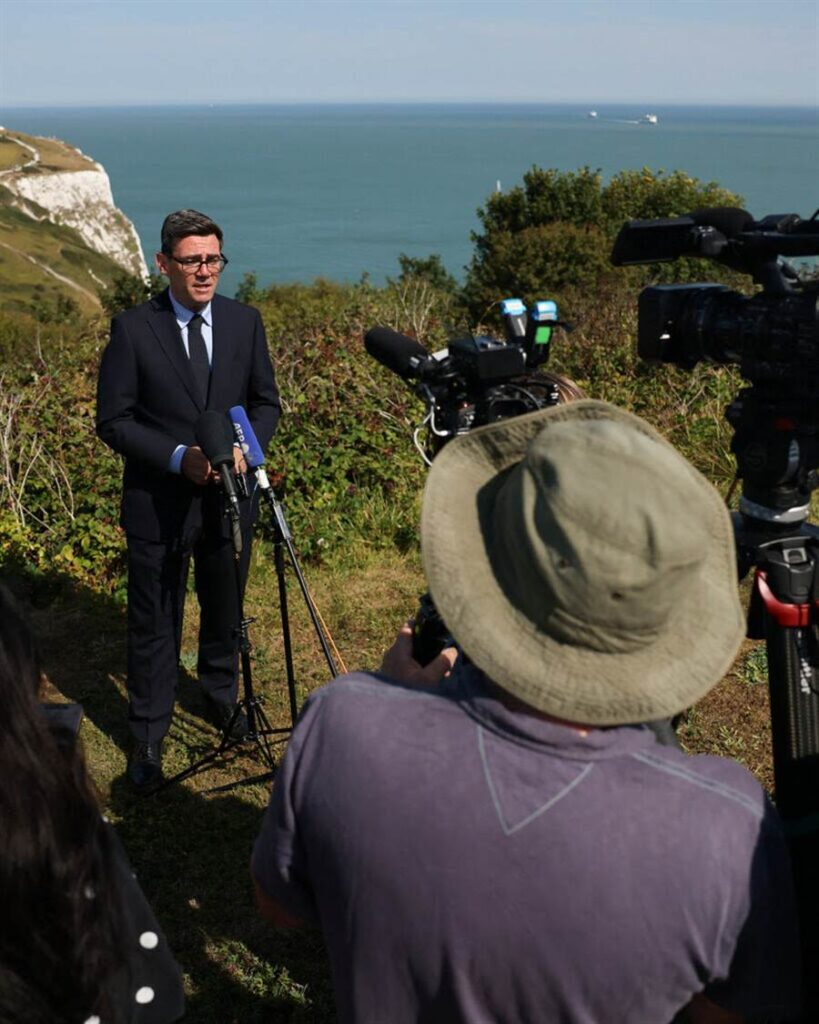
| Prime Minister Andy Burnham of Britain has been ubiquitous online since taking office, posting dozens of videos to social media. His message is clear: I’m for you, not them.Iran and Oman are closing in on a deal to reopen the Strait of Hormuz. Such an accord could cement Tehran’s control over what, before the war, was an open waterway.Boris B. Nadezhdin, one of the last remaining opposition politicians in Russia who was both against the war in Ukraine and not in prison for his beliefs, fled to France.An apparent drone explosion on a beach in southwestern Russia killed seven people and wounded 40, according to the local authorities.The U.S. is helping to prop up Japan’s weak currency. Here’s why.Myanmar’s junta allowed the former leader Aung San Suu Kyi to meet a Red Cross representative, after her family demanded proof of life.Former Honduran president Juan Orlando Hernández, who was pardoned in the U.S. by President Trump, faces fraud and money-laundering charges at home.Google Earth pulled back a new A.I. tool after it allowed users to create fake satellite images. |
WHAT ELSE IS HAPPENING

| A knife-wielding masked man. A pig’s head outside his parents’ door. Running 30 marathons in 35 days. Jason Arday, a Cambridge University professor, says he’s been through it all. Not everyone believes him.The South Pacific island of Nauru changed its name to Naoero. |
TOP OF THE WORLD
The most clicked link in your newsletter yesterday was about the nightlife in Myanmar during war.
| OPINIONS |

How has Trump changed in his second term? Among other things, he’s spending a lot of time thinking about his renovation projects, Maggie Haberman tells Ezra Klein.
The world is walking a path toward a world war, and no one seems to be in command of events, David French argues.
Whoever supplies the world’s A.I. will shape how the world thinks, writes Tal Feldman.
| QUESTION OF THE DAY |

Is chess art?
“While not all artists are chess players, all chess players are artists.” Those are the words of Marcel Duchamp, one of the great figures of 20th-century art. For his 139th birthday celebration, the Museum of Modern Art had 50 people play against a grandmaster in its lobby. Our art critic Deborah Solomon was there. Watch the video.
| MORNING READ |

France has endured a series of heat waves since the beginning of summer. Nearly 6,000 people died as a result of the most severe wave in June, and two-thirds of them were 75 or older.
France’s postal workers know this demographic well. And as part of a nationwide emergency policy, postal workers are now encouraged to not only deliver the mail but also check in on older people. “It does me good to see young people, at my age,” Elvire Bertagnolio, 95, said. Read more about the visits.
| AROUND THE WORLD |

The deep roots of the world’s oldest bank
Banca Monte dei Paschi di Siena, founded in 1472, has survived the rise and fall of the Medici, wars, pandemics and scandals. But a €35 billion hostile takeover attempt has Tuscans on edge, as the bank is pursued by its biggest rival.
For ages, the bank has been the region’s primary employer, with a charitable foundation that funded social services, community organizations and the arts. That includes Siena’s famed Palio, a bareback horse race pitting rival neighborhoods against one another for winner-take-all bragging rights.
“Monte isn’t just a bank,” said one former employee. “It is history, it’s culture and the economy.” Read more.
| RECOMMENDATIONS |
Discover: Is polyamory right for you? A sociologist shares her thoughts.
Read: In “Plant Lady,” the Korean novelist Minyoung Kang imagines a haven for women.
Travel: This idyllic Portuguese coast south of Lisbon still feels like a secret.
Deliver: Here’s how to finally stop procrastinating.
| RECIPE |

This chilled tofu, draped in a savory, chile-sweet sauce, requires no cooking at all. The sauce is essentially a chojang, a portmanteau of cho, the Korean word for vinegar, and gochujang, the fiery fermented red chile paste that is one of South Korea’s most delicious exports.
