
September 21, 2026  | By Katrin Bennhold |
Good morning, world. I’m in New York City this week, along with dozens of world leaders who have come for their annual gathering at the United Nations. They have a lot to talk about — wars, an oil shock, the risks of A.I., a shifting world order. One thing that looks set to be less of a talking point? Climate change.
It’s striking. Twenty years ago, “An Inconvenient Truth” hit movie theaters. Eight years ago, Fridays for Future was a global youth movement. The next year, Green parties all over Europe made historic gains. Today extreme weather has turned climate change from an abstract future threat into a real and present danger. And yet, the climate feels much less central to the political agenda.
But I’m going to a place where the climate will be front and center. The New York Times is holding its Climate Forward conference. My colleague David Gelles, who writes the Climate Forward newsletter, is hosting. I talked to David about what to expect.
Also:
| A.I. and Xi’s Washington visit A ‘disaster’ for Germany’s chancellor Some very handsome melons |
 |
 |
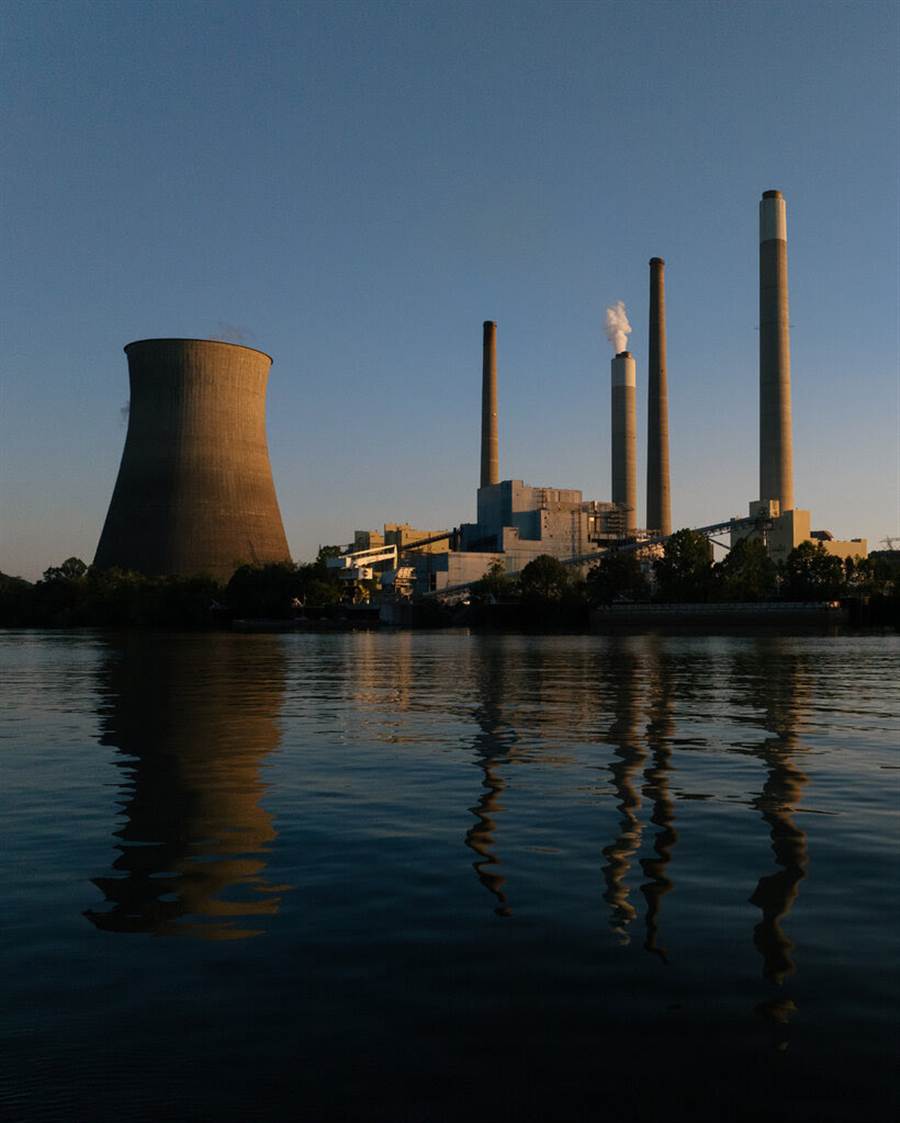
| A coal-fired power plant in West Virginia. Alyssa Schukar for The New York Times |
America, Trump and climate change
David, why are world leaders so quiet on climate change when it’s been producing a steady stream of headline news this year?
I think there are three reasons. The first is that there’s a lot going on, right? Whether it’s war or A.I. or tariffs, the world is just consumed by a host of other crises.
The second reason is President Trump. His administration has dismissed the threat of climate change and is working to promote fossil fuels, reduce environmental regulations and stymie America’s adoption of renewable technologies. The rest of the world may be moving in a different direction, but they’re, at some level, captive to the American narrative, just by virtue of America’s power in the world.
The final reason is I think many leaders still have a hard time talking about climate. It’s still really hard to address. The actual solutions that are necessary to meaningfully slow down global warming require whole-cloth changes to our economies and energy systems that no one country alone can accomplish.
How are we doing fighting climate change? What’s the state of play?
It’s not great. Just a couple of years ago, people involved in climate policy were using the phrase “keep 1.5 alive.” That number referred to 1.5 degrees Celsius, which is the threshold above preindustrial temperatures that scientists warned would be very risky to cross. Well, we’re already at 1.5 today, and every indication suggests that the planet is on track to warm somewhere between two and three degrees Celsius above preindustrial levels. A lot of that warming is going to happen in the coming decades and century.
Now, there is real positive momentum happening on the ground, if you know where to look. Major economies like China are turbocharging their adoption of renewables. It’s happening in less developed countries like Pakistan too, which is adopting things like e-scooters. So there’s progress. But even when that progress is happening on a large scale, it’s still a drop in the bucket. We’ve got a long way to go.
You’re based in America, where, as you noted, the administration dismisses climate change and has made a strategic decision to double down on fossil fuels. Can the world combat climate change without the United States?
I think the world can’t do this without the U.S., but not just because the U.S. is a major emitter. It’s because U.S. policy and precedent and industry all matter for the rest of the world’s ability to scale these technologies.
Take natural gas. The Trump administration is using natural gas exports as a diplomatic tool. They’re actively encouraging countries around the world to hasten their adoption of natural gas, which is a major pollutant and is warming the planet. So what’s happening now in the United States isn’t just about domestic policy. It’s also making it much harder for the rest of the world to move quickly to address this issue.
 |
| A portrait of Xi Jinping in Lahore, Pakistan, in July. Asim Hafeez for The New York Times |
What are some of the highlights of this year’s Climate Forward event? (Which, by the way, people will be able to livestream with no paywall.)
Well, as discussed, if you want to understand what’s happening globally on climate, you have to understand what’s happening in the United States. And on Wednesday, we’re going to have a collection of politicians, executives and activists who are going to give a comprehensive overview of the main issues driving the debate in the U.S. right now. That includes Chris Wright, the U.S. energy secretary, who will be able to speak to the administration’s policies. We’ll have the C.E.O.s of a bunch of very consequential energy and mining companies give you the industry perspective as well. You, Katrin, are speaking with Gerard Barron, for instance, who runs a deep-sea mining company.
But we’ll also have Jane Fonda, the actor and activist who’s now campaigning against petrochemical development on the Gulf Coast. We’ll have people on different sides of the A.I. debate — Josh Parker, who leads sustainability at Nvidia, and Erin Brockovich, who is campaigning against data centers. And we’ll have scientists like Kate Marvel.
Final question. David, you’ve covered climate change for many years. It’s a frustrating and difficult subject. Are you still excited about it? What makes you stick with it?
The reason I took on this beat is because I was looking for a story that would be able to occupy me for the rest of my life. And climate change is that story.
We are literally not going to solve this problem in my lifetime. I certainly hope we make progress, for the sake of preventing additional disasters and biodiversity and ecosystem loss. At the same time, I recognize the modern world is built on technologies that are exacerbating these problems. And so figuring out that puzzle is endlessly compelling. This is the greatest collective action problem in the history of humanity. And we’ve got to figure it out because if we don’t, we’re going to have a much harder time surviving on this planet.
| MORE TOP NEWS |
 |
| A robotics exhibition in Shanghai in August. Qilai Shen for The New York Times |
The economic shadow over Xi’s Washington visit
As Xi Jinping arrives in the U.S. this week for a state visit, China’s advances in artificial intelligence will be in the air. What will be less discussed is that he is also the leader of an economy in its worst shape in decades.
Economists in China, even those closest to the state, have openly warned that the government is pouring too many resources into a technology that creates relatively few jobs, while doing too little to improve the broader economy. The Chinese A.I.-centered allocation of resources could prove costly to ordinary people’s livelihoods and the country’s economic future, they say.
| OTHER NEWS |
 |
| At the headquarters of Germany’s CDU party in Berlin yesterday. Markus Schreiber/Associated Press |
| Germany’s chancellor, Friedrich Merz, vowed to remain in the job after his party performed poorly in two state elections. “It is a disaster,” he said after the polls closed.Trump wavered for weeks over Saudi appeals for help fighting the Houthis in Yemen but decided yesterday not to engage, for now, in joint strikes. Read a Times exclusive.The Houthis engaged in fierce battles against Saudi-backed fighters, a day after it said it had launched missiles and drones at Riyadh.Ukraine attacked the Moscow region with hundreds of drones on the final day of elections across Russia.An Israeli man was shot and killed in the occupied West Bank, according to Israeli authorities, who said they had detained a Palestinian suspect.Trump said his planned arch in Washington would be built to host “large numbers of drones,” snipers and ammunition. |
WHAT ELSE IS HAPPENING
| Ed Sheeran acknowledged “mistakes” and apologized to fans after his tour was roiled by the removal of Macklemore over pro-Palestinian comments.“La Bola Negra,” a Spanish epic about the intertwined lives of three gay men over decades, won the top prize at the Toronto International Film Festival.Watch our chief fashion critic recap New York Fashion Week. |
 |
| The New York Times |
TOP OF THE WORLD
The most clicked link in your newsletter on Friday was about an athlete who soiled herself during a high-endurance race.
| DISCOVERY OF THE DAY |
 |
| Fernando Faciole/National Geographic |
A new species of cat
The tilcayo is the first living feline species added to the cat family tree since 1923. It’s smaller than a house cat and lives in the cloud forests of the Andes in Bolivia. DNA analysis revealed that it split from its closest cat relatives more than a million years ago.
| MORNING READ |
 |
| Jes Aznar for The New York Times |
The Philippines is one of many countries trying to deal with energy shocks from the wars in Ukraine and the Middle East. The government is exploring nuclear power options. One proposal is to revive a plant in Bataan that was completed 42 years ago but never switched on.
Bringing it to life is not impossible, but it is a big and expensive ask, experts say. The project has divided Filipinos. Read more and take a look inside the 1970s power plant.
| AROUND THE WORLD |
 |
| Luis Antonio Rojas for The New York Times |
The finest melons in all of Mexico
In Xalapa, the capital of Veracruz State, a joke among friends has grown into an annual melon race and a contest for the city’s most handsome melon.
It started more than two decades ago when friends filmed melons rolling down a cobblestone bridge. Now, there are nine heats with 25 melons each — and a beauty contest. Read more and decide which melon you find most attractive.
We’ve made this link free for you.
| RECOMMENDATIONS |
Visit: It may look like a spaceship, but that building is the new Lucas Museum of Narrative Art.
Read: Michael Moritz’s memoir, “Ausländer,” explores his Jewish family’s history.
Watch: The documentary “You Had To Be There” revisits the “Godspell” production that started several now-legendary comedy careers.
Explore: Here’s how to spend 36 hours in Lake Como.
| RECIPE |
 |
| Nico Schinco for The New York Times |
Mild white fish becomes deeply savory in this quick one-pot meal inspired by the Vietnamese dish cá kho tộ. The sauce is fantastic with tofu, chicken, meat, vegetables and seafood. Just make sure you have plenty of rice to soak it up.
