
| May 19, 2026 | By Katrin Bennhold |
Good morning, world. The anti-immigration Reform U.K. party resoundingly defeated the governing center-left Labour Party in local elections across England earlier this month, which may yet cost the prime minister his job.
So far, so normal: Right-wing nationalism is on the rise across western democracies and beyond. But in two pockets of the U.K., another kind of nationalism prevailed: a progressive variety of Welsh and Scottish nationalism that sees itself very much on the left. In Wales, Plaid Cymru — or the Party of Wales — will govern for the first time. In Scotland, the Scottish National Party won a fifth term. Both parties beat back Reform in their respective nations.
Today I write about what Welsh- and Scottish-style progressive nationalism looks like and whether it can be exported.
Also:
| The latest on the Ebola outbreak A verdict in the OpenAI trial A foodie paradise in Sweden |
 |
| Rhun ap Iorwerth, the new first minister of Wales. Mark Naftalin/Agence France-Presse — Getty Images |
The nationalists welcoming immigrants
When I spoke to him after his recent victory, Rhun ap Iorwerth, the first minister of Wales, said things like: Immigration “can and does enrich us.” And “people who love our nation include those who were born here and those who moved here yesterday.”
His Scottish counterpart, John Swinney, has struck similar notes: Scotland needs immigrants, he says. And “I believe with every fiber of my body in the importance of inclusion.”
These are leaders of nationalist parties. But they don’t talk the way we’re used to hearing nationalist leaders talk.
Over the past decade or so, the word “nationalist” has come to be primarily associated with the right, whether it’s the B.J.P.’s Hindu nationalism, MAGA’s attempt to end birthright citizenship or Reform’s call for mass deportations. What they share is that their ideas of the nation are exclusionary. Not everyone can become a full-fledged Indian or American or British citizen.
Ap Iorwerth and Swinney are doing something different: a politics that, like other forms of nationalism, sees itself as grounded in a sense of place and a shared history, but that nonetheless views the nation as a project anyone can participate in.
Welsh- and Scottish-style progressive nationalism was born out of very specific circumstances. But these victories are case studies in what a different sort of nationalism might look like.
Ethnic vs. civic nationalism
People who study the subject sometimes draw a distinction between what they call ethnic nationalism and civic nationalism.
What we tend to associate with nationalism in 2026 are right-wing movements that see belonging as a question of whose claims to a country date back the furthest. It doesn’t take much for that to morph into ethnic nationalism. What Plaid and the S.N.P. promote — a nation that includes anyone who pledges allegiance to a set of values they see rooted in Welsh and Scottish tradition — is sometimes called civic nationalism.
Both approaches place a heavy emphasis on building a shared sense of identity. Reform wants to put portraits of the king in every classroom; the S.N.P. and Plaid want more use of the Welsh and Gaelic languages in schools. And both draw on cultural heritage to tell a story of the nation. Where they differ is on the sort of cultural heritage they emphasize.
If Reform’s story celebrates a golden age of Britain that predates the country’s modern diversity, Plaid and the S.N.P. tell a story of their people’s struggle for self-determination. Ever since the policies of Margaret Thatcher, the Conservative prime minister, shuttered their heavy industries, most Scottish and Welsh voters have cast their ballots to the left of the English. Their nationalism is fueled by a shared indignation at being governed by a larger power with different values.
 |
| John Swinney, the first minister of Scotland, in March. Lesley Martin/Reuters |
In one story, immigrants have diluted British culture; they are weakening the nation. In the other, immigrants are not the problem — Westminster is. Immigrants are actually a means of saving the nation in societies that experience falling birthrates and emigration, as young people leave for better opportunities elsewhere.
I saw this attitude embodied in Humza Yousaf, the former leader of the Scottish nationalists, who is a descendant of Punjabi and Kenyan immigrants. When I met him some years ago, he was designing his own tartan: the Yousaf tartan, which he hopes will live alongside its MacDonald and MacDuff counterparts for all the Scottish Yousafs who will come after him — many, he hopes.
Of course, what also makes both Plaid and the S.N.P. nationalist is that they support a path to independence from Britain.
Which raises the question: Could their approach really find traction elsewhere?
“An incomplete ideology”
The right has found a way to tap into nationalist sentiment that resonates.
The left, though, tends to be uncomfortable with nationalism, which it often seesas a cousin of racism and imperialism, said Bernard Yack, a political theorist at Brandeis University. But there is actually no reason nationalism should be associated with racism or even with the right, he said.
It’s “an incomplete ideology,” he told me, without a predetermined agenda. That’s why it melded easily with almost every other ideology out there, from fascism to communism to national liberation movements.
And so even left-leaning parties not seeking independence could find ways to respond to voters’ acute yearning for a sense of belonging and community, said Richard Child, a lecturer at Manchester University.
Some are already experimenting with this. The former leader of Britain’s Green Party, Caroline Lucas, recently wrote a book called “Another England: How to Reclaim Our National Story,” evoking Robin Hood and the N.H.S., instead of empire and monarchy. In Germany, I watched the Greens campaign wearing dirndls and touring the country quoting the national anthem.
But Child also noted that this sense of yearning for community was in part a response to people’s lives being difficult. And so a good story is not enough, if a party can’t ultimately deliver on improvements to those lives.
After all, Reform is making inroads in Scotland and Wales, too.
Keep the conversation going here:
 Katrin Bennhold Katrin Bennhold Host of The WorldI’m German and I grew up being taught that nationalism was bad. Then I married a Welshman who persuaded me over the years that nationalism can be joyful. I’ve felt pangs of jealousy for this feeling of belonging, which I never quite allowed myself to have. And over the course of my reporting on the far right in Germany and elsewhere in Europe I’ve become convinced that people crave it — especially in a time of economic difficulty. That’s why the recent elections in Scotland and Wales, where one brand of nationalism beat another kind, were so intriguing to me. Host of The WorldI’m German and I grew up being taught that nationalism was bad. Then I married a Welshman who persuaded me over the years that nationalism can be joyful. I’ve felt pangs of jealousy for this feeling of belonging, which I never quite allowed myself to have. And over the course of my reporting on the far right in Germany and elsewhere in Europe I’ve become convinced that people crave it — especially in a time of economic difficulty. That’s why the recent elections in Scotland and Wales, where one brand of nationalism beat another kind, were so intriguing to me. |
| MORE TOP NEWS |

In Congo, Ebola raged undetected for weeks
When the Ebola outbreak was identified in the Democratic Republic of Congo and Uganda late last week, there were already hundreds of suspected cases and dozens of suspected deaths. By then, the virus had been raging for weeks in Congo. Officials in Ituri, the province at the heart of the outbreak, did not raise the alarm when patients began showing symptoms. The consequences of the delay could prove catastrophic.
Elsewhere, the U.S. has restricted entry into the country of people who have been to D.R.C., Uganda or South Sudan in the previous 21 days. Read what to know about the outbreak.
| OTHER NEWS |
| President Trump said yesterday that he had authorized a new wave of attacks against Iran this week but that he was holding off to make room for “serious negotiations.”Trump moved ahead with plans to allow 10,000 more white South Africans into the U.S. as refugees, according to documents obtained by The Times.Israel maintained two secret bases in the Iraqi desert for its operations against Iran.The U.S. launched airstrikes against Islamic State fighters in Nigeria, days after a joint ground raid killed one of the group’s highest-ranking leaders.In closed-door talks, the U.S. is demanding a major role in Greenland, including effective veto power over any significant investment deals.A jury rejected Elon Musk’s $150 billion lawsuit against OpenAI, saying it was not filed within the three-year statute of limitations.Spain’s national court acquitted the pop star Shakira of tax fraud, ordering the authorities to repay her 55 million euros (about $64 million) plus interest. |
TOP OF THE WORLD
The most-clicked link in your newsletter yesterday was about the global frenzy for a new Swatch pocket watch.
| SPORTS |

Football: Pep Guardiola is set to leave his role as manager of Manchester City this year. Former Chelsea boss Enzo Maresca is expected to replace him.
Politics: Kylian Mbappé’s recent criticisms of the far right have set off a storm in France, a month before the World Cup.
FIFA: The head of South American football was accused of taking millions of dollars that had been reclaimed after an earlier scandal.
| LOST DANCE OF THE DAY |

‘Pelican’
The artist Robert Rauschenberg, mistakenly included on a list of choreographers for a 1963 performance, crafted a dance featuring roller skates, bicycle wheels and parachute wings. A new, reimagined version of the performance, which was lost but never forgotten, premiered this week in Brooklyn.
| MORNING READ |

A race is on for a vast new source of clean energy: hydrogen, the most abundant element in the universe. It emits only water vapor when burned and could theoretically replace fossil fuels in ships, airplanes, steel mills and more.
The challenge is extracting or producing it affordably. Dozens of start-ups are drilling in search of large natural deposits thought to exist underground. Others are trying to stimulate the geologic processes that generate hydrogen to create deposits of their own. Though the odds of success are daunting, the potential payoff is enormous. Read more.
| AROUND THE WORLD |

A food destination in the Swedish countryside
Driving east from Malmo, there isn’t a lot to see beyond the occasional red barn and long fields of rapeseed. So the village of Skane-Tranas might come as a surprise.
In a fertile agricultural area bordered on three sides by the Baltic Sea, you can find a bean-to-bar chocolatier, a sourdough microbakery and a Texas-style barbecue joint serving up to 1,500 people a day. “We’re part of an ecosystem that believes in what the community around us can be,” one inn owner said. Here’s how to eat your way through Skane.
| RECOMMENDATIONS |
Listen: The “Popcast” podcast unpacks Drake’s decision to release three albums at once.
Read: Here are five new book recommendations from our critics and editors.
Upgrade: Dress up your bed with these made-to-order sheets.
Discover: A new furniture collection takes inspiration from a New York airport.
| RECIPE |
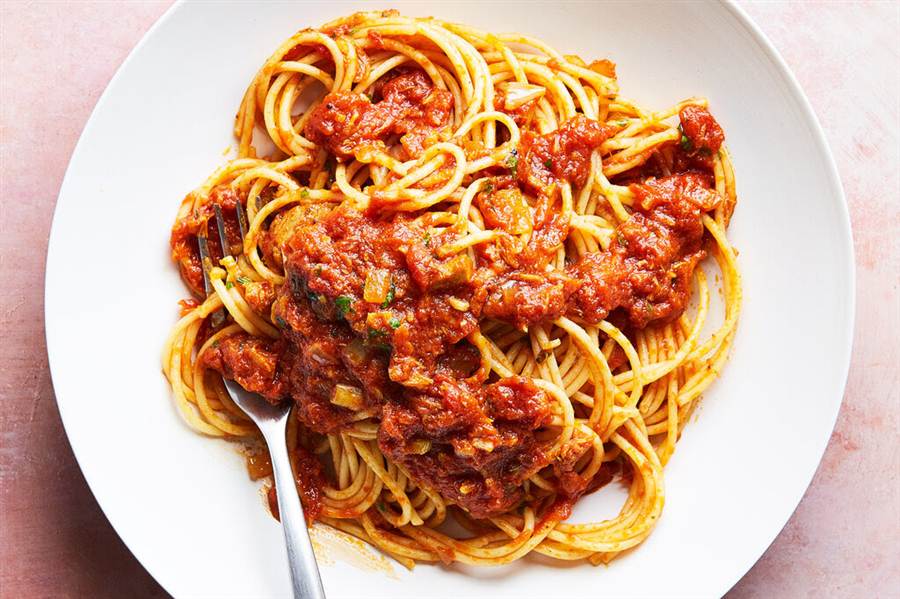
Pasta is a culinary relic of Italian colonialism that Somalis have made their own. The pasta dish baasto iyo suugo tuuna, a staple in many Somali households, gets its unique taste from fresh cilantro and warm spices, including xawaash, a spice mix with turmeric, cardamom and cumin.
