
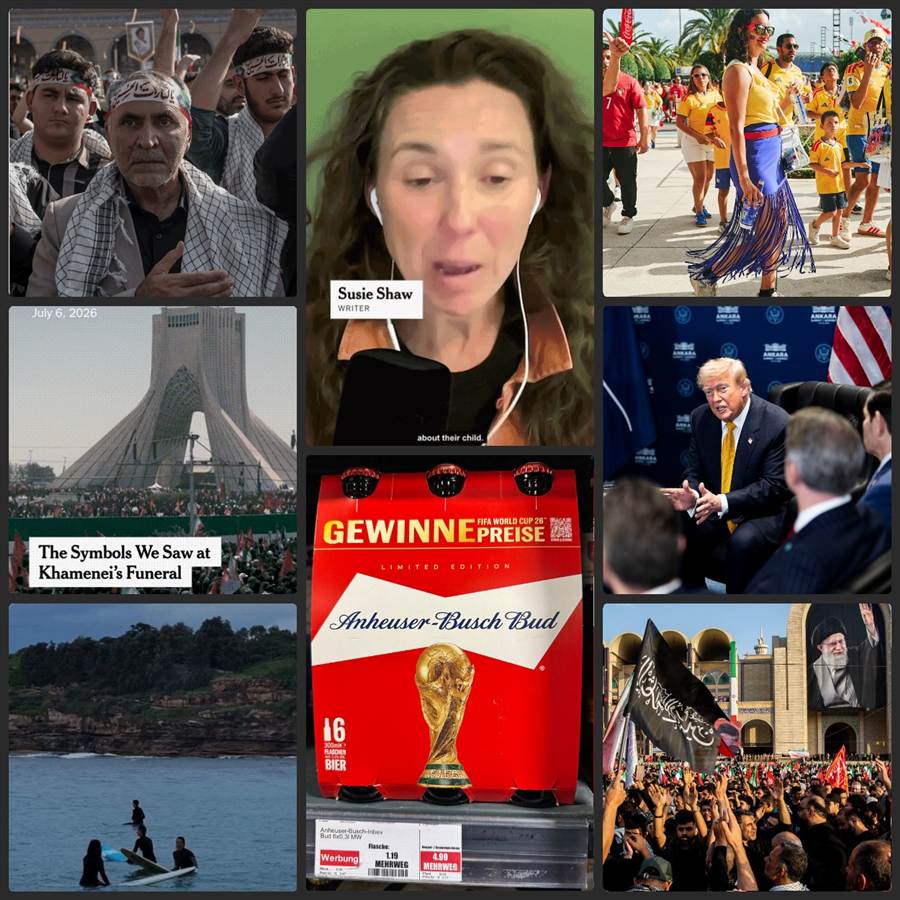
| July 9, 2026 | By Katrin Bennhold |
Good morning, world. A lot has been happening. Last month, President Trump declared peace in the Middle East. Yesterday, he said the Iran deal was “over.” A defiant Iran is not giving him what he wants. More on that below.
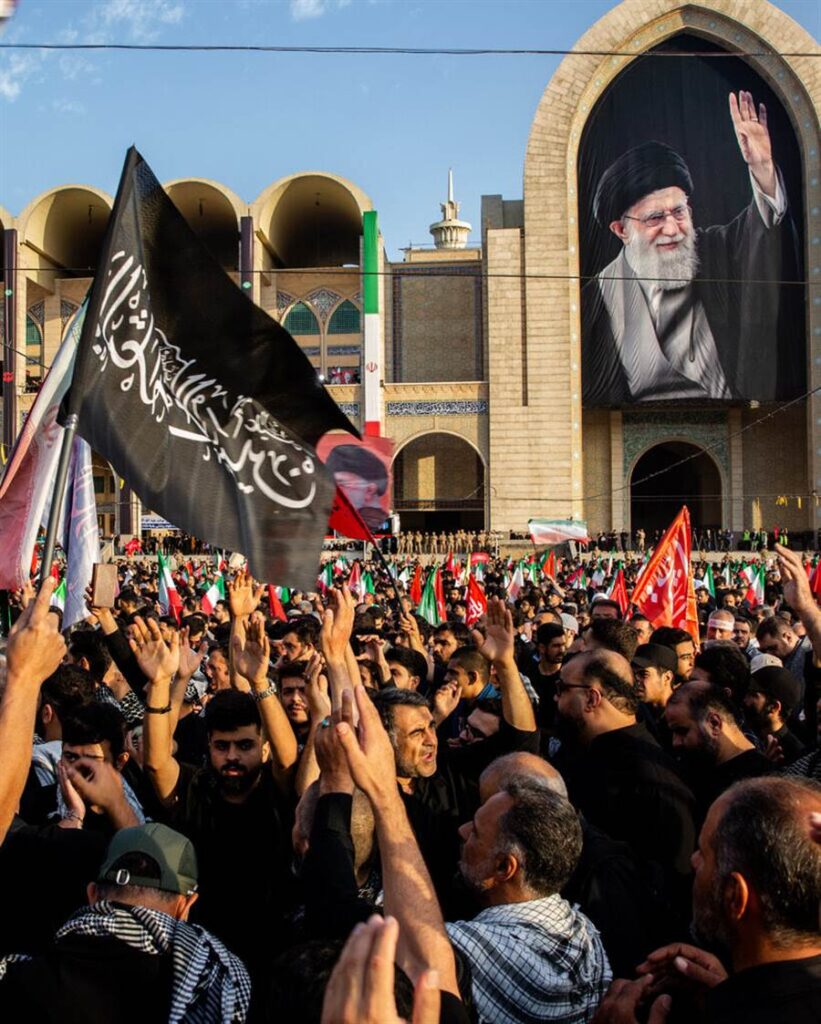
Speaking of defiant: In Iran, a weeklong, multicity funeral for the former supreme leader Ali Khamenei is wrapping up today with his burial in the city of Mashhad, his birthplace and one of Shiite Islam’s holiest cities. Hundreds of thousands of mourners have been following his casket. I spoke with my colleague Abdi Latif Dahir, who has been watching the processions in Iran, about what this moment means for the country.
Also:
| Trump’s options in Iran A big boost for Ukraine Drones watching out for sharks |
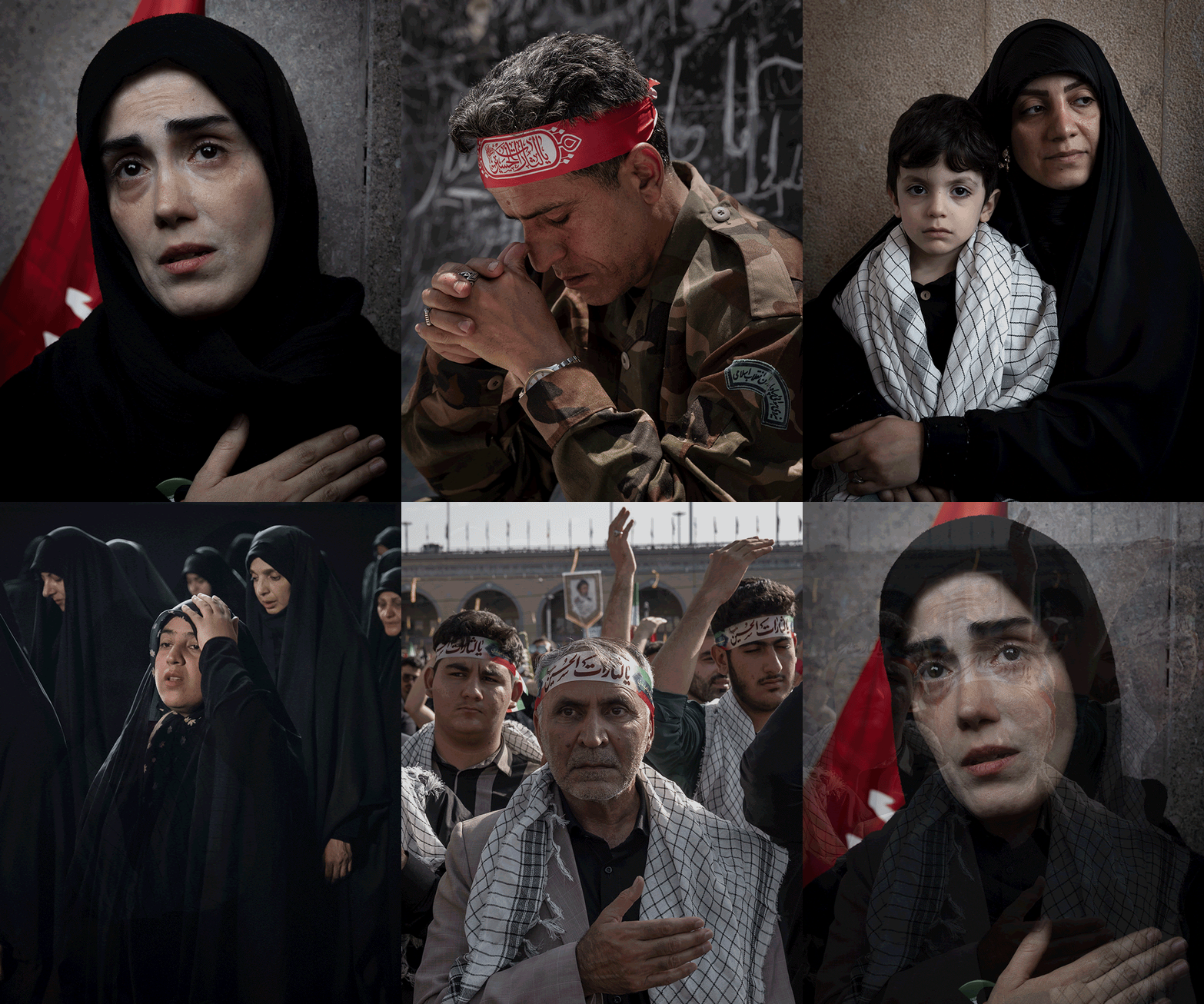
Grief, defiance and spectacle in Iran
Abdi, you are in Iran at this incredible moment. What is it like?
I have reported on state funerals, mass protests and major religious ceremonies, but the scale and intensity of these events in Iran have surpassed anything I’ve ever witnessed. Whether driven by genuine grief, religious conviction, a sense of history or some combination, the emotion on display has been impossible to ignore.
What has struck you the most about Tehran?
Basically, there were two Tehrans: There were people in conservative dress, women in chadors. But right alongside them was a secular, more liberal crowd: Women with dyed hair and fitted tops riding motorcycles. Men in shorts listening to music featuring solo female singers, which is officially banned. It was a reminder that Iran is not one-dimensional.
The last time we saw such crowds on the street was during anti-regime protests in January. How does that fit with the mourning crowds now? How much of this, if any, is orchestrated?
Iran’s government has clearly had years to prepare for this funeral. We saw a demonstration of how well the government understands political theater and how to use spectacle, symbolism and imagery to project strength. That said, it would be wrong to dismiss these crowds as entirely orchestrated. The ayatollah clearly had a genuine following, and many of the people we spoke to said they had come voluntarily to express their grief and, above all, their defiance.
But the scenes of mourning also unfolded against a backdrop of unresolved anger and pain. For many Iranians, Ayatollah Khamenei’s legacy remains inseparable from the government’s violent suppression of dissent, including the nationwide protests that were met with a deadly crackdown.
Is there a sense that the war has rallied people around their government?
There were a huge number of anti-Trump and anti-Israel posters. More than once, people told me that Trump was the enemy of the free world, not its leader; some said they wanted to see him killed. At the same time, we also spoke to Iranians who were critical of the ayatollah and his rule. But some of them said that if change was to come, it should come from within Iran, not through foreign military action or the killing of their country’s leader. Many people told us that the U.S.-Israeli war had only made life harder for ordinary Iranians, and that reality appeared to have strengthened nationalist sentiment, even among some who oppose the government.
Khamenei’s assassination ignited the war. How are the Iranian authorities using his death to stir up emotions?
The government and Khamenei’s supporters are linking him to Imam Hussein, the grandson of the Prophet Muhammad, whose martyrdom at Karbala (in Iraq) lies at the heart of Shiite identity. Hussein’s stand against what Shiites regard as tyranny and injustice is one of the defining narratives of Shiite Islam, and Khamenei’s supporters are drawing on that symbolism, portraying him as someone who stood up to the U.S. and Israel and was killed in that struggle. For many of the people we spoke to, that gives his death a profound religious meaning. They see his martyrdom as strengthening his legacy and giving it a new life.

Abdi, you’ve done your fair share of reporting in tricky places. How does this compare?
We received our visas at the last minute. Reporting here is very carefully managed. The government determined which ceremonies foreign journalists could attend, and throughout our reporting, we were accompanied by a government-provided translator and guide. That inevitably shapes what you see and who you speak to. Most of the people willing to speak on camera expressed pro-Khamenei views, but I don’t think anyone should assume those voices represent all Iranians.
There were a couple of voices who were openly critical and spoke on the record. But we encountered many people who clearly did not feel comfortable talking. Some declined immediately, and others walked away before we could even ask. So while we were able to report and speak to people, there was also an unmistakable sense of caution.
And given how rarely we have people on the ground, what were your other impressions of Iran? What were some highlights of your trip?
Without question, it was the kindness of the people. Time and again, people came up to ask where I was from with genuine curiosity and warmth. Just when I thought I was about to melt in the Tehran heat, complete strangers appeared with bottles of water and glasses of sharbat (a cool drink made with rose water) to keep me going. And then there was the food. I had an orange-saffron chicken dish for dinner one night that was so good I’ve genuinely been thinking about it ever since. If there is one thing I wish I could pack in my suitcase, it would be that dinner!
For more: Hundreds of thousands of Iraqis attended commemorations for Khamenei in the cities of Najaf and Karbala.
| MORE TOP NEWS |
Trump’s meager options in Iran
The shaky truce between the United States and Iran edged closer to collapse on Wednesday. Hour after Trump said he thought a three-week-old cease-fire between the countries was “over,” the U.S. military launched a new round of attacks on Iran. Tehran said it had targeted American military bases in Kuwait and Bahrain in response. Follow live updates.
Trump faces unpalatable options, my colleague David Sanger writes. He could restart combat operations or reimpose the blockade of Iranian ports. Or he could elect for neither war nor peace, with episodic skirmishes in the Persian Gulf, punctuated by periodic negotiations.
For more: Even before the U.S. strikes, divisions were emerging within Iran’s leadership between those who favor negotiation with Washington and hard-liners who oppose a deal.
Indeed, this week, Iran’s president and foreign minister were physically attacked by supporters of a hard-line faction. “Death to the appeaser,” a crowd shouted as they tried to tackle the president.
| OTHER NEWS |
NATO SUMMIT
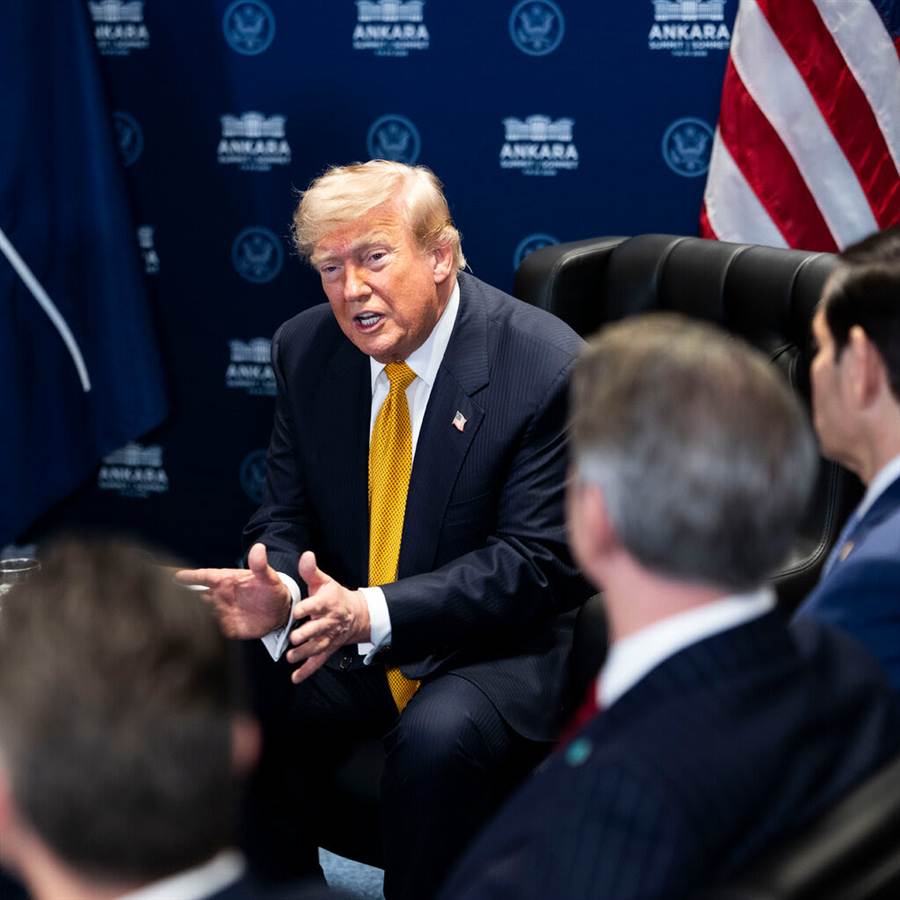
| Trump left Turkey last night on the old Air Force One instead of his new Qatari-donated plane. It was a security precaution related to the resumption of hostilities with Iran, according to people briefed on the plans.Trump said that the U.S. would grant Ukraine a license to manufacture Patriot air defense systems, which could help Kyiv protect itself against Russian missile attacks.At the summit, Trump scolded France, Germany, Italy and Britain for not joining the war against Iran, and called Spaniards “hopeless, bad people.” Hours later, he said there was “tremendous love” among leaders. |
OTHER STORIES
| The far-right leader Marine Le Pen began her presidential campaign in a small French town, a day after a court lifted the ban on her running for office again.Nigel Farage, the British right-wing leader who is resigning his seat in Parliament, may end up in a special election against a candidate dressed as a trash can.An internal report obtained by The New York Times found that Karim Khan, the International Criminal Court prosecutor, had committed sexual harassment.“The Pitt” collected 25 Emmy nominations, the most of any show. The sci-fi drama “Pluribus” also had a big day, scoring 18 nominations. Here’s the full list.E.U. leaders are standing firm on a new airport security program that had led to long lines and missed flights, despite a plea from the aviation industry to suspend it. |
| WORLD CUP |

Fashion: Which country has the best-dressed fans? Our photographers have captured fans, flags, fringe and face paint. Take a look.
Controversy: More than 70 European lawmakers have called for an investigation into FIFA and its president, Gianni Infantino.
Top of The World: The first quarterfinal match is today, between France and Morocco. The most clicked link in your newsletter yesterday was about our writers’ predictions for the next round of the tournament.
| FRAGRANCE OF THE DAY |

Japanese Cherry Blossom
Real cherry blossoms have almost no scent, so the Japanese Cherry Blossom fragrance sold by the U.S. company Bath & Body Works is pure perfumer’s fantasy. With notes of Asian pear, white jasmine and basmati rice, this scent has generated more than $1.5 billion in sales over the last 20 years.
| MORNING READ |

Budweiser is trying to make it in Germany — and not for the first time. This is the company’s third attempt to persuade Germans to drink its quintessentially American beer. The decision is confusing to some because the German beer market is insular, and, at this moment, regard for Trump and the U.S. is low.
Nonetheless, the company is giving it another go, casting the move as a homecoming: Its founders were born in Germany. Our Berlin bureau chief, Jim Tankersley, writes that he’s always had a soft spot for the beer, the favored drink of a mentor. Germans, on the other hand, have no such affection. Read more on Bud and the toughest beer market in the world.
| AROUND THE WORLD |

Eyes in the skies to spot sharks in Australia
Sydney is on high alert after a period of increased shark activity, including the mauling of a schoolteacher last month at a popular beach near Bondi. Among the measures, officials have put more funding into a drone program that monitors great whites and other dangerous species.
One beachgoer said he knew the risks involved in ocean swimming but was still of two minds about the increased aerial surveillance: “It’s nice to know, but then sometimes I’d rather not know.” Read more and see the drones in action.
| RECOMMENDATIONS |

Soothe: On the “Modern Love” podcast, the writer Susie Shaw talks about how to support a parent going through the loss of a child.
Inspect: What do Taylor Swift’s lyrics reveal about her thoughts on marriage?
Read: In the A.I. dystopia “Dead but Dreaming of Electric Sheep,” an experimental technology gives its heroine control over somebody else’s body.
Peek: This classic 1800s whaler’s cottage in Sag Harbor, N.Y., conceals a very modern renovation.
| RECIPE |

Fluffy and slightly sweet on the inside, with crunchy outer pockets, muufo, a Somalian cornmeal flatbread, needs time to rise but cooks up quickly. It’s normally baked in a traditional tinaar clay oven, but this recipe allows for pan-frying it in a skillet.
