

| July 22, 2026 | By Katrin Bennhold |
Good morning, world. For a while now, there has been a sense that the tide has turned for Ukraine in its war with Russia. Ukraine is attacking Moscow; it’s even getting praise from President Trump. So why did President Volodymyr Zelensky just fire his top general?
War can be uniquely challenging for democracies, where citizens expect to have a say and sometimes express their discontent on the streets. Today my colleague Andrew Kramer writes about the upheaval in Kyiv during what should be a moment of optimism. It’s a fight over drones, corruption, generational differences and more.
Also:
| Protesters hold the line in India Mamdani calls for Netanyahu’s arrest A risky escape from North Korea |
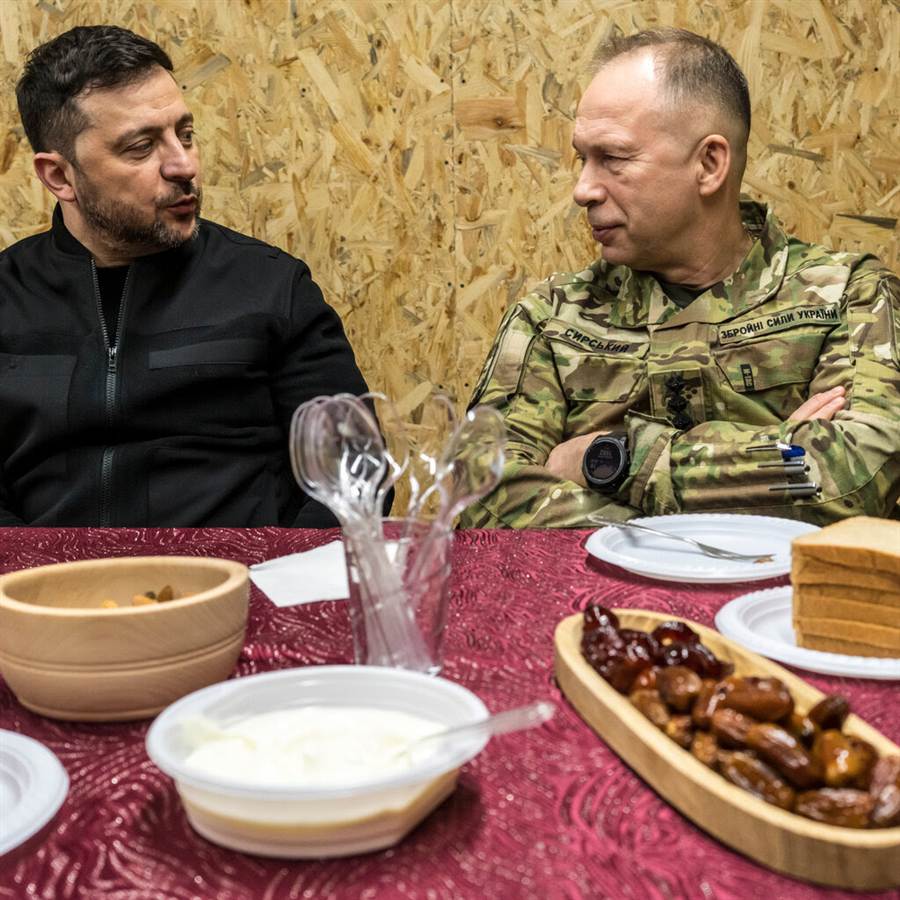
| Volodymyr Zelensky and the former commander in chief, Oleksandr Syrskyi, in March. Brendan Hoffman for The New York Times |
Why Zelensky ousted his top general
By Andrew E. Kramer
For a time, it looked like Ukraine was going to have a good summer.
After a winter of heavy Russian bombardment, the country was finding battlefield success, striking Moscow and hitting Russian ships in the Black and Azov Seas. It was finding diplomatic success, too, receiving billions of euros from the European Union and a promise from Trump that Ukraine could start manufacturing its own interceptor missiles. Ukraine was on a winning streak.
What snapped it was not a fearsome Russian offensive or another unraveling of relations with Trump. Instead, it was an outbreak of political infighting at home.
The defense minister, Mykhailo Fedorov, was openly clashing with Oleksandr Syrskyi, the country’s top general. Zelensky fired Fedorov last week, triggering major street protests. He then fired Syrskyi last night.
The infighting has cracked the all-important sense of wartime unity and overshadowed the narrative that Ukraine is riding high in the war. Rather than capitalizing on its momentum, Ukraine is now grappling with military upheaval at a critical juncture — a reminder that being a democracy at war can be messy.
A generation gap
The rift has raised questions about how fully Ukraine, with its vaunted reputation for military innovation, is embracing the high-tech solutions that the popular, youthful Fedorov embodied.
During his tenure, Fedorov, 35, clashed with Ukraine’s generals, who saw aspects of his robot-war vision as fanciful and argued for the continued need for infantry deployments.
Fedorov was ultimately fired after he blocked purchases of artillery ammunition in favor of drones. Syrskyi insisted that the ammunition was still needed in the brutal trench fighting in the country’s east.
 |
| Mykhailo Fedorov, Ukraine’s former defense minister, in Kyiv last week. Jędrzej Nowicki for The New York Times |
But Fedorov didn’t back down. Instead, he responded with a press conference, where he delivered the most scathing public critique of Ukraine’s military leadership so far during the war.
Fedorov accused the 60-year-old Syrskyi, an old-school general, of strategic shortsightedness — of thwarting the careers of promising junior commanders and resisting the drone and robot combat that’s transforming the war. He said he had sought to root out what he described as rampant corruption in defense procurement and made enemies as a result.
In the aftermath of his firing, protesters poured out into cities across the country, many of them carrying signs with variations on “Fedorov is innovation, old grandpas are degeneration.”
In the days since, however, what began as a show of support for Fedorov morphed into demands for Zelensky to fire Syrskyi.
Crowds in Kyiv, which included active-duty soldiers and veterans, began deriding the man who successfully commanded pivotal battles earlier in the war. Meanwhile, a cardboard cutout of Fedorov got cheers when it appeared on a balcony overlooking the demonstration.
Ukrainian leaders take street protests seriously. They’ve toppled multiple governments. They’re viewed as a pillar of democracy and as an important contrast to the authoritarianism of Russia under President Vladimir Putin.
It wasn’t long before Zelensky was holding back-to-back video calls with army commanders, showing a willingness to hear their complaints. By Tuesday evening, Syrskyi was gone.
 |
| Ukrainians protested Zelensky’s decision to dismiss Fedorov in Kyiv last Thursday. Jędrzej Nowicki for The New York Times |
When success breeds pushback
One Ukrainian journalist told me that the rift over how to wage the war had come into the open now “precisely because there are successes” on the battlefield.
The people advocating high-tech warfare felt vindicated and became more vocal, said Volodymyr Yermolenko, the editor of a culture and politics magazine. Then those favoring a more conventional approach pushed back.
But that sort of clash carries risks. “Ukrainian history shows that if we are united, it’s very difficult to win against Ukraine,” Yermolenko said.
“The biggest enemy is internal division,” he said. “Our history taught us this can be deadly.”
Will these firings be enough to restore unity?
The latest on Ukraine: Zelensky announced Mykhailo Drapatyi, a decorated commander, as the new top general. The choice of Drapatyi, who is 43, will likely please the protesters — he publicly sided with Fedorov in his clash with Syrskyi.
| MORE TOP NEWS |
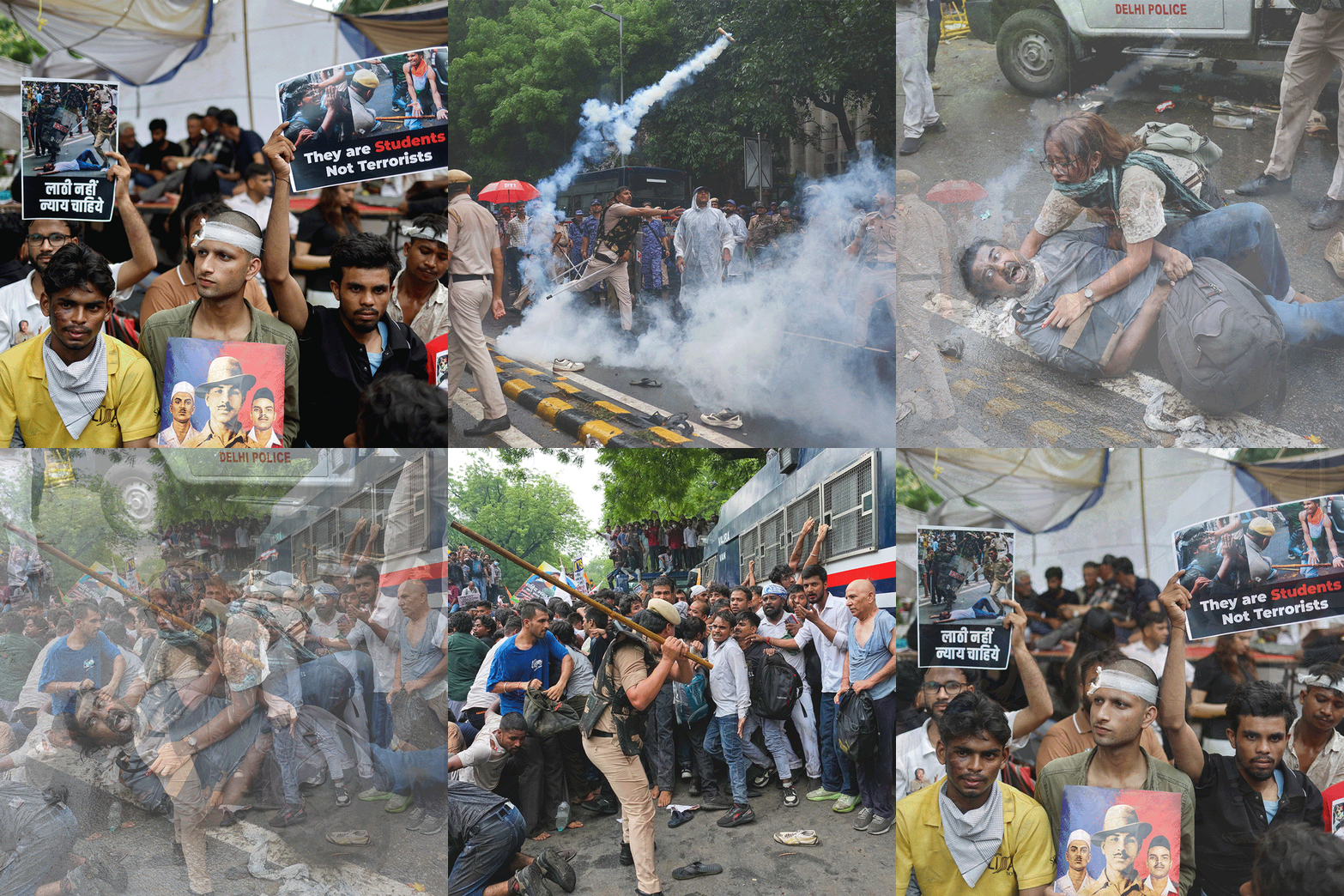
India’s young protesters are undeterred
A day after the police used tear gas and batons against young people protesting failures in the education system and a lack of jobs, thousands returned to the protest site in New Delhi.
Security forces had removed tents and parts of the main stage at the venue. But Abhijeet Dipke, the founder of the Cockroach Janta Party — a satirical movement that has become a vehicle for the frustrations of millions of young Indians — said that the protest would continue indefinitely. More than 40 percent of India’s population is under the age of 25.
| OTHER NEWS |
| The U.S. is set to announce a nuclear agreement with Saudi Arabia. Some oppose such a plan, fearing that the Saudis could use a civilian nuclear project to eventually develop nuclear weapons.Mayor Zohran Mamdani, in a video address, challenged the U.S. government to execute an international arrest warrant against Benjamin Netanyahu, who is expected to visit New York in September.Two oil tankers made U-turns in the Red Sea after Houthi militants in Yemen threatened to attack Saudi oil shipments.France passed a landmark law restricting access to social media for anyone under 15, the first European country to do so.The right-wing British politician Ann Widdecombe was struck 21 times on the head with a hammer in a fatal attack earlier this month, prosecutors said.Lebanon accused Israeli forces of opening fire near its units as they deployed in a village in southern Lebanon.At least 23 people died and more than 80 others were injured in flash floods in eastern Afghanistan. Dozens remain missing.Andy Burnham, Britain’s new leader, has promised hope and change. His opponents are already doling out criticism. Read analysis from our chief U.K. correspondent. |
WHAT ELSE IS HAPPENING
| Pope Leo XIV called for nuclear disarmament in a new book published yesterday.An Australian woman gave birth to identical quadruplet girls, who were conceived naturally and split from one fertilized egg, in an extremely rare event. |
TOP OF THE WORLD
The most clicked link in your newsletter yesterday was about what Greeks think of “The Odyssey.”
| SPORTS |
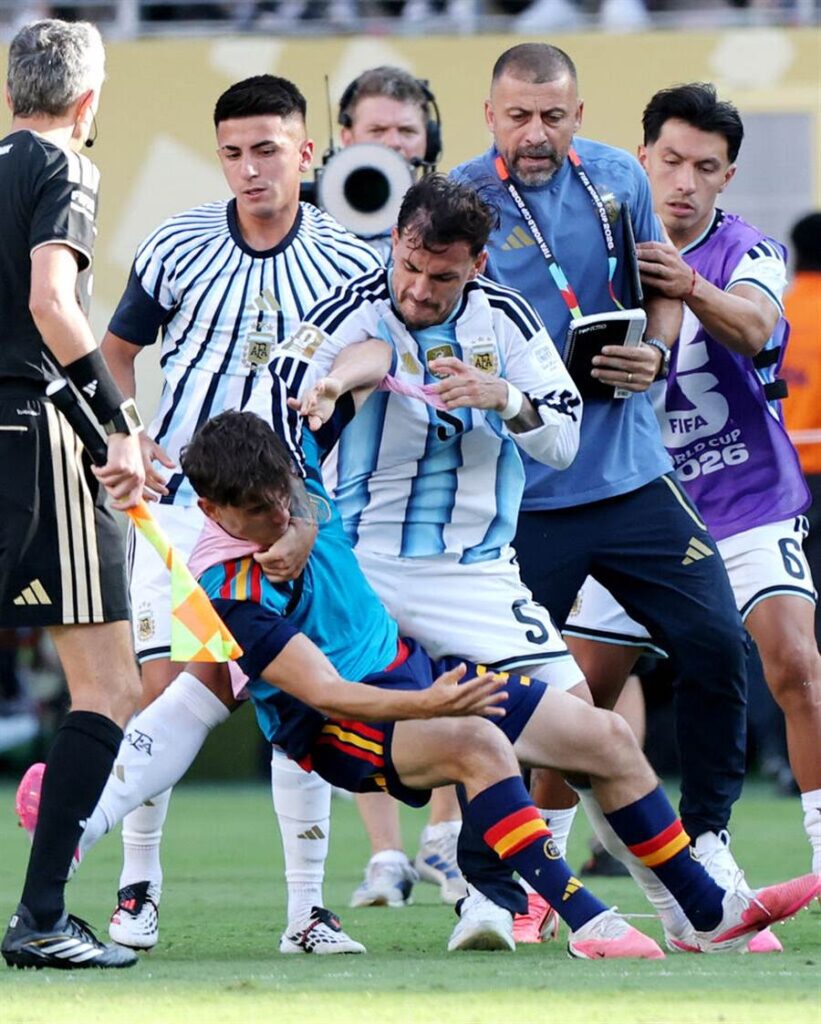
World Cup: FIFA will investigate a brawl between players for Argentina and Spain after the final.
Football: Zinedine Zidane will succeed Didier Deschamps as the manager of France’s national team.
| SIMPLE PLEASURES OF THE DAY |

Grandma hobbies
Young people, in search of calm and community, are turning to pastimes that seem to belong to a bygone era: quilting, bookbinding, beekeeping and sock knitting. One young person says it comes from a desire, in the era of A.I., to hold onto experiences that feel distinctly human.
| MORNING READ |
 |
| Woohae Cho for The New York Times |
It’s exceedingly rare for an entire family to successfully escape North Korea together. But one family of nine did just that, becoming among the few who have managed to defect since the country’s crushing pandemic lockdown.
To escape, they crossed a hill strewn with land mines to reach a secluded beach, where a small boat waited. To carry the two young children more easily, the family sealed them inside burlap sacks and hoisted them onto their shoulders. Once aboard, they headed out of North Korean waters. Read what happened when the South Korean Navy found them.
| AROUND THE WORLD |
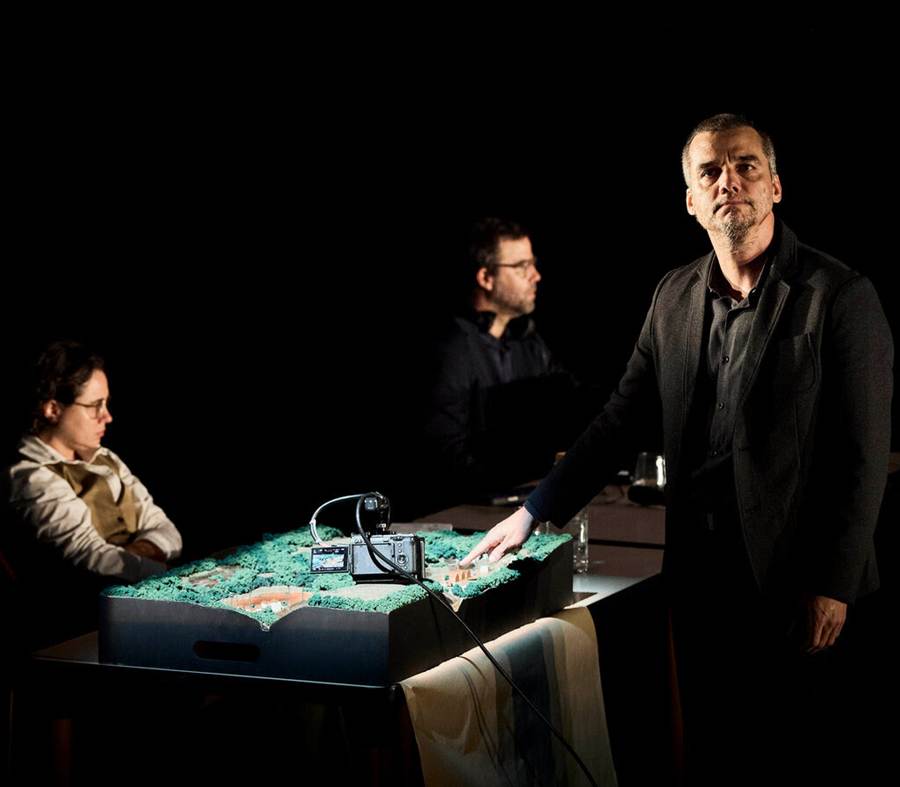
Dark theaters, loud protests
France’s network of cultural venues has long been the envy of artists around the world, but in recent years the intricate system of subsidies that sustains it has come under strain.
This month, the culture ministry announced that it was freezing part of its remaining 2026 arts funding. Theaters, opera companies and orchestras say the decision will force layoffs, canceled productions and even bankruptcy.
In response, this year’s Avignon Festival, the annual theater extravaganza, has turned into a staging ground for protests, defiant new works and some early 2027 presidential campaigning. Read more about how French theater is turning up the political heat.
| RECOMMENDATIONS |
Simplify: This architect’s upstate New York retreat prizes minimalism.
Pick: Which Costa Rican villa would you choose for $1.9 million?
Move: Here’s a quick workout to strengthen your lats, which are sometimes called the glutes of the upper body.
Pack: Is it better to fold your clothes or roll them? The travel team at Wirecutter tested both methods and discovered advantages to each.
| RECIPE |

The cemita is a popular sandwich from the Mexican state of Puebla named after the sesame seed bun it’s served on. It’s frequently filled with a crispy fried cutlet, often pork or chicken, and topped with creamy avocado, salty Oaxaca cheese and pickled jalapeños or smoky chipotles.
