
| June 29, 2026 | By Katrin Bennhold |
Good morning, world. Europe’s populist parties know how to make the most of a crisis. When I was in Germany covering the far right, they jumped on the European debt crisis. Then they jumped on the migrant crisis. And then they jumped on Covid, each time attacking mainstream elites for their response.
Is the climate crisis next? It might seem a stretch, given that climate change, which contributed to record heat across the continent last week, is being driven by the oil and gas industries these parties tend to support. But today, my colleagues Michael Shear and Jeanna Smialek write about the politics of air-conditioning — and how right-wing parties are already trying to capitalize on the fallout from last week’s heat emergencies.
Also:
| U.S. and Iran agree to halt attacksQuake rescue efforts in VenezuelaThe World Cup’s knockout stage |
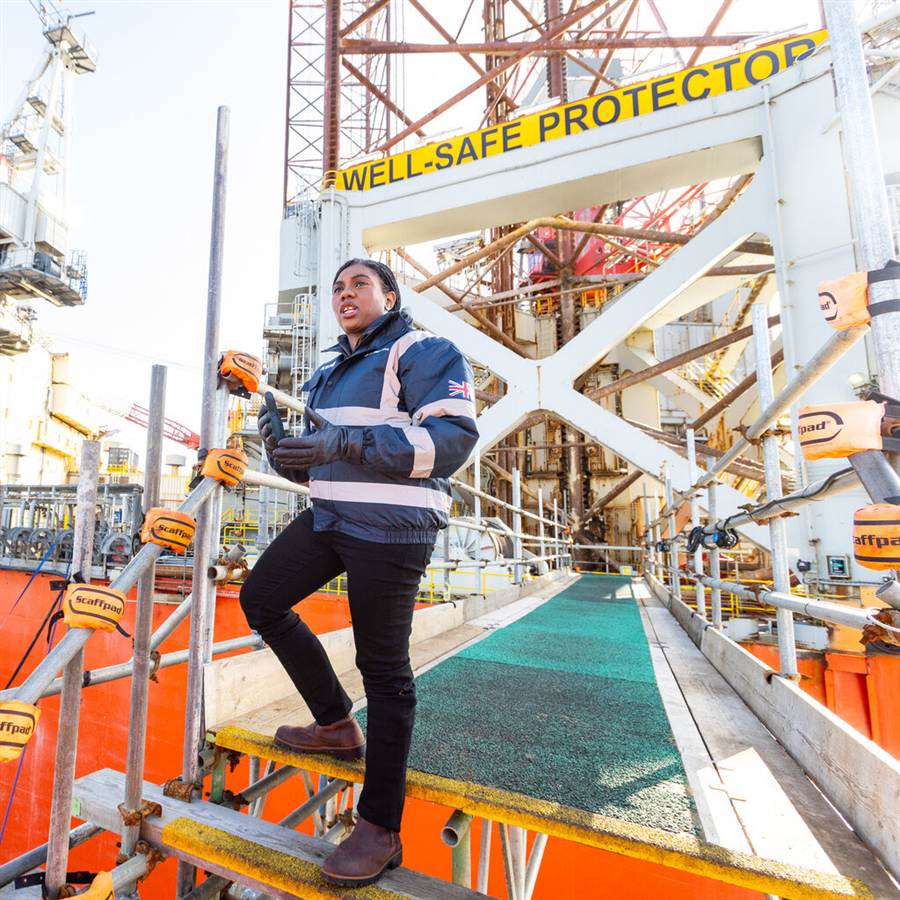
| Kemi Badenoch, the leader of Britain’s Conservative Party, visited an oil rig in Aberdeen, Scotland, in March. Paul Reid/Getty Images |
How to support fossil fuels in a heat wave
By Michael D. Shear and Jeanna Smialek
It was a crisp 12 degrees Celsius in Aberdeen, on the northeast coast of Scotland, earlier this month when Kemi Badenoch, the leader of Britain’s Conservative Party, once again championed the country’s fossil fuel industry.
“The war on oil and gas must end,” she insisted, prompting applause from supporters in the port city, a major hub for petroleum extraction in the North Sea. “We need to get Britain drilling again.”
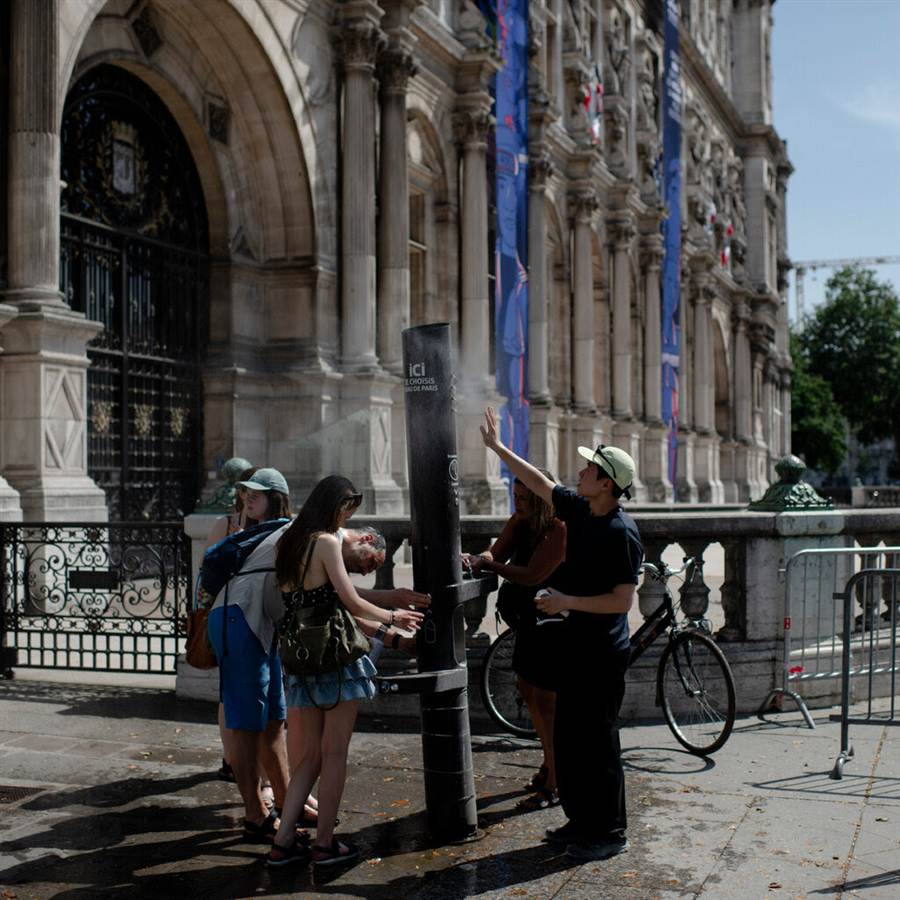
Eight days later, thermostats across southern England and Wales spiked. Temperatures in London reached 35 degrees. Schools closed and trains were canceled. Some hospitals halted elective procedures. The opening session of London Climate Action Week — focused on the ways governments can mitigate the risks of extreme heat — was called off after Britain’s national weather service issued a “red warning” for extreme heat.
For politicians like Badenoch, the increasingly intense heat presents a challenge. How do they reconcile their support for polluting energy sources that contribute to global warming with the reality of a planet that already feels as if it’s burning up?
The politics of air-conditioning
For starters, they talk a lot about air-conditioning.
The installation of air-conditioning units in European homes, schools, public buildings and hospitals is a short-term fix that almost everyone agrees is necessary.
And talking about it serves a few purposes. Air-conditioning highlights the failures of various governments to help their countries adapt to extreme heat so far. It’s also a cultural issue to use against environmental groups and Europe’s Green parties, which often criticize the use of air-conditioners for its high energy demands.
And it allows far-right politicians to avoid saying much about the longer-term underlying cause of the heat waves: rising greenhouse gas emissions.
“If I am elected president, I will put into place a massive air-conditioning plan,” Marine Le Pen, the leader of the National Rally party, pledged on Friday, “starting in places with the most vulnerable populations.”
Le Pen argues that air-conditioning units do not exacerbate global warming, saying that “when environmentalists don’t want something, they twist the studies, they pull things out of context.” (New air-conditioning units have become greener in recent years but do contribute to climate change by guzzling electricity, which, if it doesn’t come from renewable sources, contributes to the emissions that warm the planet.)
In the Belgian city of Ghent, run mostly by left-of-center politicians, the municipal website last week discouraged the use of air-conditioners, saying that “the best air-conditioner is a tree” and advising citizens to use fans and to request a free tree to plant outside their houses.
The city later removed wording that read “avoid air-conditioners,” replacing it with the phrase “cool smartly.” A spokesman for the mayor noted that Ghent was not against air-conditioners and that it had installed 30 portable units into day care centers. “Health always comes first” in a heat wave, he said.
But by then, a right-wing member of the Flemish Parliament, Maurits Vande Reyde, had already seized on the recommendations on social media.
“It is absurd that all governments in our country, under pressure from left-green mumbo-jumbo, advise against the use of air-conditioning,” he wrote on Tuesday. “How many deaths would the government already have on its conscience with this kind of absurd advice?”
Others have tried to tap into economic concerns and to focus attention on burdensome regulations.
Andrew Bowie, who oversees energy policy for the British Conservatives, said his party supported the transition to cleaner energy. But he added, “It’s a transition, and it makes no sense at all to pursue net-zero targets while inflicting higher energy bills on households, deindustrializing and losing the potential tax revenue from exploiting our North Sea oil and gas resources.”
Potent fuel
While climate change politics in the U.S. have become more divisive during President Trump’s two terms in office, in Europe there’s still broad support for taking action to tackle global warming.
In a survey last year by the E.U.’s public opinion service, about 85 percent of respondents said they considered climate change a serious problem for the world and action against it a public-health priority.
And a wide body of research on European voters shows that extreme weather events can influence politics: A 2025 study found that abnormally high temperatures in Germany had delivered a meaningful increase in support for the Green Party, for example.
But such research also showed that extreme weather events did not guarantee a backlash against climate-skeptic parties.
Extreme weather events like floods and heat tend to leave governments scrambling to respond. These scrambles become fertile ground for voter frustration. And to populist parties on the right, voter frustration — regardless of what’s driving it — can be a potent fuel. And so the politics of heat going forward may be shaped by two questions: Will governments get better at adapting? And will voters focus on the short-term politics of air-conditioning — or the long-term politics of what’s making the world so hot?
Related: The extreme heat gripping Western Europe eased over the weekend, though some countries in Central and Eastern Europe are bracing for more dangerous days to come.
| MORE TOP NEWS |

The U.S. and Iran to suspend attacks
Iran and the U.S. agreed to halt attacks in the Strait of Hormuz, according to a U.S. official. Iran has yet to confirm an agreement.
Yesterday, Iran said it had targeted bases in Bahrain and Kuwait in retaliation for U.S. attacks. A day earlier, the U.S. hit Iranian air-defense sites and other military infrastructure in “direct response” to an attack earlier on an oil tanker in the strait.
The renewed attacks over the strait have risked derailing the cease-fire. Analysts say that, for Iran, it was a necessary gambit: Its newfound power to disrupt traffic through the waterway is critical leverage it cannot afford to lose.
| OTHER NEWS |
| The death toll from twin earthquakes that devastated the Venezuelan coast now stands at more than 1,400 people. Rescue efforts have faced chaos, delays and aftershocks. Here’s what to know.Elected officials in Mexico have been quietly offering themselves up as informants in U.S. investigations into their own government.The Beijing authorities confirmed the death of the pilot who flew a small aircraft into the tallest building in the city on Friday. Another 13 were injured at the scene.A U.S. financial agency is investigating the prediction market company Polymarket, reviving questions about whether it is operating legally.Sri Lanka is using military drones to fight mosquitoes, as the country faces one of its worst dengue fever outbreaks in years.Red Cross volunteers risking their lives to bury Ebola victims in the Democratic Republic of Congo have been met with suspicion and violence. Our chief Africa correspondent, Declan Walsh, explains what’s behind the hostility. Watch the video. |

TOP OF THE WORLD
The most clicked link in your newsletter on Friday was about the creative ways Belgians are finding to escape the heat.
| WORLD CUP |

The knockout stage begins
Canada won its first knockout game at the World Cup, beating South Africa 1-0. Canada, co-hosts of the tournament, had never progressed beyond the group stage before. Now, they are headed to the round of 16.
Who is going to be in the final? Who are the best fans? The best player? The Athletic’s writers weighed in with their thoughts on the knockout bracket.
South Korea: The country’s president called for the sports ministry to investigate the national team’s group-stage exit from the tournament. The team’s head coach has announced his resignation.
Iran’s exit: The team’s elimination ended one of the most politically charged sports odysseys in recent history. The captain complained of logistical challenges, blaming FIFA for “a disaster World Cup.”
Short-lived joy: Some goals are being ruled offside through a video assistant referee, causing heartbreak after celebrations. See how one of Colombia’s goals was ruled out over a toe.
| PHRASE OF THE DAY |

Gray divorce
Splits among older couples are on the rise, with nearly 40 percent of U.S. divorces occurring between people 50 and older. The reasons are complicated, but experts point to longer life spans and older people’s unwillingness to stay in relationships without real connection or vitality.
| MORNING READ |

Meet Francis Ferrari, a French doctor and the inventor of a cosmetic procedure that can change eye color. It’s controversial in the ophthalmology community.
Most of Ferrari’s patients want to transition from dark to light shades, choosing among a range of pigments that include olive green, pistachio and “Riviera blue.” Critics point out that the procedure involves manipulating the cornea, which could cause complications. But Ferrari views it as a way for patients to become who they’ve always wanted to be. “There’s real suffering,” he said. “Of course, it would be better to accept one’s natural eyes, but there are some patients who aren’t able to.” Read more with your own eyes.
| AROUND THE WORLD |

A reset for the Uffizi
One of the world’s most visited museums is getting a makeover. Simone Verde, the director of the Uffizi Galleries in Florence, Italy, has been working long hours overseeing workers as they rehang masterpieces like Botticelli’s “Primavera.” He aims to remake the institution into a living encyclopedia through new museum labels, QR codes and design that pays homage to the museum’s past. Take a look inside.
| RECOMMENDATIONS |
Log off: Our monthlong Touch Grass Challenge is coming to an end. For your final assignment, we’re inviting you to create land art.
Pick: Which of these $1.3 million homes in Mexico City would you choose?
Watch: The final season of “The Bear” is out.
Try this: Did you know you’re supposed to hang your bananas?
| RECIPE |

“Eating your skin care” is the latest wellness trend all over my social media feeds, encouraging you to ditch serums and lotions for foods that nourish your skin from the inside. This simple toast recipe was my easy way in: A thick slice of sourdough is topped with smashed avocado, capers and smoked salmon, and then crowned with shaved carrot salad. It’s full of omega-3s, antioxidants and beta carotene. — Parin Behrooz
