

| February 27, 2026 | By Katrin Bennhold |
Good morning, world! Every once in a while, a new type of medication turns out to be so transformative that it becomes a household name. Take statins, which have prolonged millions of lives by lowering cholesterol. Or Prozac, which revolutionized the treatment of depression.
The latest class of drugs to join this club are the GLP-1 receptor agonists. You might know them better by their brand names: Ozempic, Wegovy and Mounjaro. They’ve been hailed as miracle weight-loss drugs that can help people where diet and exercise have failed. There are also a lot of unknowns about the consequences of long-term use.
I spoke to my colleague Dani Blum on the Well team to find out how they work and who should — and shouldn’t — take them.
Also:
| Pakistan strikes Afghanistan Britain’s Labour Party defeated in a special election Poems on the London Underground |
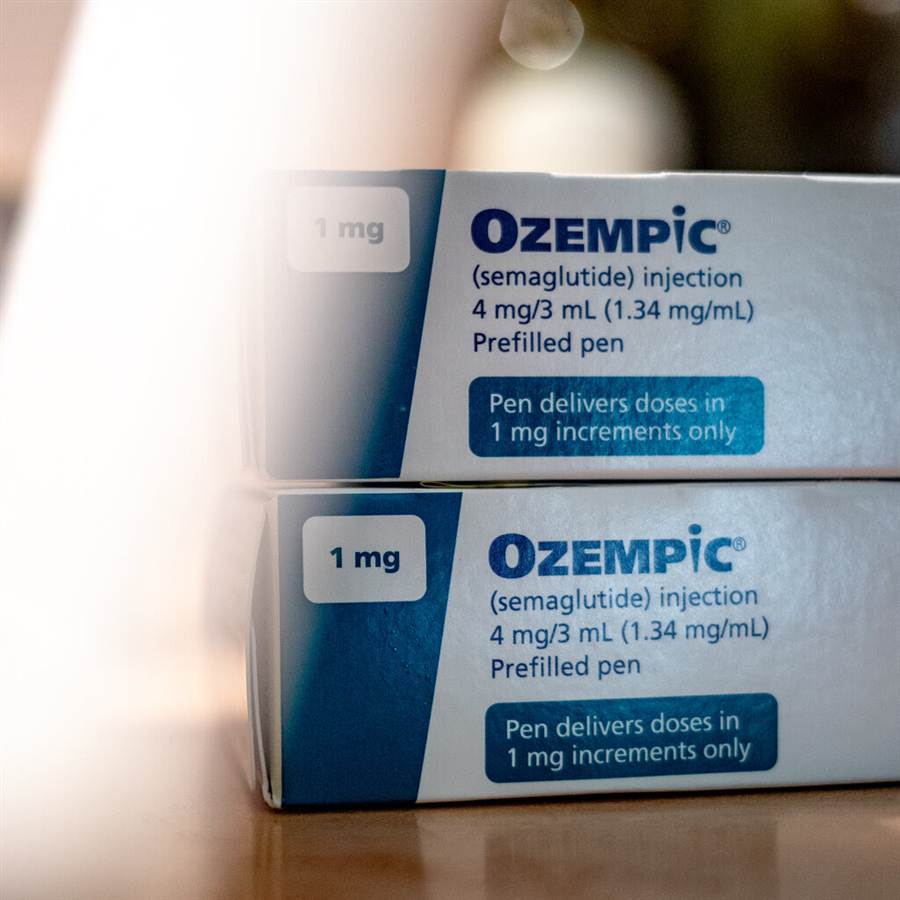
What we know — and don’t know — about Ozempic
Dani, I’ve known several people who are on Ozempic who lost weight really fast. How exactly do these drugs work?
So, technically Ozempic is not a weight-loss drug — the actual name-brand medication is approved only for people with diabetes. But “Ozempic” has become a catchall for this new class of drugs called GLP-1s that can, as you said, help people lose a lot of weight, sometimes pretty quickly. Basically, the drugs mimic naturally occurring hormones that blunt our appetites and leave us feeling fuller, for longer. When people take these drugs, they’re just less hungry.
Do people have to stay on them forever to keep the weight off?
Basically, yes. It’s possible, but rare, for people to keep the weight off when they go off these drugs. Even Oprah gained back 20 pounds when she went off them. Doctors I talk to say we should think of these medications like statins — something to be taken long term.
Do we know yet what the side effects of long-term use might be?
No, we don’t really know a lot about potential long-term side effects yet. We just don’t have decades and decades of data.
We do know that these medications can have side effects in the short term. Most commonly, these are gastrointestinal issues: nausea, constipation, diarrhea, stomach pain. People can also get fatigued. In rare cases, people can experience more severe problems, like kidney or gallbladder issues, or pancreatitis.
But at the same time, there seems to be a new study out every week showing GLP-1s help treat various ailments. What’s going on there?
Such a good question. We’ve seen positive data on how these drugs can help with things like sleep apnea, heart issues and kidney issues. But we don’t totally know why.
There are a lot of theories. Some scientists think that it comes down to the fact that obesity is intimately linked with a slate of other health issues, and once people lose weight, other conditions improve. Some think that these drugs can reduce inflammation throughout the body, which could have big benefits. But again, these drugs are pretty new, and there are many open questions.
It sounds as though, if these drugs deliver on their promise and help with widespread obesity-related conditions like diabetes, they could help health care systems save a lot of money.
In theory, yes. These drugs could offer big health care savings by lowering the overall burden of disease in a lot of countries. But remember, they are quite expensive, at least for now, so there’s that, too.
Who’s making money on these drugs, apart from the companies producing them? And who stands to lose — and is maybe lobbying against them?
What’s fascinating to me is the array of companies trying to cater specifically to people on GLP-1s. A number of companies — gyms, protein bars, supplement companies — are trying to capitalize on people worried about losing muscle on these drugs. Food companies could lose, but they’re also working to adapt really quickly, partly through these high-protein options for people whose appetite has been curbed by these drugs.
 |
| Maansi Srivastava/The New York Times |
So here’s something I’m wondering about. There is pleasure in eating. If these drugs make you want food less, does that mean you’re less able to experience pleasure? Is this life in beige, as one writer put it?
There isn’t really any concrete evidence that these drugs dull pleasure, but I have heard that anecdotally from people on these medications. Food is a big part of our lives. A lot of us connect with friends and family over meals, and GLP-1s can sometimes throw a wrench into that.
We don’t have any hard evidence — there are no solid studies yet. But there is anecdotal evidence that these drugs curb cravings, and that can be good and bad, right? If it curbs harmful cravings like gambling and excessive shopping, that’s potentially beneficial. If it lowers your sex drive, not so much.
If someone is healthy but still wants to lose weight, is there any reason not to take these drugs?
These really are not meant to be drugs you take to lose 15 pounds. These are powerful medications that you’ll most likely have to stay on for the rest of your life, if you want to keep the weight off. They come with side effects. They can be expensive. These drugs have helped a lot of people, but they’re not a casual commitment.
| MORE TOP NEWS |

| The U.S.S. Gerald R. Ford aircraft carrier in the Mediterranean yesterday. Costas Metaxakis/Agence France-Presse — Getty Images |
A deal or war?
The U.S. and Iran concluded a six-hour round of high-stakes nuclear talks in Geneva yesterday.
There was neither a diplomatic breakthrough, nor an impasse on American demands that Iran completely dismantle its nuclear program. Iranian officials and Omani mediators said the two sides had agreed to continue talking next week in an effort to avert war.
Notably, the two American negotiators, Steve Witkoff and Jared Kushner, remained silent about the current status of negotiations. The White House declined to comment.
President Trump is considering ordering the U.S. military to carry out targeted strikes in Iran. In making the case for an attack, his administration has made some false or unproven claims.
For more: Any strike by the U.S. would most likely pull Israel into its second war with Iran in less than a year. The mood in Israel is wavering between anxiety, resignation and anticipation.
| OTHER NEWS |
| Pakistan carried out airstrikes on Afghanistan’s two largest cities today, including Kabul, the capital. The escalation into open conflict followed months of tension and border skirmishes.In Britain, the Green Party defeated the governing Labour Party in a special election, a blow to Prime Minister Keir Starmer and a sign of left-leaning voters’ frustration.The prime minister of Denmark called a snap election amid a surge in her approval ratings after she stood up to Trump’s threats to take over Greenland.Russia launched big strikes on Ukrainian cities hours before U.S. and Ukrainian negotiators met for talks in Geneva.Fifteen South African men who were duped into fighting for Russia in Ukraine have returned home.Cuba said the men aboard a speedboat who exchanged fire with border troops were intent on “an infiltration for terrorist purposes.” Its account was called into question after one of the men it identified as having been on the boat turned up in Miami.As the U.S. pushes Cuba’s economy toward possible collapse, Trump hopes to make a deal with its communist leaders to avoid chaos even if it means regime change has to wait.The far-right One Nation party in Australia has soared in opinion polls since the mass shooting at Bondi BeachAnthropic said it was standing firm on not having its A.I. model used in certain scenarios by the Pentagon, which has given the company until today to remove all restrictions on military use or face severe consequences.Israel indicted an intelligence agent on charges that he profiteered from smuggling goods into Gaza. |
EPSTEIN FILES
| Hillary Clinton denied ever meeting Jeffrey Epstein or knowing anything about his crimes during a more than six-hour, closed-door deposition in front of a congressional committee. |
| Borge Brende, the chief executive and president of the World Economic Forum, said he would resign after an investigation of his ties to Epstein.Take a look at who else has faced fallout from the Epstein files. |
WHAT ELSE IS HAPPENING
| An anonymous donor sent the Japanese city of Osaka 21 gold bars worth some $3.6 million with instructions: Fix the aging water pipes.Top of The World: The most clicked link in your newsletter yesterday was about super-agers’ brains. |
| SPORTS |

Football: A goal from Vinícius Júnior helped Real Madrid win 2-1 over Benfica and advance to the UEFA Champions League round of 16.
World Cup 2026: Boston’s games are in jeopardy because of a financial dispute with FIFA over security costs.
| WEDDING AESTHETIC OF THE DAY |

“Bridgerton”
— The popular Netflix historical romance is having a big influence on weddings. English mansions, museums, hotels, even a place in rural Virginia are offering grand wedding venues inspired by the Regency era.
| MORNING READ |

More and more New Zealanders are moving to Australia, lured by higher salaries, job opportunities and more sun. Now, one of New Zealand’s most recognizable citizens, Jacinda Ardern, is among them.
A spokesman for Ardern, the country’s former prime minister, said that she and her family were basing themselves in Australia “for the moment.” Her decision has brought new attention to New Zealanders’ growing tendency to emigrate. Read more.
| AROUND THE WORLD |

Roses are red, violets are blue. She picks subway poems for you.
About 40 years ago, Judith Chernaik had an idea: Why not put poems on the Underground, London’s busy subway system. Today, Poems on the Underground, a program she started with two friends in 1986, has transformed millions of morning commutes worldwide. That’s because in addition to filling the city’s subway cars, the project has inspired other transit networks, including New York’s.
At 91, Chernaik, a Brooklyn native who has lived in London for over four decades and is an acclaimed writer herself, is still involved in picking poems. In an interview, she said she ought to retire, but it was clear to our reporter that her passion for poetry, and for getting Londoners reading new work, was undimmed. Read more.
| RECIPE |

Delicate and subtly sweet, this matcha-coconut custard is a creamy spoon-to-mouth affair. Whip it together in just 20 minutes and leave it in the fridge overnight to set.
