
| July 10, 2026 | By Katrin Bennhold |
Good morning, world. We’ve written a lot in this newsletter about the reasons President Trump wants the war in Iran to end. It didn’t play out as he’d expected, and it’s been incredibly costly for him, both politically and financially.
But there are politics in Iran, too. And the latest escalation of hostilities over the Strait of Hormuz is empowering a faction of hard-liners who opposed the cease-fire.
Today, I write about why some in Iran might want the war to continue.
Also:
| $3.2 trillion in A.I. deals France prevails Meme couture |
The Iranians who prefer war
Ayatollah Ali Khamenei’s funeral this week was a dramatic display of grief and defiance. It was also meant to be a show of unity in Iran.
That last part hasn’t quite worked out.
Hard-line supporters used the occasion to physically attack government officials who have been defending the cease-fire with the United States.
On Monday, a crowd tried to tackle President Masoud Pezeshkian during a funeral procession while shouting “death to the appeaser.” He swayed, looking dazed, as his security detail guided him away. Foreign Minister Abbas Araghchi was struck with a rock as he was chased down an alley during the funeral. The attackers, waving flags, cursed him and called for his death.
Not long after those incidents, Iran’s Islamic Revolutionary Guards Corps fired on three tankers in the Strait of Hormuz.
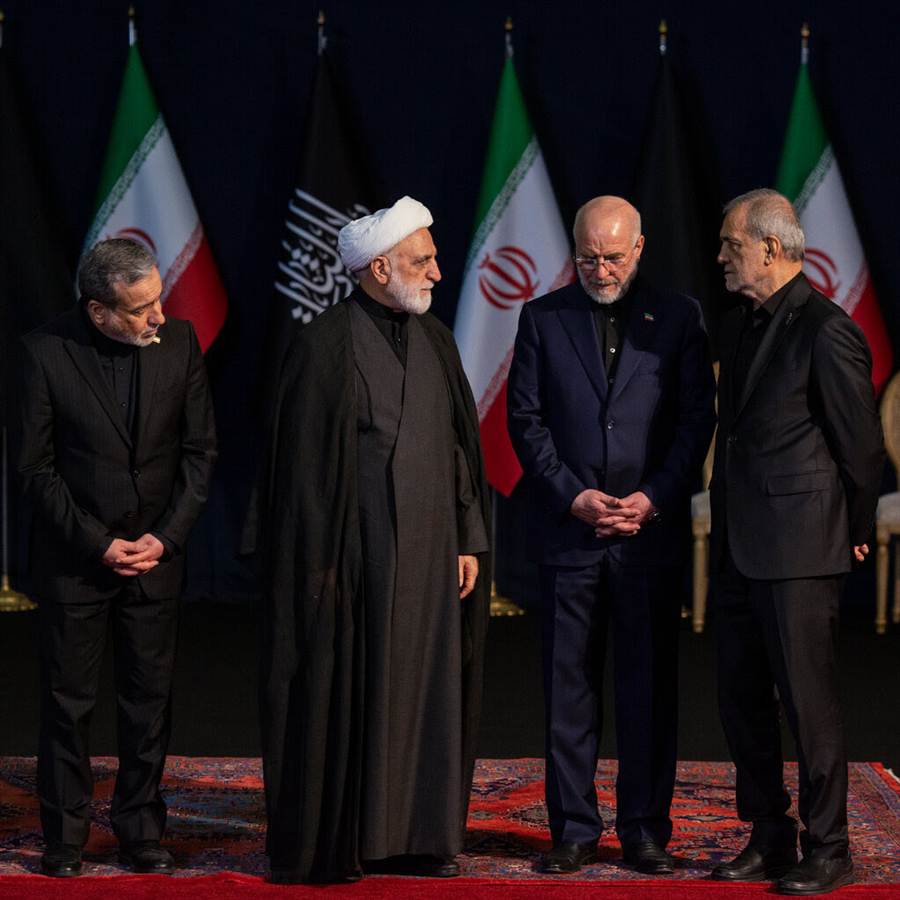
The attacks on Pezeshkian and Araghchi were a manifestation of a divide roiling Iran. On one side: the faction that thinks building a better future requires an end to hostilities with the U.S. On the other: hard-liners who would prefer that the country go back to war rather than continue negotiating with a treacherous enemy.
An end to the war depends in part on the actions of Trump. But it also requires those in Iran who favor negotiations to prevail in this internal struggle. And the current state of the conflict — which seems to be trapped in a cycle of tit-for-tat attacks and aggressive rhetoric — might well make that harder.
Whose leverage?
Ever since the U.S. and Iran signed a memorandum of understanding to work toward peace last month, senior Iranian officials and prominent political figures have been fighting openly, my colleague Farnaz Fassihi reports. (Always read Farnaz on Iranian politics.)
“I spit on this era where they kill our leader and then we speak of peace with the United States,” one hard-liner strategist recently declared at a rally in Tehran. Instead of negotiations, he called for revenge.
I spoke to Ellie Geranmayeh, an Iran expert at the European Council on Foreign Relations. She told me that the hard-line case rests on the idea that the U.S. doesn’t really want peace — it just wants a pause in the fighting while it prepares for the next war.
They see the memorandum of understanding as “essentially a ruse,” she said. “They believe the Americans are playing for time” and that “those who argued for a pragmatic end to the war have been naïve.”
 |
| Mashhad, Iran, yesterday. Arash Khamooshi/Polaris for The New York Times |
From the perspective of Iranian hard-liners, the U.S. has been using this period of relative calm to attempt to take away Iran’s various forms of leverage in the conflict, while trying to retain its own:
| The U.S. brokered a separate deal between Israel and Lebanon aimed in part at disarming Iran’s proxy, Hezbollah, which many in Iran believe could enable Israel to keep its soldiers in Lebanon.It has limited the amount of Iran’s frozen funds it is prepared to release.And it has encouraged tankers in the Strait of Hormuz to take a southern route, along the coast of Oman, rather than respect Iranian demands that all traffic register with its newly minted Hormuz transit authority. |
The tensions over the strait in particular are fundamental. It is Iran’s primary form of leverage — the tool that allows Tehran to hold the world economy hostage. But the U.S. can’t tolerate that.
The question now is whether there’s a way out of this cycle.
Politics in flux
Iran is navigating these complicated negotiations with the U.S. at a time when its own politics are in flux — largely because Israeli strikes killed the man who once had unquestioned authority over Iran. Now his son is ostensibly in charge.
Any new leader would need time to consolidate power. But Ayatollah Mojtaba Khamenei’s circumstances are uniquely tricky. Badly hurt in attacks that killed his father, wife and daughter, he has yet to be seen in public, not even at his father’s funeral. He has expressed tentative support for the negotiations, but his absence has allowed those in the hard-line camp to insist that he is being manipulated.
The already challenging task of those pushing for peace has been made more difficult by the U.S.’s maximum pressure strategy, Geranmayeh said. The more pressure the U.S. puts on Iran, “the more this face of the Islamic Republic of Iran will double down on maximum resistance,” she said. “We mustn’t forget that, just like in America, in Iran, hard-liners are a minority, but they’re a powerful minority.”
Trump might not want to return to war with Iran. But it also might not be entirely up to him.
More on the Middle East:
| The U.S. said it sharply increased its attacks on Iran this week, stating that it hit 15 times the number of targets it struck during a round of attacks last month.The final stage of the funeral procession for Ayatollah Ali Khamenei was in the holy Iranian city of Mashhad.An Israeli airstrike killed a Palestinian aid worker in Gaza, according to his family and colleagues. Israel has been carrying out frequent airstrikes in Gaza despite a U.S.-backed cease-fire deal with Hamas.The Palestinian Authority set a November date for parliamentary elections; if it goes ahead, it would be the first such vote in over two decades.Israel said it was investigating after it confirmed the authenticity of a widely circulated photo that showed a stripped and bound detainee. Israeli rights groups said it depicted a war crime. |
| MORE TOP NEWS |
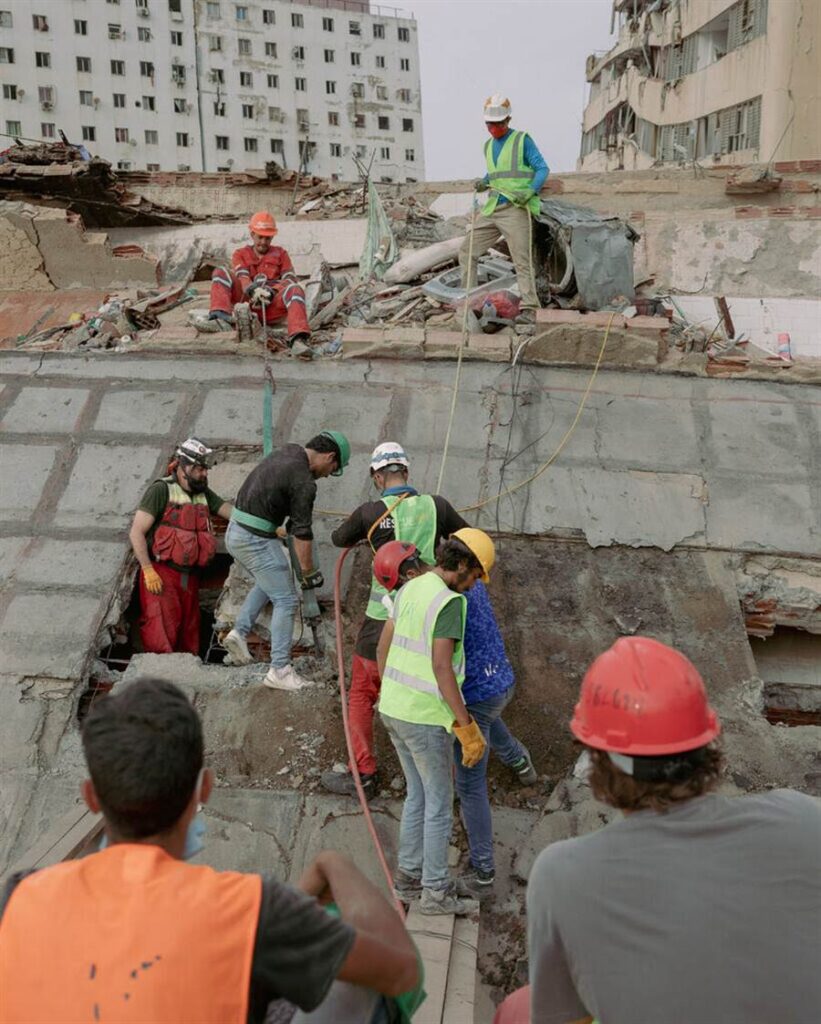
| Two weeks after Venezuela’s earthquakes, survivors are digging through ruins with their bare hands to find the bodies of loved ones.The A.I. economy has created a $3.2 trillion deal-making frenzy.The German carmaker Volkswagen will cut the number of models it offers by as much as half to reduce costs and better compete with Chinese companies. |
WHAT ELSE IS HAPPENING
| Czechs Linda Noskova and Karolina Muchova reached the Wimbledon women’s final. Read a recap of the day.Global warming could kill off a third of the plants used by communities in the Amazon.Wally Funk, an accomplished female pilot who became the oldest person to fly in space, died at 87. |
TOP OF THE WORLD
The most clicked link in your newsletter yesterday was a video about the symbols at Khamenei’s funeral.
| WORLD CUP |
A post-colonial clash
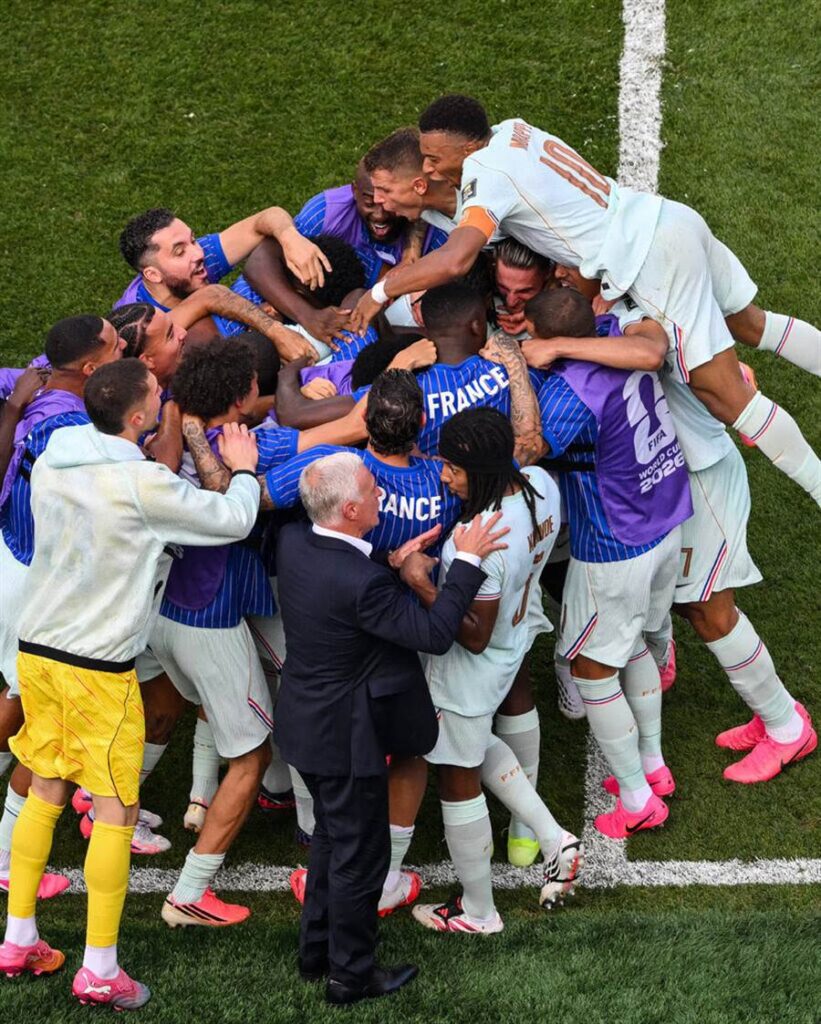
Kylian Mbappé missed a penalty and scored a superb goal against Morocco as France marched into the semifinals for the third tournament in a row. That France have not fallen behind once at this World Cup is a testament to their brilliance, according to our football writers.
The underdog, now a powerhouse: Six of Morocco’s players were born in France, illustrating the complex ties between France and its former protectorate.
Kylian and Lionel: Both the players’ tournaments are uncannily similar. When Messi scores, Mbappé follows. When one misses, the other does, too, as if they are bound together.
Nike versus Adidas: The two largest sportswear companies in the world are spending millions of dollars in a duel over the future of football.
| FASHION ERA OF THE DAY |

Meme couture
If a dress doesn’t go viral, does it even matter? This week in Paris, designers like Duran Lantink of Jean Paul Gaultier are making clothes not so much for the customer as for social media, with dresses resembling drainage pipes vomiting yards of tulle. Wearable? Not at all. Ridiculous? Yeah. The future? Very possibly.
| MORNING READ |
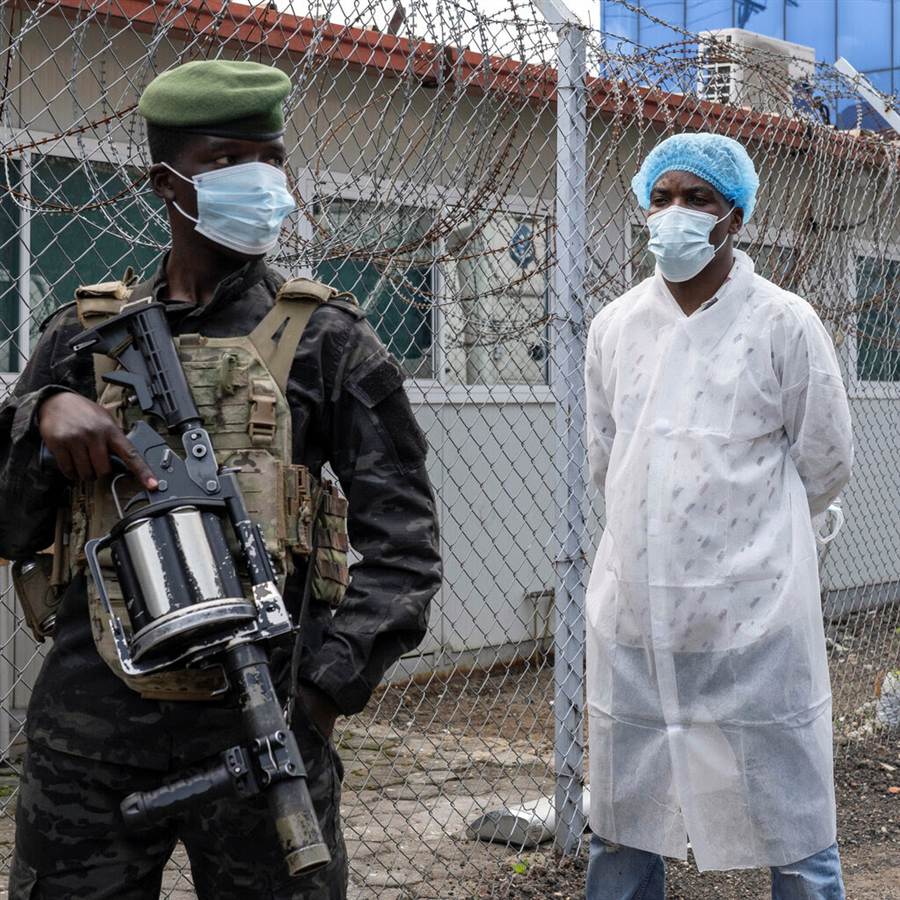
The deadly Ebola outbreak in the Democratic Republic of Congo is moving fast, raising fears that it could expand into the territory held by the powerful militia M23.
Officials say a full-scale outbreak in M23-controlled areas would be devastating for civilians trapped by the fighting and the virus. But it may also present an opportunity for the rebels. If M23 manages to contain Ebola, it could bolster the image it has cultivated as a legitimate authority, at a time when the Congolese government is struggling to control the outbreak. Read more.
| AROUND THE WORLD |

Now showing at a hospital near you
The nonprofit MediCinema runs movie theaters inside hospitals around Britain. The audience at a recent screening of “Toy Story 5” included a woman waiting to give birth, a 4-year-old with an autoimmune condition and a 71-year-old with a bone condition whose youngest son had come to watch the movie with her.
“Sometimes when you’re in hospital, patients lose their sense of identity,” one nurse said. “But when they come here they can be themselves.” Read more about the program — and the only movie genre it tends to avoid.
| RECIPE |
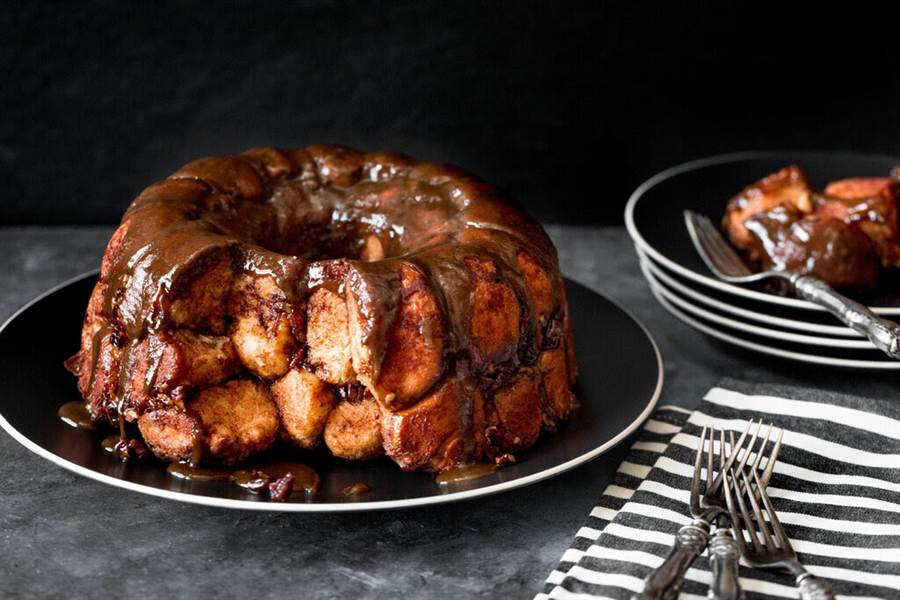
Monkey bread is a hybrid of several classic treats: sticky buns, cinnamon rolls and a Hungarian coffee cake called aranygaluska. Since it rises high in a Bundt pan, the presentation is pretty spectacular. You can slice it, but it’s more fun to just put it on the table, sit down and invite your guests to pull it apart.
