

| August 3, 2026 | By Alicia P.Q. WittmeyerI’m the editor of The World. |
Good morning, world. If you’ve missed her (I have!), don’t worry — Katrin will be back tomorrow. For now, today’s newsletter is on what happened in Ceuta, a Spanish territory in North Africa, last week.
Why did 50,000 to 60,000 people rush en masse from Morocco to a Spanish exclave over the course of two days? We know why, in a general sense — because they thought they’d find better opportunities in Europe. But what prompted the sudden, seemingly coordinated surge? That’s the mystery.
Today I’m writing about what we do and don’t know about Ceuta, and why it matters that we still don’t understand exactly why events unfolded as they did.
Also:
| Trump calls off strikes on Iran The latest “Spider-Man” is a hit American burritos for Mexicans |
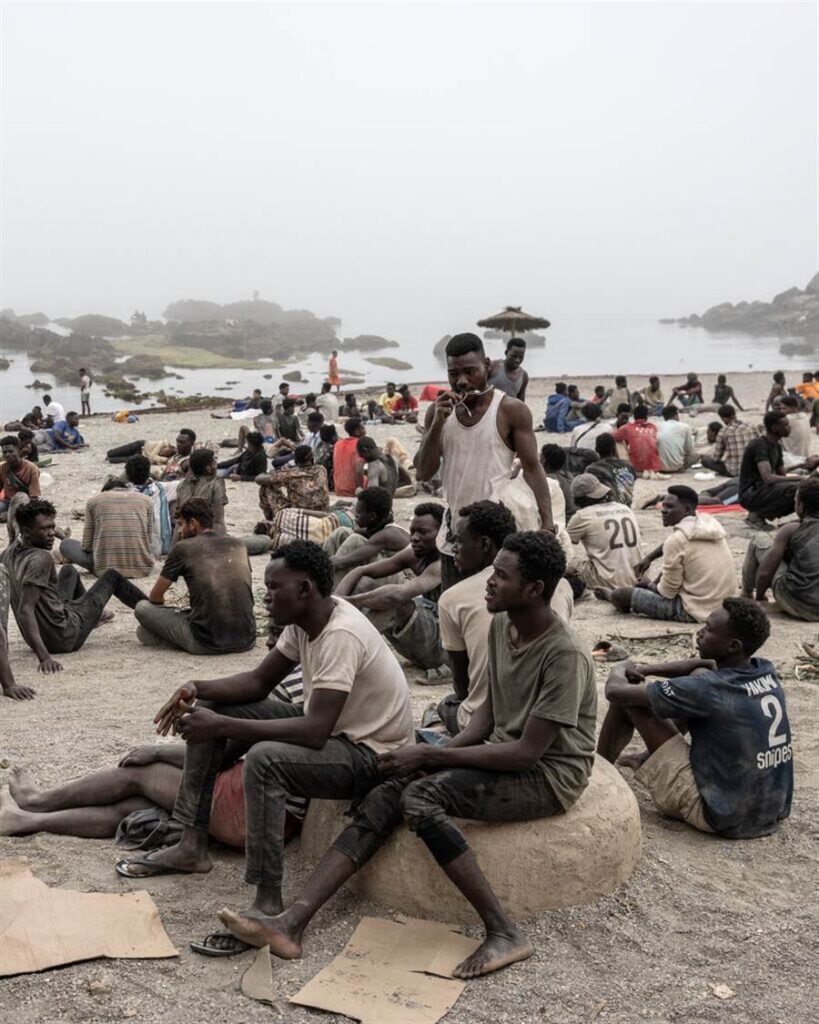
Why did 50,000 people rush the Spain-Morocco border?
The Spanish exclave of Ceuta is tiny. About 10 kilometers long, the peninsula is normally home to about 84,000 residents. But for a brief period last week, the population nearly doubled.
My colleagues who rushed to Ceuta to report from the ground described surreal scenes — thousands of young men wandering around, unsure of what to do or where to go, in a place with no capacity to feed or shelter them. Scared residents hunkered down in their homes, furious at the government for allowing this to happen.
By Saturday, things had already calmed down significantly. Most of those who’d arrived had returned home. But the roughly 48 hours of chaos promises to have lasting repercussions in Europe, a continent already acutely sensitive to issues related to migration from less wealthy countries.
The reaction from the continent’s far-right leaders was near-instantaneous — the surge was the result of the welcoming immigration policies of Spain’s prime minister, Pedro Sánchez, they said. Sánchez, for his part, blamed human traffickers for spreading misinformation about the ease of settling in Spain. Some of the migrants themselves, though, told stories about being waved forward by Moroccan border guards, who encouraged them to cross.
We still don’t know which of these, if any, was the primary factor — and the gap between these explanations matters. Because they have different implications for what the authorities can do to prevent this from happening again.

Spain’s fault? Or Morocco’s fault?
My colleague Jonathan Wolfe tried to sort through some of the theories of what happened last week. Ultimately, the experts he spoke to stressed, it’s still too early to say for sure. But the theories can roughly be broken down into two categories:
| The surge was driven by the actions of the Spanish authorities.The surge was driven by the actions of the Moroccan authorities. |
Those in the “this was Spain’s fault” camp include those who argue that Sánchez — the rare pro-immigration politician in Europe these days — inadvertently encouraged this.
In particular, they cite a decision to allow more than a million migrants living illegally in Spain to apply to formalize their status, which made headlines this year.
They also note a recent ruling by Spain’s Supreme Court that, under certain conditions, bars the summary return of migrants intercepted at sea while they try to reach Spain. Many of those who reached Ceuta last week swam around the sea wall separating Spain and Morocco. Sánchez himself blamed human trafficking networks for misleading would-be migrants about the consequences of the ruling.
Those who think the Moroccan authorities are at fault include analysts who remember a similar incident in 2021, when Morocco’s normally fierce border guards let as many as 12,000 people surge into Ceuta. That episode has since been widely understood as an effort to pressure Spain for more aid money and to influence its position on the issue of the Western Sahara region.
The theory has been bolstered by some accounts from the migrants interviewed by my colleagues, who described being pointed in the right direction by Moroccan police officers: “They just kept saying, ‘Go that way, go that way,’” one recalled.
If this is the case, what Morocco might be pressuring Spain for this time isn’t clear. Some analysts have suggested it may be a response to Spain’s recent efforts to strengthen ties with Morocco’s neighbor and rival, Algeria. One Moroccan analyst, though, told Jonathan that the theory didn’t make sense. The surge coincided with Morocco’s Throne Day celebrations, which try to highlight the country’s economic achievements. A wave of migrants entering Spain would “send contradictory signals” and “undermine this message,” he said.

Why it matters
The two categories of explanation aren’t incompatible. Pull factors drawing migrants to Spain could combine with an orchestrated effort by Morocco. But it does matter which one takes primacy.
Addressing state-orchestrated migrant surges requires dealing with the states that are orchestrating them — not just with pull factors.
In 2021, when Belarus lured in people from Iraq, Syria and Afghanistan in order to push them toward E.U. borders, European officials understood it as a form of hybrid war, and responded, in part, by hardening the borders — but also by imposing sanctions on Belarus. At the height of the migrant crisis in the 2010s, Europe cut a deal with Turkey to host the millions of Syrian refugees who wanted to get to the continent; in the years that followed, Turkey regularly threatened to send refugees over the border as a means of securing additional concessions from the E.U.
If the primary driver of what happened in Ceuta was Spain’s recent policy shifts on immigration, then it’s possible a less welcoming stance toward immigrants could have an impact. But if Morocco encouraged last week’s crossings, it’s not clear that different policies in Spain would have been enough to stop them.
It will probably take months to sort out what, precisely, drove so many people to make the same risky choice at the same time; at least 72 people died trying to enter Ceuta. But Spanish opposition leaders and far-right politicians have already begun arriving in the exclave to argue for the dangers of Sánchez’s policies, and some European leaders have talked about suspending Spain from the Schengen area. The Ceuta mystery is not resolved yet, but the fallout has already begun.
The latest:
| “Do you think if I had a job I would have gone?”: The crisis has exposed the economic despair felt by Morocco’s young people.A small group of migrants who arrived from Morocco are holed up on a seafront, tired, hungry and vowing to stay. |
| MORE TOP NEWS |

| Trump traveled to New Jersey on Friday after a cabinet meeting at Camp David. Pete Marovich for The New York Times |
Trump calls off strikes on Iran
President Trump said late Saturday that he had canceled a series of strikes on Iran because of progress on a deal that would include the immediate reopening of the Strait of Hormuz. He said yesterday that talks with Tehran would begin today.
“I was asked to by Saudi Arabia, by U.A.E., by Qatar and by Iran,” Trump told reporters last night. “We were all set to go. Just about at this time, right now. The reason they asked is they think there’s a deal.”
The whiplash from war to tense calm has become routine as Trump tries to resolve the conflict with Iran.
A wider war: Iran recently devised a plan to expand the fighting by using its proxy forces in Yemen, Iraq and elsewhere to escalate attacks, my colleagues Farnaz Fassihi and Neil MacFarquhar report.
| OTHER NEWS |
| The Pakistani Taliban claimed responsibility for a suicide bombing that killed at least 14 people outside a police station in Pakistan’s Swat Valley.Israel bombarded Gaza, killing at least two people, days after Trump announced a deal to advance a cease-fire there.An improvised bomb detonated at a restaurant in central Moscow, killing three people and wounding 21. The Russian authorities opened a terrorism investigation.China has cast itself as a champion of low-cost, open-source A.I. Those same models could threaten the Communist Party.An unsecured Chinese police dashboard offered a rare window into how the authorities there track foreigners by collecting and aggregating vast amounts of private data.The U.S. and Japan made a coordinated intervention in the currency markets to stabilize the weakening yen last week, a rare move that last occurred more than a decade ago.WestJet, one of Canada’s largest airlines, canceled hundreds of flights, as the company’s flight attendants walked off the job. |
WHAT ELSE IS HAPPENING

| The new Spider-Man movie, “Brand New Day,” was expected to take in $927 million worldwide on opening weekend, defying Hollywood’s superhero slump.Nirmal Purja, a renowned British Nepali mountaineer, was found dead after an avalanche struck Pakistan’s Broad Peak. He was 43.The singer Ariana Grande will step away from public life after her world tour. Grande has faced increasing scrutiny in tabloids and on social media about her weight. |
TOP OF THE WORLD
The most clicked link in your newsletter on Friday was about Rome’s pizza renaissance.
| SPORTS |
Football: After FIFA scrapped its divisive plan to sell a stake in the World Cup to private investors, Gianni Infantino, FIFA’s president, faced questions.
| D.I.Y. PROJECT OF THE DAY |

Saving Japan’s heritage homes
Abandoned kominkas, or traditional Japanese folk houses, are scattered across Japan, where they are no longer treasured the way they once were. But they’re not necessarily unwanted: Enthusiasts are dismantling and rebuilding them overseas.
| MORNING READ |

At Pioneer Plus, an exclusive nightclub in Myanmar, a private table for the evening — with hookah, imported fruit and pyramids of frosted shot glasses — costs hundreds of dollars to book.
A civil war in Myanmar has turned more than half of the country into a battlefield. But it has largely spared the cities, and even in war, the partying class continues to party. Take a look at the surreal nightlife thriving amid war.
| AROUND THE WORLD |

A new U.S. export to Mexico: Mexican food
Chipotle, the Mexican-inspired food chain that is ubiquitous in the U.S., is making a bold bet: expanding into Mexico to sell to Mexicans an Americanized take on their own cuisine. The chain has changed absolutely nothing about its menu, not even the level of spiciness.
Its first location is at a high-end mall in Monterrey, a city near the Texas border with strong ties to the U.S. Chipotle says it hopes to offer an option between cheap street food and fine dining, with prices about 25 percent lower than in the U.S. But that’s no guarantee of success: Taco Bell, another Mexican-inspired American chain, has already failed south of the border twice. Read about Chipotle’s gamble.
| RECOMMENDATIONS |
Listen: Musicians are cinephiles, too. Our music critic compiled songs that reference filmmakers. Here’s the playlist.
Watch: The new film “Tony” evokes Anthony Bourdain’s coming-of-age in a Cape Cod town.
Care: Chronic inflammation is linked to many disorders, such as diabetes, cancer and Alzheimer’s. Here’s what the latest research shows.
Try: Apple’s Siri got an A.I. upgrade. These prompts can show you its new tricks.
| RECIPE |

Panzanella, the Tuscan bread salad, is even better when you head outside to the grill to make it: Charring the bread brings a nutty, smoky edge to the sweet tomatoes, corn and cucumbers.
