
| May 1, 2026 | By Katrin Bennhold |
Good morning, world. I remember my first iPod. It was white and slim and just the coolest, most beautiful thing. Going running with a thousand songs in my pocket was life-changing.
I can’t say I feel the same about my iPhone 16, despite it containing all the world’s knowledge, and near-infinite songs. iPhones are everywhere these days. Even my mum has one. And when is the last time Apple, now a $4 trillion company, put out something that felt as game-changing as the iPod, or the original iPhone?
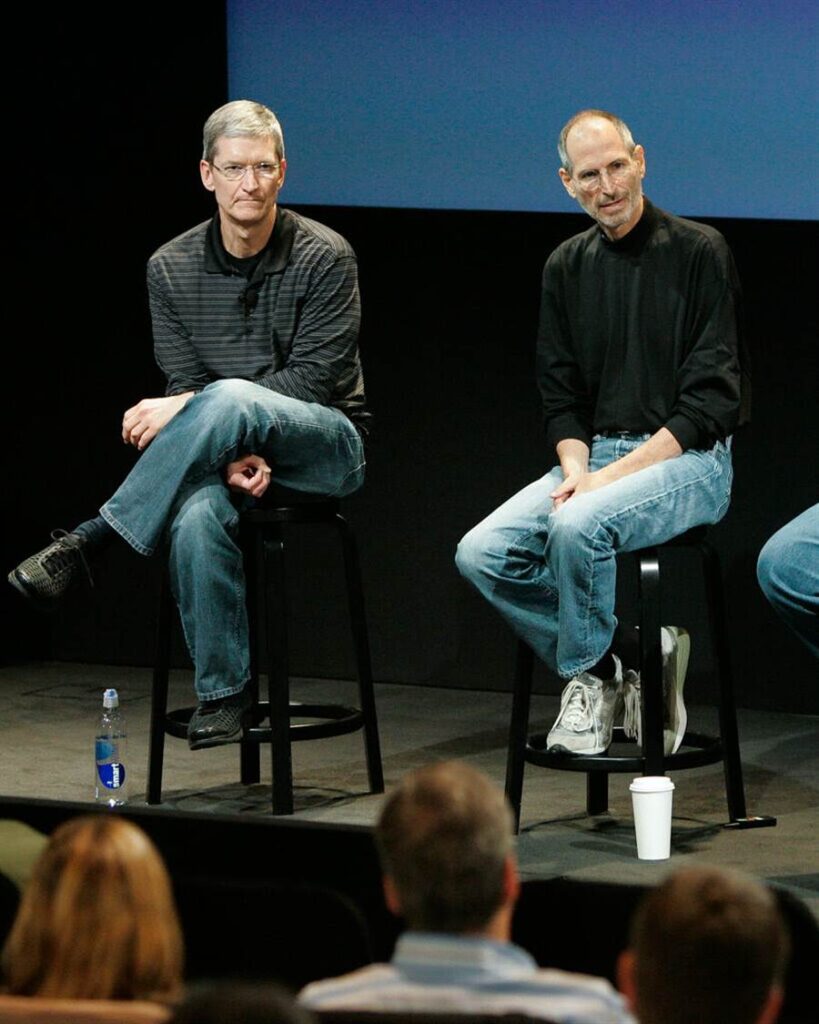
Last week, Tim Cook — the successor to the legendary Apple chief executive Steve Jobs — announced he’d be stepping down. I wanted to use the opportunity to talk to my colleague Tripp Mickle, who has written a book about Apple, on the state of the company. It’s one of the most profitable in the world. But can it become cool again?
Also:
| The mood in Iran Epstein suicide note Swimming with orcas |
Where does Apple go next?
Tripp, when we talk about Apple chief executives, there’s no getting away from the Steve Jobs mystique. How real is it?
It’s real. Under Jobs, Apple was a place of imagination and innovation. It went from releasing the iMac — the signature, candy-colored computers — to the iPod, which changed the way we listen to music, to the iPhone, which started the smartphone revolution.
All of that happened in around one decade. Jobs had the vision for what people wanted, and he was able to harness all these creative forces within Apple to make it happen. He made Apple the signature American company of the past 20, 25 years.
You wrote a book called “After Steve: How Apple Became a Trillion-Dollar Company and Lost Its Soul.” What was Apple’s soul, and how did the company change under Tim Cook?
The soul of Apple, as embodied by Jobs, was this philosophy of living at the intersection of technology and the liberal arts, or, put more simply, creativity. That infused all the products they were bringing into the world.
When Jobs died, there was a real question from industry peers, Wall Street and even people inside the building about whether Apple could still innovate. Almost nobody thought the company would have the success that it had over the previous 15 years.
The reality has been more complicated. Under Cook, Apple has been tremendously successful. But it became a different company, more conservative, more focused on making the most money possible with the products that Jobs had helped originate. It’s more of an operational juggernaut and less of a creative powerhouse.
 |
| Qilai Shen for The New York Times |
How would you describe Cook’s reign?
One of the most underappreciated things about Cook is that he figured out how to make this company that was built around Jobs function without Jobs. He had to create a company that was more democratic, where decisions were made by a team of leaders versus a more autocratic approach under Jobs. That wasn’t an easy transition.
If you ask people at Apple who worked with Jobs the hypothetical question, “What would it be like if he had lived?” they’d tell you that Apple would be a lot more interesting as a company — but not as rich.
Jobs would have taken more risks, made more mistakes, started products that flopped. Cook was laser-focused on the bottom line.
And what made Cook so very, very good at making money?
One answer is China. In 2013, he persuaded the Chinese government to allow Apple to sell iPhones in China. He got permission for China Mobile, China’s largest wireless carrier, with 750 million subscribers,to carry the iPhone. To this day, Apple’s China business is the envy of most companies.
He also recognized around 2017, 2018 that iPhone sales were slowing and began looking for other ways to make money. He shifted the company’s focus from developing devices to selling software and services across those devices. Apps, a credit card and TV shows kept people reliant on Apple.
So there’s Jobs, the creative visionary, and Cook, the operations guy. Where does Cook’s successor, John Ternus, fit in?
He comes from the product side and has been there since the early 2000s, so he’s very familiar with that period of innovation and creativity under Jobs. But he has also been part of the Cook era of making careful, calculated choices.
So he’s this hybrid figure. The hope is that he’ll do both: bring back more of a spirit of innovation, and keep the profits flowing. But we just won’t know until he gets into that seat.
 |
| John Ternus at an Apple product event in 2018. Bebeto Matthews/Associated Press |
What are the biggest challenges coming his way?
There are two — one technological, one geopolitical.
The technological challenge is that we are in the A.I. era, and Apple is behind. Inside Apple, they’re very concerned that A.I. could lead to a new operating system and that if Apple doesn’t develop its own A.I. operating system, the iPhone experience as we all know it will be broken by somebody else who develops it. So they’ve got to figure out how to control their own destiny.
The other challenge is geopolitical. Apple is still heavily reliant on China to make its smartphones, and being Apple’s chief executive requires navigating the adversarial relationship between the U.S. and China. Tim Cook proved to be a diplomat and statesman. He was very skilled at working with government ministers in Beijing and officials in Washington, including President Trump. Ternus will have to learn that.
What’s the next innovation up Apple’s sleeve? Will Ternus start his term with some nifty new gadget?
This transition is very stage-managed, very scripted. They’ve been working on a foldable iPhone that reportedly could be released in September. That coincides with when Cook steps down and Ternus steps in, so he might be the one bringing this new iPhone to the world. Watch this space.
Related: The Hard Fork podcast discusses Apple’s new era.
| MORE TOP NEWS |
MIDDLE EAST

| On the surface, Iranian society appears to be functioning normally for a country that was recently under bombardment. That is all a veneer, many Iranians say, masking pain and a loss of hope.Israeli forces in southern Lebanon and northern Israel are contending with a new threat from Hezbollah militants: exploding drones designed to evade electronic jamming. |
OTHER NEWS
| At least 150 members of the Fulani ethnic group in Nigeria’s northwestern region have died in a camp run by Nigeria’s military in recent months, Amnesty International said.European officials are investigating attacks on Jewish targets claimed by an Islamist group that may have ties to Iran.A suicide note purportedly written by Jeffrey Epstein has been hidden in a New York courthouse for nearly seven years.Myanmar’s military government moved Daw Aung San Suu Kyi, the country’s ousted civilian leader, from prison to house arrest.A prominent Kuwaiti-American journalist said Kuwait revoked his citizenship after detaining him for weeks over social media posts about the Iran war. |
WHAT ELSE IS HAPPENING
 |
| In Waterloo Place, London. Kin Cheung/Associated Press |
| Banksy appears to be taking credit for a large statue in London that displays a man in a suit marching with a flag billowing onto his face.The Venice Biennale jury resigned amid a furor over its decision to not give awards to artists from countries whose leaders were being investigated by the International Criminal Court.Korean Air said it would ban roosters on flights from the U.S. to the Philippines, after an animal welfare group said breeders were illegally transporting them for cockfights. |
Top of The World
The most clicked link in your newsletter yesterday was about King Charles’s subtle rebuttals to Trump.
| SPORTS |
Golf: Saudi Arabia’s sovereign wealth fund confirmed it would withdraw funding from LIV Golf.
World Cup: Iranian officials were denied entry into Canada for the FIFA Congress in Vancouver.
| ENDANGERED SPECIES OF THE DAY |

Asiatic cheetahs
One of the world’s fastest land animals, now found only in Iran, has been on the brink of extinction for years. But Iranian conservationists say they have recorded the existence of several new adults and cubs, a rare glimmer of hope for a country devastated by war.
| MORNING READ |
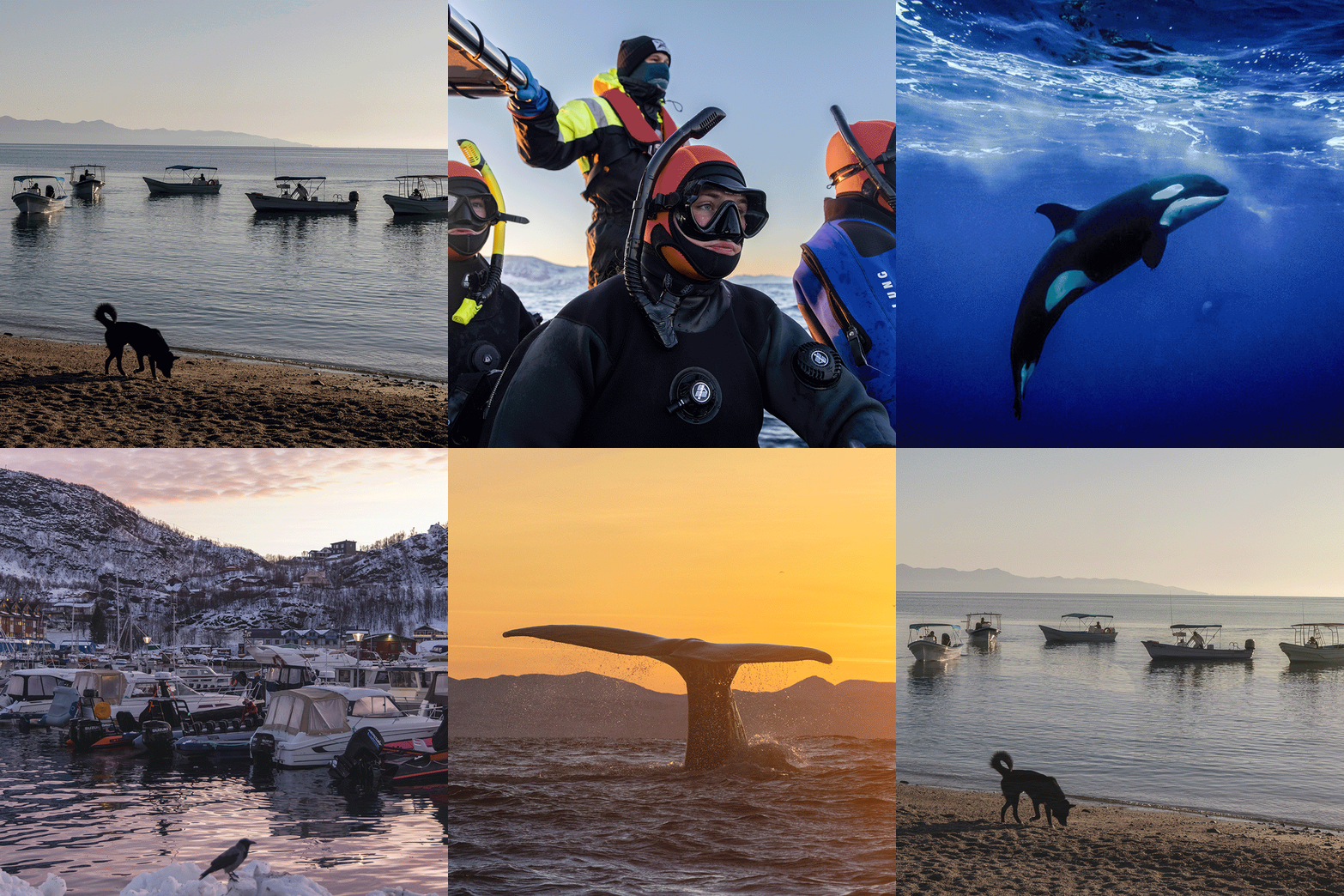
Only two places in the world allow you to swim in open water alongside a killer whale: La Ventana, Mexico, and Skjervoy, Norway. Growing crowds, fueled by social media, are descending on the quiet coastal towns, bringing money and friction in equal measure.
Boats jostle for position, some cutting through the orcas’ path. Drones buzz overhead despite being prohibited. On busy days, more than 20 boats at once can surround small groups of orcas. As one person told our reporter: “People love these animals to death.” Read more.
| AROUND THE WORLD |

Young, buff and getting elders ready for lunch
Japan’s nursing homes are dealing with an influx of elderly patients but a lack of workers to care for them. Some are turning to an unconventional solution: recruiting martial arts fighters and bodybuilders to become caregivers.
Bodybuilders in tank tops help patients brush their teeth and work out. Mixed martial arts fighters take turns cooking for residents and helping them bathe. And retired sumo wrestlers help care for men rejected from other facilities because of their weight.
The unusual arrangement provides athletes with steady work and provides the care facilities with vitality and excitement. Read more.
| RECIPE |

What if you could make bakery-quality light, flaky croissants in your own kitchen? Watch the step-by-step video to see how Claire Saffitz does it. “I made croissants (and all types of laminated doughs) professionally for about 40 years, and this is the best recipe I’ve ever seen for successfully making them yourself,” one reader wrote.
