
November 6, 2026  | By Katrin Bennhold |
Good morning, world. The first time I heard K-pop was in 2012. Psy had just had his breakout hit, “Gangnam Style,” and we were all doing the horse dance.
K-pop has exploded in popularity in the years since. My kids listen to BTS and watch “KPop Demon Hunters.” It has put South Korea on the world’s cultural map. But as my colleagues report, there’s also a dark side to all this. I spoke to Sarah Hurtes and Jin Yu Young, who have been investigating the case of the K-pop girl band NewJeans, and their secretive — some say exploitative — contracts.
Also:
| Russell Brand found guilty of rape Iran and nuclear talks Pilates bros |
 |
| Danielle, a member of NewJeans, performs on stage in Hong Kong. Lam Yik Fei for The New York Times |
Secret deals, tight control
So, Yu Young, tell me about NewJeans. Who are they, and what did they do that got so much attention?
NewJeans is one of the biggest K-pop bands of the last few years. They released their debut song in 2022, and it immediately shot up the charts. Industry insiders loved them because they had this really clean image. They were a bunch of fresh-faced teenagers singing about coming of age and having crushes.
But NewJeans hasn’t performed in a year, and it hasn’t made any new music. Today, part of what the singers are famous for is the fact that they tried to quit their label — and weren’t allowed to. The label took them to court, and the court ordered NewJeans members to serve out their contracts.
Wow. So, Sarah, why was this such a big deal?
By trying to quit — and being barred from doing so — NewJeans trained a spotlight on what many see as the controlling and exploitative contracts that are pervasive in K-pop. That’s kind of what prompted our investigation. We wanted to see what was in these secret contracts. Eventually we got hold of them, and what we found really surprised us.
What was in them, Yu Young?
Among other terms, the contracts bar group members from criticizing the label, even if what they say is true. They’re not allowed to have “inappropriate romantic relationships” or “insincere attitudes.” Another clause states that once the contracts expire, the label will sharply reduce the album and streaming revenues it pays to the members. Not only that, the label retains the right to use their voices, faces and identities, which could be used to sell new content generated by A.I.
Creepy!
And remember, the members of NewJeans are very young. They’re mostly in their early 20s now, but they all signed these contracts when they were minors.
Another feature of the contracts: high exit fees. Four of the five NewJeans members were forced to serve out their contracts, but one had hers terminated, which triggered this incredibly high fee. She and her mother could face millions of dollars in debt. Her lawyer said that’s because the label wanted to send a warning to other artists: If you try to leave, this is what we can do to you.
 |
| NewJeans perform on stage in Hong Kong. Lam Yik Fei for The New York Times |
Sarah, how unique is this in the music industry? We’ve heard stories about American pop stars who’ve dealt with exploitation from labels too, right?
What various people have told me is that the system today in South Korea is similar to a system that existed a long time ago in the U.S., in which, basically, one person or one company acts as label, manager, agent and lawyer, controlling virtually every facet of an artist’s career. That’s mostly no longer the case in the U.S. There are separate lawyers, agents and managers who represent the artist’s interests, not the label’s. In South Korea, the label still holds all the reins.
Is there something that makes the K-pop industry particularly prone to this sort of hyper-controlling contracts, Yu Young?
I think some of it is cultural. South Korea is a country that has developed very fast in the past half century. The concept of sacrifice for success is very ingrained. This idea that someone gives up everything for a dream is not uncommon and it starts very young.
But some of it is related to the business model. Only a tiny percentage of aspiring stars make it. The labels invest lots of money in dozens and dozens of young people who they train, most of whom will never earn that money back. So when one actually becomes a star, their success has to cover the costs of all the others who didn’t.
So Sarah, this is basically a business model…
The labels see these contracts as a way to make sure they get a return on their investment. They can spend hundreds of thousands of dollars building a group, and they make that money back mostly through tours and brand deals. So from their side, if an artist gains weight or gets into an “inappropriate” romantic relationship, that could hurt their image, and their profits.
Is anyone trying to reform the industry in response to all this?
There’s been some push for reform, but it ultimately hasn’t changed much. For example, one member of a really famous boy band tried to form South Korea’s first performers’ union, but that initiative went nowhere.
In 2009, the South Korean government created a standard contract template. It had protections for minors: limits on how much they could work, and keeping them in school, for example. But what we saw with NewJeans is that labels can just take those clauses out.
Yu Young, let’s close on a slightly more empowering note. NewJeans used to make great music, right? And maybe someday will again. What NewJeans song should we highlight for readers?
I would say “Attention”! It’s one of their most famous songs. It’s very vibrant and bright and fresh. It still plays everywhere in South Korea. Even though they haven’t produced music in a while, they’re not forgotten. I hear them everywhere, and that song in particular.
Read the full investigation here.
| MORE TOP NEWS |
 |
| Leon Neal/Getty Images |
Russell Brand found guilty of rape
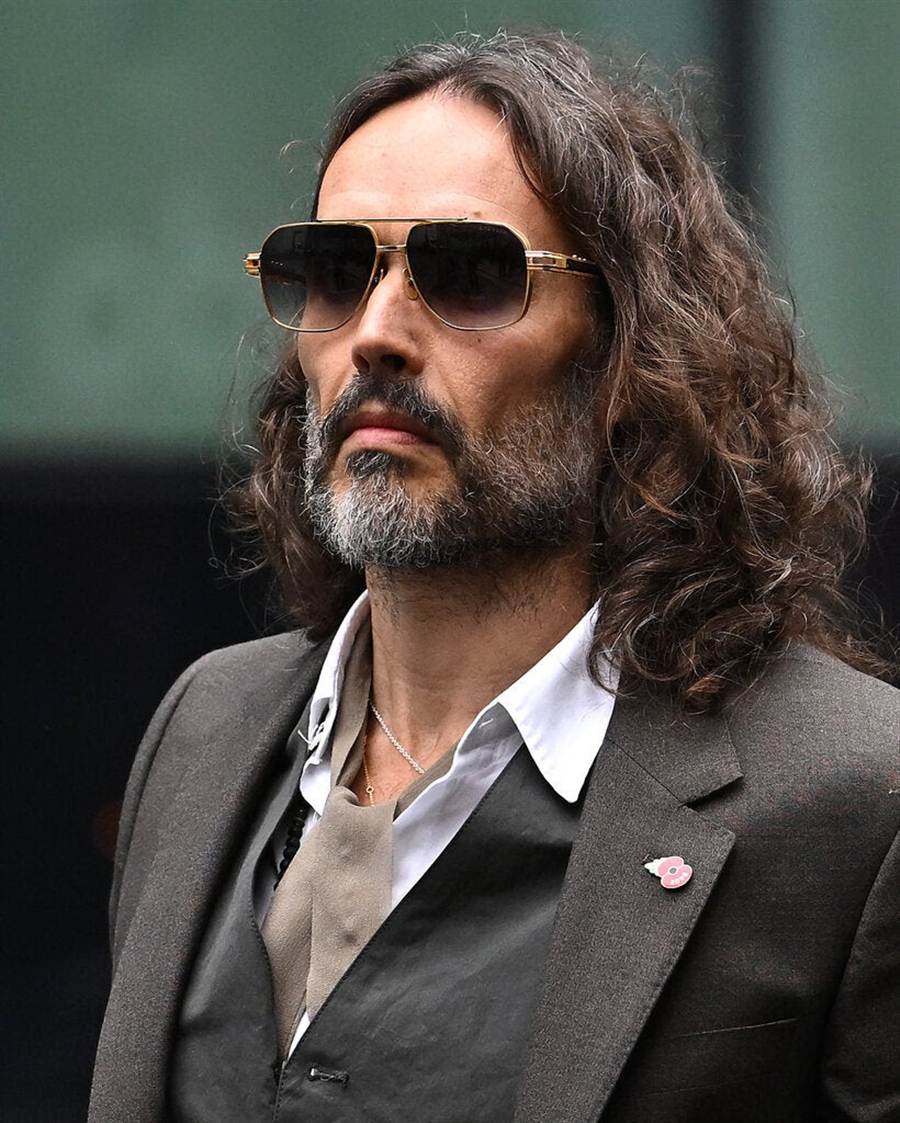
Russell Brand, the comedian and actor turned conspiracy-minded YouTuber, was found guilty in a London court of one count of rape and three counts of sexual assault. The judge in the case said Brand would be sentenced to “significant” time in prison, and denied him bail.
The jury heard testimony from the six women who said that Brand had assaulted or raped them, sometimes only moments after they had met him, between 1999 and 2009. He was found not guilty of two other counts of rape and one count of attempted indecent assault.
Britain’s tabloid newspapers and many comedy audiences once celebrated Brand’s promiscuity and lewd humor. More recently, as sexual assault allegations mounted, he became better known for YouTube videos featuring interviews with prominent U.S. conservative figures, some of whom have come to his defense.
| OTHER NEWS |
EUROPE
| New bomb threats targeted several European airlines, disrupting over two dozen flights. All the planes landed safely, some escorted by fighter jets. More than half a million people poured onto the streets of France again, protesting as part of a general strike. A British doctor who tested positive for Ebola in the Democratic Republic of Congo has returned to the U.K. for treatment. |
MORE NEWS
| Iran is reviewing a set of proposals that could shape the future of its nuclear program, representing a potential breakthrough in diplomatic efforts to end its war with the United States. Prime Minister Benjamin Netanyahu and his allies are claiming without evidence that Arab voters stole Israel’s election, as parties jockey for the chance to form a governing coalition. Paraguay’s president resigned after a major bank with close ties to his administration went under, leaving half the country’s population without access to their money. The United Arab Emirates hired Colombian mercenaries to fight alongside a notorious Sudanese paramilitary group, United Nations investigators have found. The U.S. stock market plunged a day after a post-election rally, as investors fretted about the rising costs in the tech sector. New Zealand voters are discontented with rising costs and ready to “flip the table” on the two major parties in Saturday’s elections. Bangladesh said it would raise the minimum wage for garment workers, after protests that shut down hundreds of factories and led to sporadic violence. |
TOP OF THE WORLD
The most clicked link in your newsletter yesterday was about Pope Leo’s meeting with Bob Dylan. The pope is about to embark on a major Latin America tour, weeks after an operation on his lung last month.
| BROS OF THE DAY |
 |
| Dave Sanders for The New York Times |
Men doing Pilates
The low-impact workout that emphasizes core strength has long been stereotyped as a women’s workout, with an aesthetic heavy on athleisure sets and post-class matcha lattes. However, the exercise method is increasingly winning over men. The new masculine energy in Pilates studios has left a few people in a huff, but as one man explained: “I love the vibes.”
| MORNING READ |
 |
| Robert Ormerod for The New York Times |
Millions of people watched Lisa He’s post about her mother’s struggling Chinese restaurant in Edinburgh, turning the small eatery, China Star, into an online sensation. But fame created its own complications, as influencers and sympathetic locals flocked to the modest 13-table restaurant.
Neither He nor her mother had been ready for internet stardom. One frustrated chef walked out in protest during lunch as a full house waited for meals. “It was absolutely awful,” He said. Going viral “doesn’t help when your restaurant’s already broken.”
Read more about the history and fortunes of China Star.
| WHAT IN THE WORLD?! |
 |
| Qilai Shen for The New York Times |
Zapped: A Chinese device uses A.I. to burn the wings off mosquitoes.
Unlocked: A man’s brain injury made him a musical genius.
Unknowns: Why did snakes lose their legs? Why do some frogs turn blue? There are some animal questions that science hasn’t answered.
| RECIPE |
 |
| Andrew Scrivani for The New York Times |
In this version of the classic Viennese Sacher torte, two dense chocolate cake layers are filled and topped with rum-scented apricot jam, and then coated in a fudge-like chocolate glaze. Few cakes are as richly satisfying, and you can make it up to three days before serving.
