
| July 2, 2026 | By Katrin Bennhold |
Good morning, world. Over the past few months, Ukraine has taken the war to Russia.
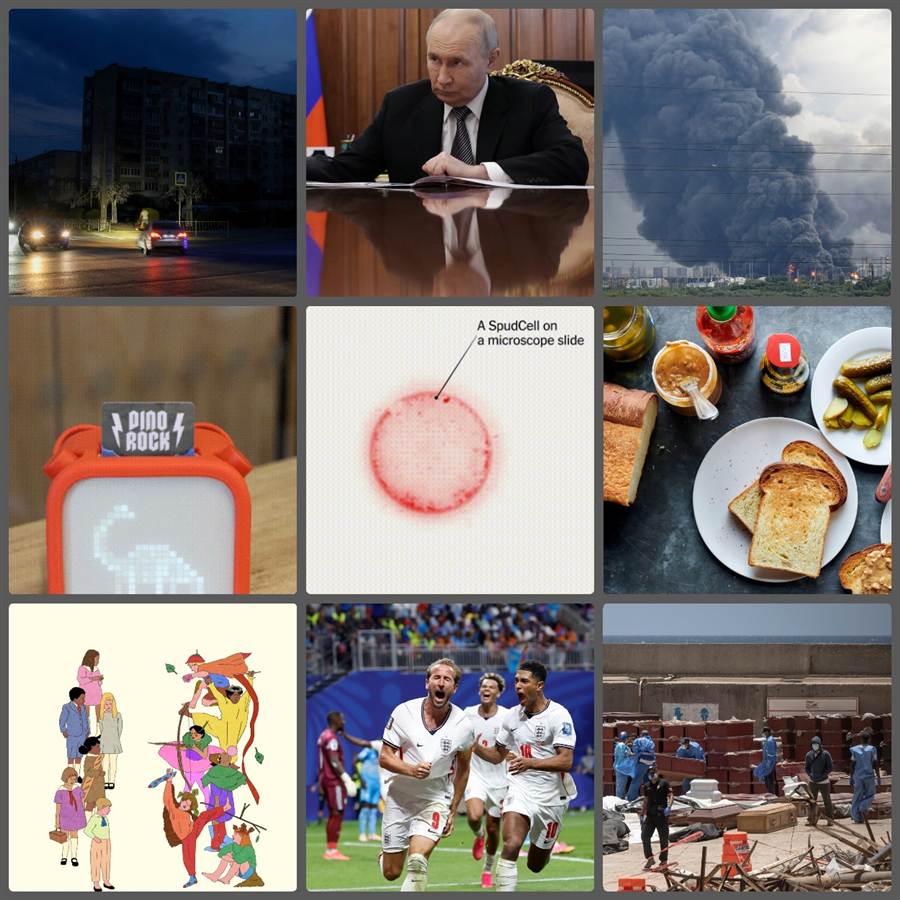
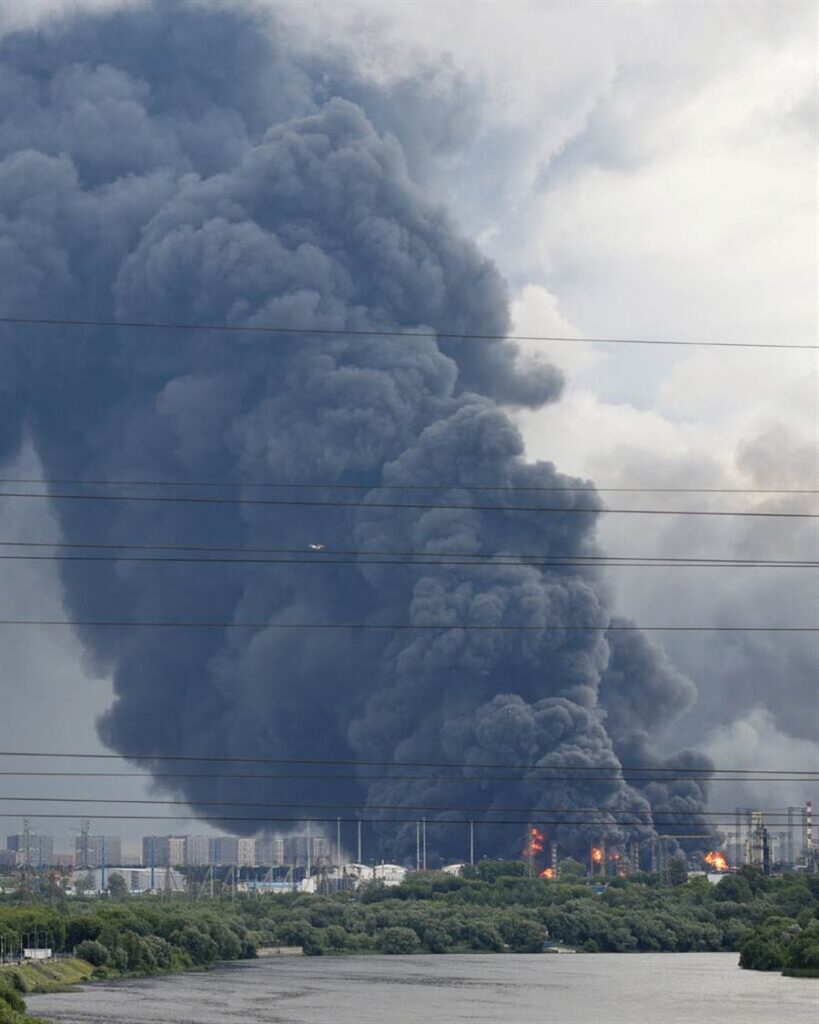
Hundreds of drones and missiles are now regularly flying into Russian territory, sometimes causing chaos. (Footage of one recent attack showed the whole roof of an oil refinery in Moscow being catapulted into the sky as onlookers gasped.) Ukraine has been attacking Crimea — which was illegally annexed by Russia in 2014 — to the point that the authorities on the peninsula have declared a state of emergency.
Four and a half years after Russia invaded, something qualitative seems to have shifted in this long, grinding war. Today my colleague Paul Sonne, our Moscow bureau chief, writes about whether it’s enough to force President Vladimir Putin to end it. (Spoiler alert: Not yet.)
Also:
| Overflowing morgues in Venezuela Harry Kane saves EnglandSpoiled bébés? |
Ukraine is attacking Moscow. Can Putin hold out?
By Paul Sonne
Vladimir Putin wasn’t having a very good year.
Russians were already grumbling about the tax hikes they faced in order to pay for the war against Ukraine, the unpopular internet restrictions that the Kremlin blamed on wartime security precautions and their country’s broader economic woes.
Then Ukraine made it worse.
An attack that sent 419 drones into Russia this week, including more than 60 toward Moscow, was the latest in Kyiv’s escalating campaign in recent months to bring the war home for more Russians and usher in a new stage of the conflict.
Some of these attacks, which are targeting refineries and other infrastructure, have led to dramatic scenes. Putin had to kick off his signature economic conference in his hometown, St. Petersburg, on June 3 under smoke-filled skies — the result of a nearby Ukrainian strike. On June 18, Ukraine pulled off its biggest attack on Moscow since the start of the war, covering the Russian capital’s sky with black plumes from explosions at an oil refinery.
The campaign has prompted fuel shortages across the country. Gas stations have introduced rationing, and some drivers are lining up for hours to fill their tanks. Despite being one of the world’s largest oil producers, Russia is turning to other nations to import emergency supplies of fuel.
In Crimea, the peninsula Russia annexed from Ukraine in 2014 that has recently become a particular focus of Kyiv, there are regular blackouts. Gas is practically nowhere to be found. Water pumps that run on electricity aren’t working.
Ukraine’s aim is simple: Put enough pressure on Putin on the home front that he ultimately agrees to end the war. But so far he has shown nothing but defiance. Even as life grows worse for Russians as a result of the conflict, it’s far from clear that the one man who matters will be sufficiently moved.
 |
| Vladimir Putin in Moscow on Tuesday, in a photograph released by Russian state media. Pool photo by Gavriil Grigorov |
Putin’s pain threshold
One of the enduring surprises of the war has been how much pain Putin has been willing to tolerate at home to pursue his war aims.
When his Ukraine invasion boomeranged back into the Russian region of Belgorod, little changed. When Ukrainian drones exploded over the Kremlin, the conflict continued. When Ukraine occupied a piece of Russian territory in Kursk, he stayed the course (and Ukraine eventually withdrew).
It’s always possible this time will be different. Putin’s popularity has sagged in polls. Russians are indeed feeling the worsening economic situation and noticing the increased disruption to their lives. In a poll conducted by Gallup between March and May, 60 percent of Russians said the economic situation in their city or region was getting worse.
But popular opinion matters only so much in a nation without democratic freedoms, or even political alternatives.
Will this time be different?
As my colleague Valerie Hopkins noted, Putin was initially silent in the face of Ukraine’s stepped-up attacks, in keeping with the broader effort to isolate much of Russian society from the war. Officials have euphemisms like “unscheduled maintenance” for the Ukrainian strikes on Russian fuel facilities, and have even avoided disclosing the locations of bomb shelters or using sirens when Russia cities come under attack — after all, this isn’t war, just a “special military operation.”
But perhaps the gap between the language the government was using and the reality many Russians were seeing eventually became too wide. Because, last weekend, Putin finally sat down with his chosen state news reporter to give a formal response.
He tried to thread the needle, on the one hand showing Russians his government was responding to their needs, but on the other downplaying the severity of the situation.
He said attacks on Russian infrastructure were indeed “creating problems” and resulting in “a certain shortage,” but called the situation “not critical.”
 |
| A blackout in Crimea on Tuesday. Alexey Pavlishak/Reuters |
The Ukrainian attacks were psychological warfare “with the goal of making us feel insecure about ourselves and our own strength,” dividing Russian society and “forcing Russia to suspend, at least for a short time, our troops’ offensive on the front line.”
“We won’t give them that chance,” Putin said. He then spent much of the interview going through, in extreme detail, how far Russian troops were from taking various Ukrainian cities on the front — an exercise that one Russian military analyst noted employed “interesting math,” repeatedly halving the real distances between Russian forces and the Ukrainian cities.
Ukraine’s new approach is succeeding on one level. It’s projecting power onto Russian territory. Russians have taken notice, and don’t like it. Even Putin has acknowledged their unhappiness.
But for a leader who has sent an estimated 350,000 to 450,000 Russians to their deaths on the front lines yet suffered minimal backlash — thanks in part to wartime repression — eye-catching explosions and fuel shortages may not change things as much as Kyiv hopes. There is even the chance that Putin responds not only with defiance but with escalation.
That leaves two big questions: How much further can Ukraine go with its campaign? And how long can Putin hold out? For now, the Russian leader is digging in.
Alina Lobzina and Oleg Matsnev contributed research.
Related:
| Moscow pummeled Kyiv early this morning with waves of ballistic missiles and drones, killing at least 10 people.More than two million troops have been killed or wounded in the four and a half years that Russia and Ukraine have been at war, a new study found. |
| OTHER NEWS |
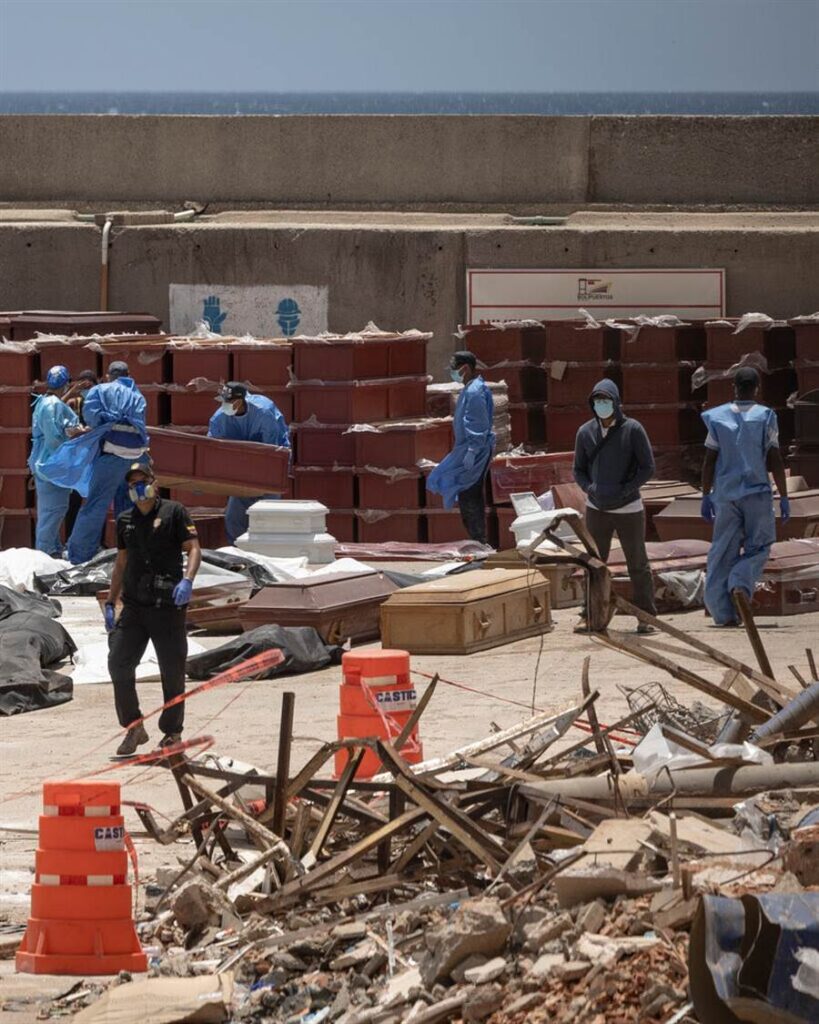
| As the earthquake death toll mounts in Venezuela, the country’s forensic system has been overwhelmed by thousands of bodies, turning a seaport into a temporary morgue.U.S. and Iranian negotiators held indirect talks in Qatar yesterday after an upsurge of violence in the Persian Gulf threatened to derail peace efforts.A group of traditionalist Catholics consecrated four bishops in defiance of a plea from Pope Leo XIV, creating the biggest internal crisis of his papacy.Extreme heat waves engulfed much of Europe in recent weeks. Now it’s North America’s turn — temperatures there are expected to set records this week.Three bombs exploded in a city in northern Greece yesterday, killing one person and injuring two others. Officials said it was a campaign targeting members of the country’s conservative governing party. |
WHAT ELSE IS HAPPENING
| Canada will compete in the high-camp Eurovision Song Contest next year, the country’s national broadcaster said.Jannik Sinner and Aryna Sabalenka, the top seeds in men’s and women’s singles, moved on to the third round at Wimbledon. Read a recap of Day 3. |
TOP OF THE WORLD
The most clicked link in your newsletter yesterday was about Norway’s signature “Viking Row” football cheer.
| WORLD CUP |
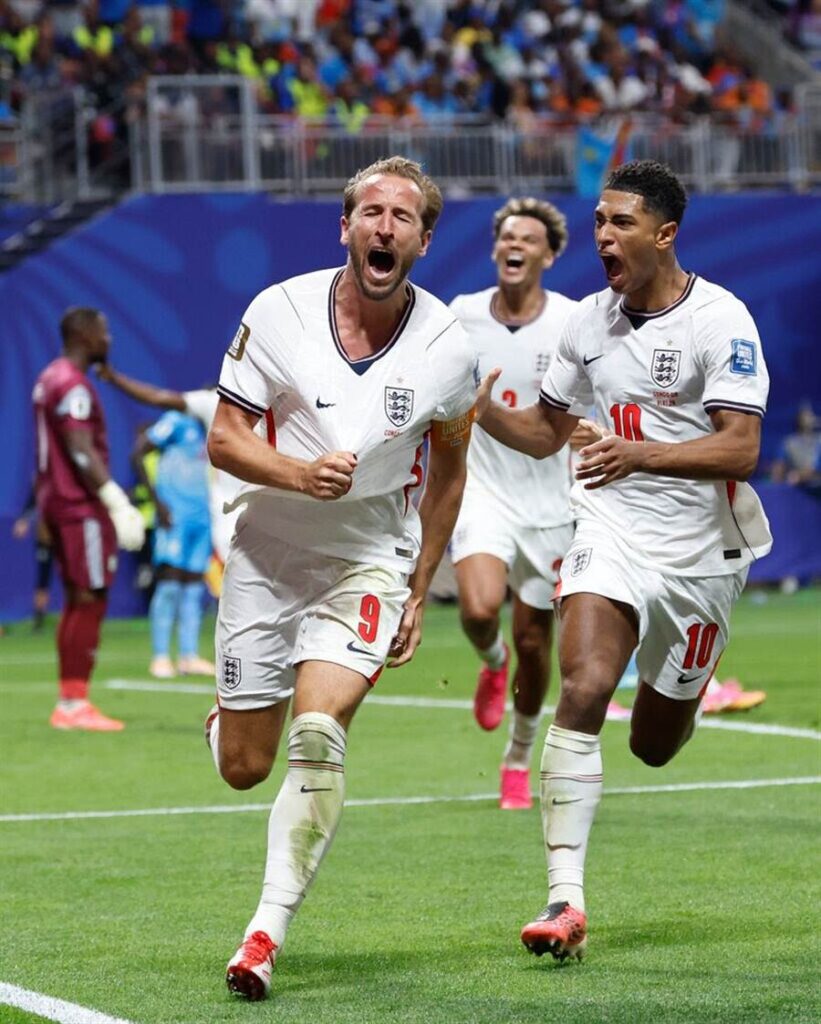
Harry Kane saved England from an embarrassing early exit at the hands of the Democratic Republic of Congo with two late goals. The England men’s team has been playing football for 154 years, our writer says, but it has never had a player quite like Kane before.
Earlier, in another impressive showing, Belgium came from 2-0 down to snatch a 3-2 victory against Senegal. Its last goal came at the 125th minute. And elsewhere, the U.S. defeated Bosnia and Herzegovina, 2-0.
A dejected mood: For the third time in a row, Italy is not competing in the World Cup. For some, the failure is a metaphor for a broader national malaise.
Home away from home: The tournament has given immigrant diasporas in the U.S. the chance to revel in support for their home countries. In one New York neighborhood, divisions between supporters of Ecuador and Mexico melted away for one big block party.
| GADGET OF THE DAY |

The Yoto music box
About 12 years ago, two dads in Britain got to work creating a music player for children that would be enriching but not addictive. A rubber-encased box that emits audio from a speaker when a card is inserted into a slot, the Yoto Player has since gained a cult following. It even counts Paul McCartney among its investors. “I was doubtful I would be impressed, until my 22-month-old daughter picked it up and began inserting cards,” our tech reporter writes.
| MORNING READ |

Scientists at the University of Minnesota have created the first synthetic cells that can perform most of the same functions as living cells. Assembled by blending dozens of ingredients and known as SpudCells, they can feed, grow and reproduce.
The achievement represents a major step toward creating living cells out of nonliving chemicals. Researchers hope SpudCells can tell them things about how life works that natural cells cannot. They could also eventually be engineered to make new medicines and capture carbon dioxide from the atmosphere. Read more.
| AROUND THE WORLD |
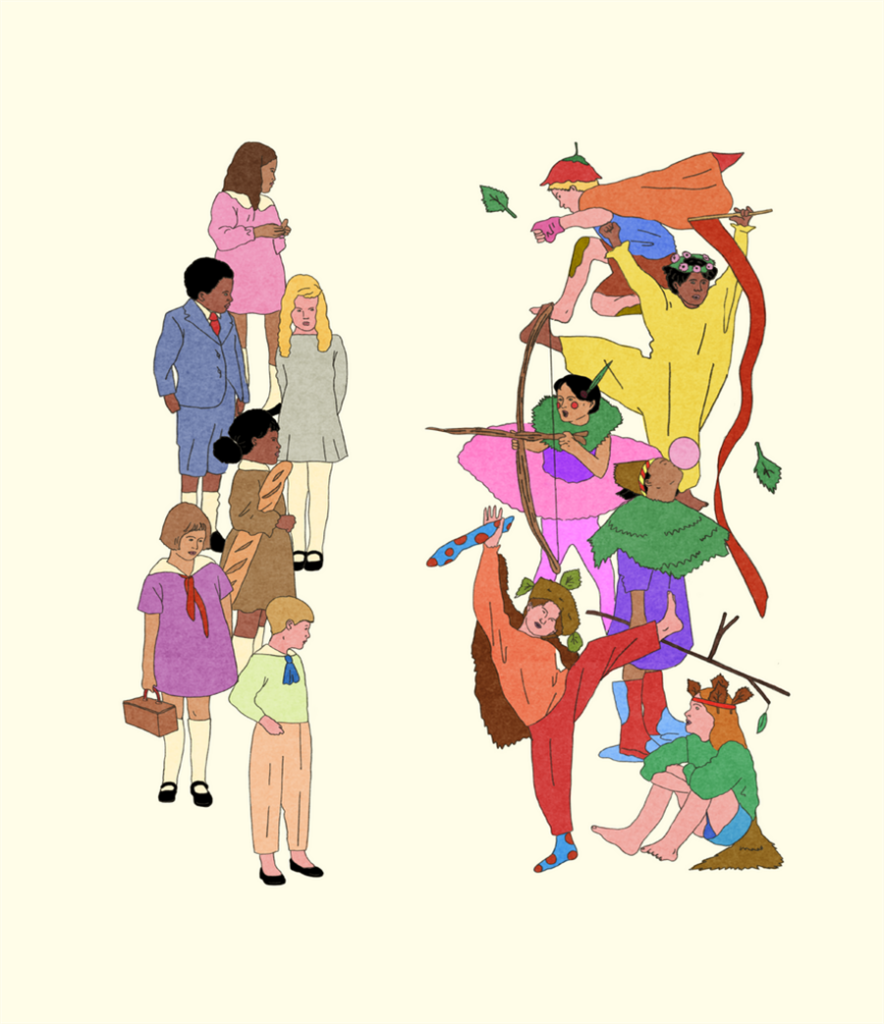
Bringing up spoiled bébés?
French parents once prided themselves on not letting children impinge on their lives, partly thanks to a culture that emphasized treating children as if they were little adults. But over the last 10 years, many French families have embraced positive parenting, an American import that hinges on shared decision-making and prioritizing childhood emotions.
France’s most polarizing psychologist, Caroline Goldman, says parents have become too permissive. Her embrace of the old-fashioned timeout has ignited vitriolic debate. Children “just don’t hold back anymore,” she said. “If they want to fart, they fart; if they want to burp, they burp.” Read more.
| RECOMMENDATIONS |
Explore: The actor Lionel Boyce’s favorite spots in Copenhagen include a bakery known for its mouthwatering cardamom croissants.
Nurture: “Invent your own love language” is one of the best relationship tips we’ve heard so far this year.
Discern: Should you buy that rug you saw on Etsy? Here’s how to avoid a dud.
Peek: This penthouse in Brazil shows how built-in shelving, low-slung furniture and floor lamps can make a large space feel cozy.
| RECIPE |
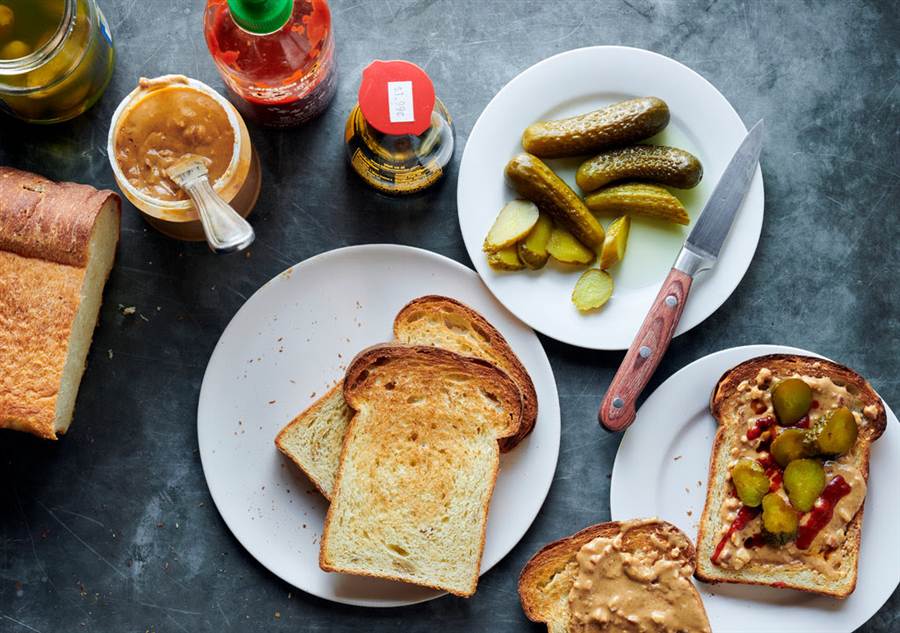
This is a no-recipe recipe for peanut butter and pickle sandwiches, a spin on a great old sandwich of the American South. With no ingredients list or steps to follow, it invites you to improvise in the kitchen. One reader called it “a revelation!”
