
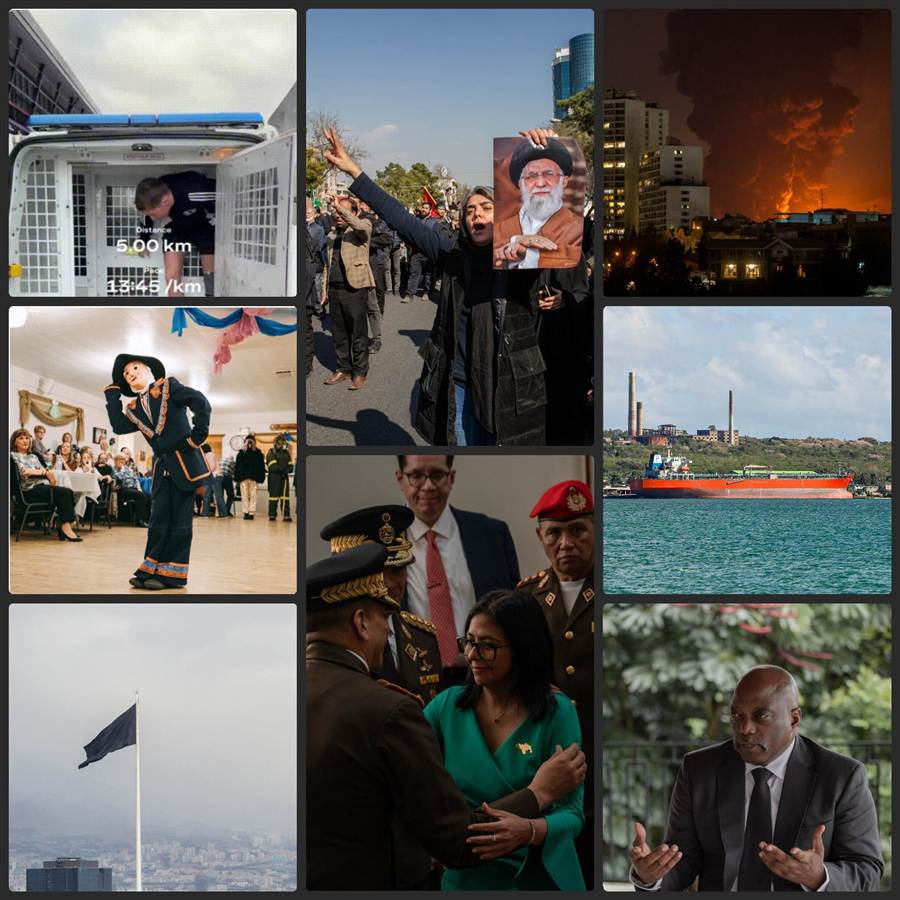
March 31, 2026
Good morning, world. The immediate aftermath of a so-called decapitation strike — an attack that removes the leadership of a government — often looks like victory. A hostile leader is now either out of power or dead. Moral and legal questions aside — isn’t that a win?
Not quite. My colleague Amanda Taub, who writes The Interpreter newsletter, looks today at the perils of what are known as targeted strikes. They seem to be the new favorite tactic of the Trump administration. But a strategy that emerged from the world of counterterrorism doesn’t always work as planned when applied to nations and governments. — Alicia P.Q. Wittmeyer
Also:
| Trump’s threat to destroy Iranian energy sites A Russian oil tanker nears Cuba Masks and mischief in Quebec |
 |
| A black flag in Tehran after the killing of Ayatollah Ali Khamenei. Arash Khamooshi for The New York Times |
When targeting foreign leaders goes wrong
| By Amanda Taub | |
Over the past year, the Trump administration appears to have embraced a new foreign policy tactic: removing unfriendly leaders.
In January, President Trump sent U.S. troops to Caracas, where they captured the Venezuelan president, Nicolás Maduro, in an overnight raid.
The next month, the U.S. and Israel opened their war against Iran with airstrikes that killed Ayatollah Ali Khamenei, the country’s supreme leader, along with other top officials.
Both acts were shocking enough that the tactic has since been deployed as a warning: One Trump official notified the Taliban this month that if they did not release American hostages held in Afghanistan they could face the same fate. The administration is also reportedly insisting that Cuba’s president step down (though people involved in the discussions say military force is unlikely to be involved).
But the actions in Venezuela and Iran led to different results. In Venezuela, removing Maduro seems to have paved the way for new leadership that has appeared more inclined to cooperate with the U.S. In Iran, Khamenei’s death seems to have, if anything, made his successors more determined to resist.
 |
| Pro-government supporters marching in Tehran this month. Arash Khamooshi for The New York Times |
What accounts for the difference? Some of it is because of the specific circumstances in Venezuela and Iran. But it’s also worth looking more closely at the context surrounding decapitation strikes.
These sorts of strikes are a tactic often used in counterterrorism, where the goal isn’t to replace the leadership, but to destroy and dissipate a group. That makes them an awkward fit for states: There is no destroying and dissipating Venezuela or Iran. And so any attempt to remove the leadership needs to account for what’s going to come next.
Countries have deep benches
Even when used in counterterrorism, targeted strikes are often ineffective.
They can be useful against small cells that don’t have deep benches of replacements, according to Robert Pape, a political scientist and the author of “Bombing to Win: Air Power and Coercion in War.” Black September, the group that massacred Israeli athletes at the 1972 Munich Olympics, for example, was effectively dismantled through a campaign of assassinations and arrests.
Such strikes are less useful against larger, more established organizations, said Jenna Jordan, a political scientist and the author of the 2019 book “Leadership Decapitation: Strategic Targeting of Terrorist Organizations.” Groups with bureaucracies, roots in their local communities and ideologies that don’t depend on a particular charismatic leader (such as Hamas or ISIS) “are really hard to weaken with decapitation,” she said.
And decapitation “makes no sense with leaders of a country,” Pape said. National governments have established succession plans in place and plenty of people who can step in to fill the vacant roles.
The crucial question, therefore, is not whether an existing leader can be removed, but whether existing succession plans bring someone better to power — or if a coup or revolution can circumvent those existing plans.
 |
| Delcy Rodríguez became Venezuela’s new leader after the U.S. captured Nicolás Maduro. The New York Times |
The state collapse scenario
In Venezuela, the U.S. seems to have decided that the established succession plan was good enough: That is, in fact, how power transferred to Maduro’s vice president, Delcy Rodríguez. So far at least, she has looked willing to cooperate with the U.S., but there was no real regime change, experts say. Rodríguez is a longtime government insider who has kept the broader power structure of the government.
In Iran, however, where Israel has continued to engage in targeted strikes aimed at other top leaders, the politicians whom the U.S. originally envisioned working with have been killed, according to President Trump. The U.S. and Israel appear to have hoped that removing old figures would lead to a grass roots uprising that would sweep away the old regime.
But experts who study coups and revolutions say that was never likely. Whoever takes power would need to win the support of crucial elites, including within the security services, by convincing them that backing regime change is the lowest-risk option. That requires coordination and planning — not merely reacting to an airstrike.
So far, Iran’s succession process has brought to power hard-liners who are doubling down on war.
As that war continues, and more of Iran’s leadership is killed, some experts worry about the prospect of state collapse — that the government could effectively stop functioning, which is what happened in Libya in the wake of Muammar el-Qaddafi’s death. Those worries highlight another difference between terror groups and governments.
If a terror group collapses, it can simply cease to exist. But if a state collapses, it opens up a power vacuum. What ends up filling it could be more dangerous than what the targeted strikes removed in the first place.
| MORE TOP NEWS |
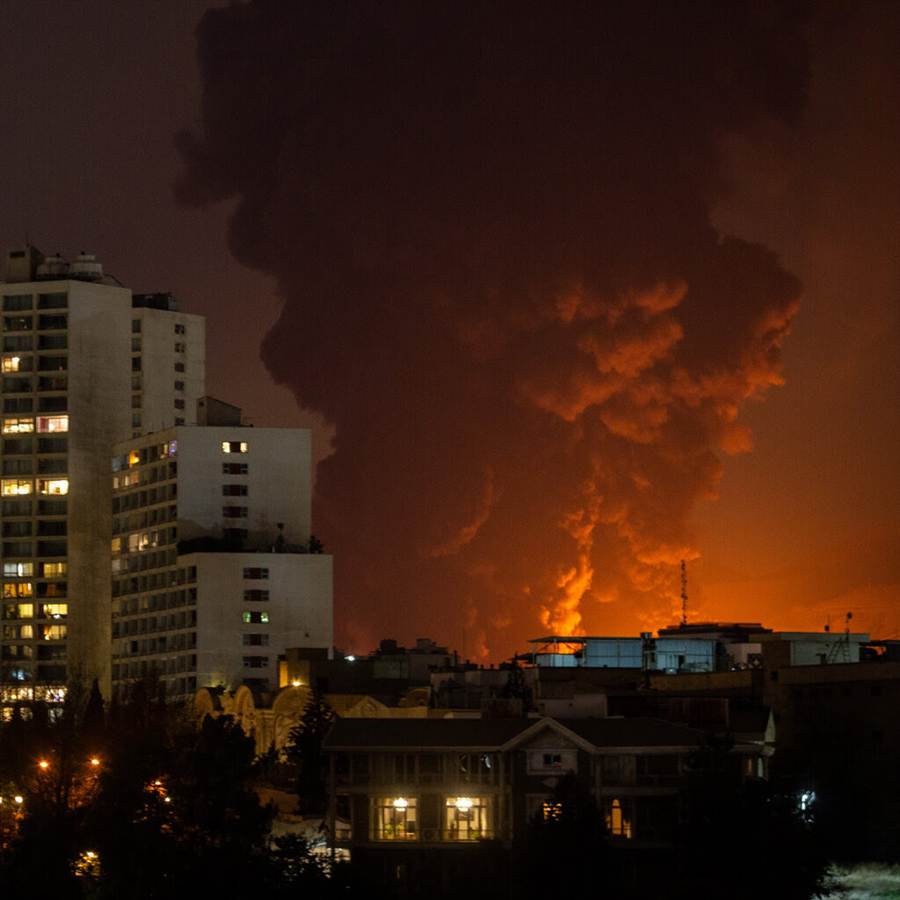
Trump’s threats against Iranian energy sites
Trump zigzagged from claims of diplomatic progress with Iran to renewed threats of destruction, warning that the U.S. would obliterate Iran’s power plants and oil infrastructure and, potentially, its desalination plants if a deal wasn’t reached.
The president has repeatedly threatened such attacks in recent weeks, only to back down.
This morning, a Kuwaiti tanker full of oil erupted in flames after it was struck off the coast of Dubai, an attack the Kuwaiti authorities blamed on Iran. Follow live updates.
Markets: The price of Brent crude, the global benchmark for oil, settled at around $112 a barrel, after having jumped above $115. Oil prices are up more than 50 percent since the war began.
Universities: Iranian officials condemned U.S. attacks on several universities across the country and warned of possible retaliation against U.S. universities in the region. New York University closed its campus in Abu Dhabi.
Lebanon: Two U.N. peacekeepers were killed when their convoy was “struck by an explosion of undetermined origin” in southern Lebanon.

A Russian tanker is about to deliver badly needed fuel to Cuba
A Russian tanker full of crude oil approached Cuba yesterday and the U.S. said it would allow the critical fuel delivery even though it has prevented other oil imports for months.
The tanker was carrying about 730,000 barrels of oil — enough to buy Cuba just a few weeks before its fuel reserves run out, experts said. Trump has suggested that allowing the oil shipment through is a humanitarian gesture. But analysts see the move as a sign that the U.S. pressure campaign against Cuba has probably been sidelined by the war in Iran.
| OTHER NEWS |
| Israel passed a law that would allow the hanging of Palestinians convicted of deadly attacks. Critics say it would exclude Jewish extremists convicted of similar crimes.Israel suspended army reservists after they detained CNN journalists and put a cameraman in a chokehold. One reservist described their actions as “revenge” against Palestinians.Myanmar’s military ruler, Senior Gen. Min Aung Hlaing, moved one step closer to becoming the country’s president.Air Canada’s chief executive said he would step down after drawing criticism for his mostly English statement following a fatal runway collision.China’s leader, Xi Jinping, invited the leader of Taiwan’s main opposition party for a rare visit.The Australian police killed a man suspected of shooting two police officers. |
WHAT ELSE IS HAPPENING
| Celine Dion, who has rarely performed since announcing her stiff person syndrome diagnosis in 2022, will return to the stage for 10 concerts in Paris later this year.Thieves stole works by Renoir, Cézanne and Matisse from an Italian art museum.Top of The World: The most clicked link in your newsletter yesterday was about the “No Kings” anti-Trump rallies in the U.S. |
| SPORTS |
Football: Tottenham Hotspur are pursuing Roberto De Zerbi to become the club’s third head coach of the season.
Tennis: Jannik Sinner and Aryna Sabalenka each pulled off a rare “Sunshine Double,” winning back-to-back tournaments in Indian Wells, California, and Miami.
| FEAT OF THE DAY |

Running 5K in a van
For running influencers, stunts can be worth just as much as impressive race results. The latest viral stunt: running in unlikely locations — the more cramped the better — including in a police van, an airplane bathroom and a bathtub.
| MORNING READ |
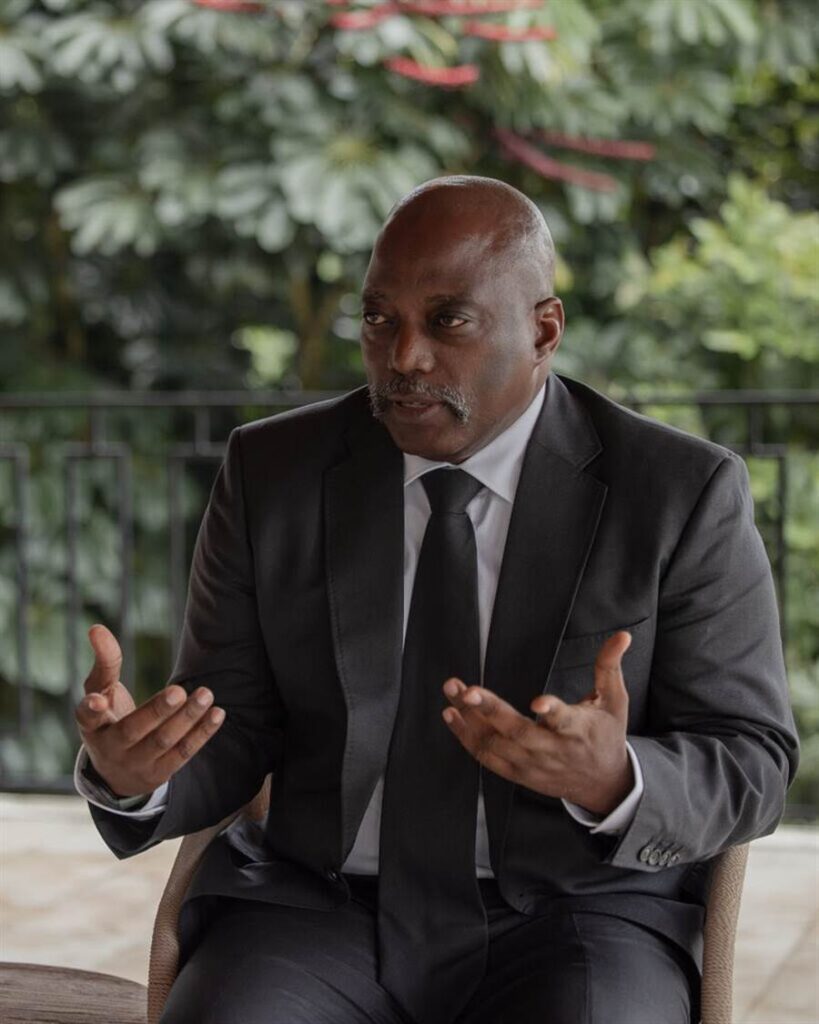
Joseph Kabila was president of the Democratic Republic of Congo for 18 years. Now, he is on the run from a death sentence after being convicted of treason, and living under the protection of the M23 militia in Goma, in the country’s east.
My colleague Ruth Maclean interviewed him and asked him if he would like to be president again. Read the full story here.
| AROUND THE WORLD |

Dancing, masks and mischief in Quebec
Every year, residents on L’Isle-aux-Coudres, a small island in Quebec accessible only by ferry, take part in a celebration called Mid-Lent. The islanders disguise themselves in bulky costumes and try to guess who’s inside based on how they dance a jig.
Back when the Québécois were expected to do penance during the 40 days of Lent, they took a break halfway through by dressing up, dancing and generally being mischievous for a few days, despite the disapproval of local priests.
Today, even as few observe Lent on the island, Mid-Lent, or “Mi-Carême” in French, is celebrated and seen by some as an act of defiance against the once all-powerful Catholic Church. Read more about the celebrations.
| RECOMMENDATIONS |
Read: The novel “Transcription” by Ben Lerner is as slim as an iPhone but has a lot to say about technology.
Thrive: A healthy mind-set, including a sense of purpose, can have real benefits as you age.
Watch: “Yes,” by the Israeli director Nadav Lapid, is an uncomfortable satire about artists in times of war.
Primp: Here’s some expert advice on how to trim and style your own bangs.
| RECIPE |

Coated in an orange-flavored dressing spiked with harissa and red wine vinegar, these roasted carrots make a tangy-sweet side dish next to a Passover brisket, roast chicken or any other main dish.
