

| June 25, 2026 | By Katrin Bennhold |
Good morning, world. It’s hot in London. My colleagues are wearing flip-flops and shorts to the office. My kids’ schools have closed down for the week. I’ve seen at least one person faint on the bus.
Heat waves around the world are becoming hotter, more frequent and longer lasting. Europe is warming faster than any other continent. Temperatures in France just reached a record high, as they seem to nearly every year.
As Chico Harlan, our global climate correspondent, reports, it’s poised to get even worse. Because this year, El Niño, the natural phenomenon that can disrupt weather around the world, is back.
Also:
| Devastating earthquakes in VenezuelaNew York’s venerable dive barsWatch out for a missing giraffe |
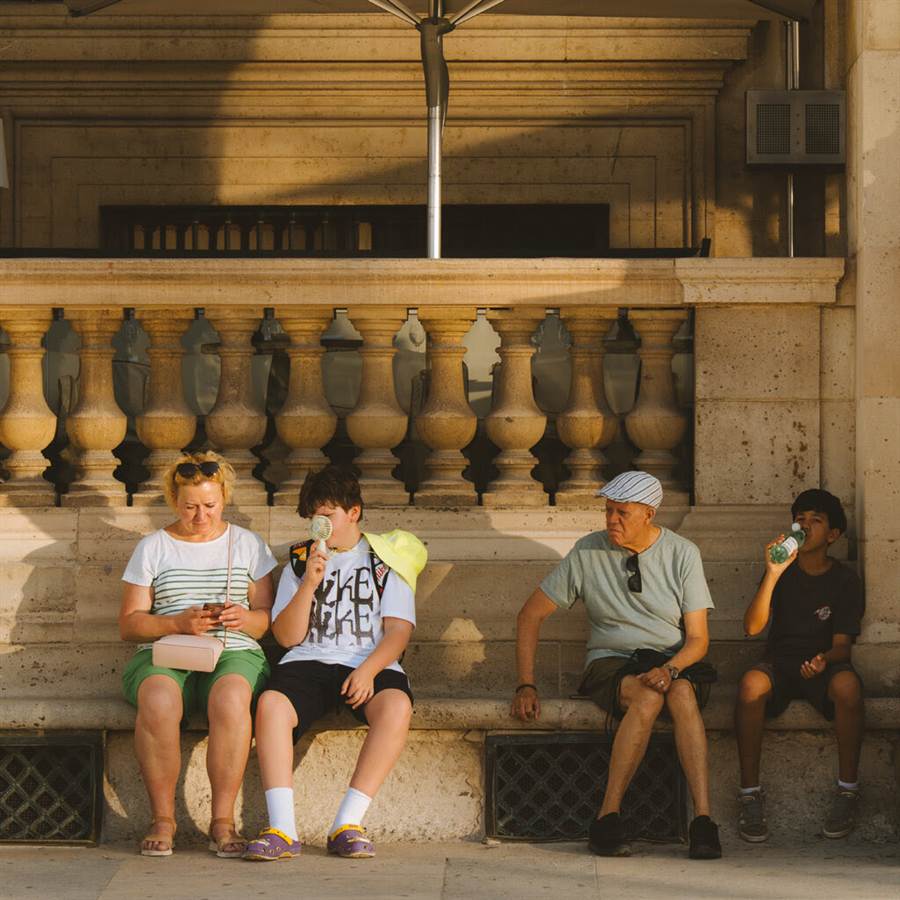
El Niño is back. Expect even more extreme weather.
By Chico Harlan
Less than a month ago, I was reporting on the consequences of a brutal weeklong heat wave across Europe that turned classrooms into “pressure cookers” and caused children to fall asleep at their desks.
Europe is going through another scorcher this week, and it’s not even July.
It’s a sign of a changing planet. In general, scientists know that heat seasons are getting longer and more intense. And now, on top of that, there’s another thing on the horizon that could make heat waves unbearable.
El Niño, a natural shift in Pacific Ocean winds and water temperatures that can drastically transform global weather patterns, comes around every two to seven years, and it’s a chaos maker. This one is bound to strengthen in the coming months.
If it reaches the record-breaking proportions that many forecasts suggest, this year’s El Niño, coupled with the effects of climate change, could set off a bout of extreme weather that the world will be stretched to handle.
‘Fuel on the fire’ of a warming world
The world has dealt with these events for eons. But El Niños are now playing out across a hotter planet with more moisture in the air. That means a potential for heavier downpours, stronger droughts and, above all, hotter temperatures.
The weather pattern is called El Niño because it usually peaks around Christmas; South American fishermen centuries ago named it after the baby Jesus. (In Spanish, “El Niño” means “the little boy” but also “the Christ child.”)
El Niños that formed in 1997, 2015 and 2023 helped set off global annual temperature records.
Because temperatures continue to rise in the months after an El Niño reaches peak strength, many scientists expect 2027 to become the hottest year humanity has ever experienced — at least until the next El Niño comes along.
“The world must treat it as the urgent climate warning it is,” the U.N. secretary-general, António Guterres, said. “El Niño conditions will pour fuel on the fire of a warming world.”
The return of El Niño was confirmed by scientists this month, and its signature wasn’t hard to spot. Heat maps of ocean temperature show a comet tail of pulsing red off the coast of South America. Water temperatures in a crucial monitoring zone have climbed to 29.4 degrees Celsius, the highest level ever for June.
 |
| Source: University of Maine Climate Reanalyzer | Note: Chart shows one-week rolling averages in the area of the Pacific Ocean used to track El Niño. Data from June 9-22, 2026 is preliminary. | by Katherine Chui/The New York Times |
Some research suggests El Niño could raise sea surface temperatures more than 3 degrees Celsius above the long-term average, which would be the biggest anomaly on record. That’s prompted a number of forecasters to call it a “Super El Niño.”
“I think it will be the largest so far,” Wenju Cai, a scientist who researches El Niño events at the Ocean University of China, in Qingdao, told me. “Which means a humongous anomaly.”
Danger zones
Scientists like to say that an El Niño has teleconnections — a word that sounds almost mystical, but simply means that its disruptions can happen far away from the Pacific.
These disruptions are predictable: India is often much drier in an El Niño year, as is Australia and Southeast Asia. Some regions of Africa can plunge into drought, while others might be deluged. Parts of the southern U.S. can receive more rainfall. The Atlantic hurricane season tends to be suppressed, but cyclones in the Pacific can get a boost. In 2015, 16 tropical cyclones formed, more than three times the average.
Previous El Niños have also had grave consequences for the natural world and often coincide with widespread bleaching of coral reefs. In 1982 and 1983, an El Niño disrupted the cold waters that Galápagos penguins depend on for nutrients and caused the population to plunge by three-quarters.
History shows that El Niños can exacerbate existing problems, and this year, there are many of them. A global energy shock, brought on by the war in Iran, is driving up prices and causing fertilizer shortages, straining the same farmers who might now be dealing with drought.
The Philippines, prone to drought during El Niños, is a prime example of the concerns. The country happens to be heavily dependent on fuel imports and has already seen major price increases this year — both for transportation and food — because of the current war in the Middle East.
 |
| The Philippines has seen major increases in fuel prices. Ezra Acayan for The New York Times |
The government is working to distribute drought-resistant seeds and fertilizers and advising the conservation of water.
Still, the Philippines’ Department of Agriculture warned last month that production of rice could fall 3.5 percent short of targets if a strong El Niño materializes.
And that’s just one country. Rice production is threatened across Asia.
It’s the beginning of another strain on the food system, in an already strained year. The consequences of this year’s El Niño will be playing out even after the heat waves subside.
For more:
| Londoners clutching fans on the Tube, Parisians dangling their legs in fountains: See photos from Europe’s record-breaking heat wave.Thousands in France are jumping into canals and rivers for relief from the heat. It can be a deadly decision: Forty people have drowned in heat wave-related accidents in recent days.Here’s why Europe is the world’s fastest-warming continent. |
| MORE TOP NEWS |
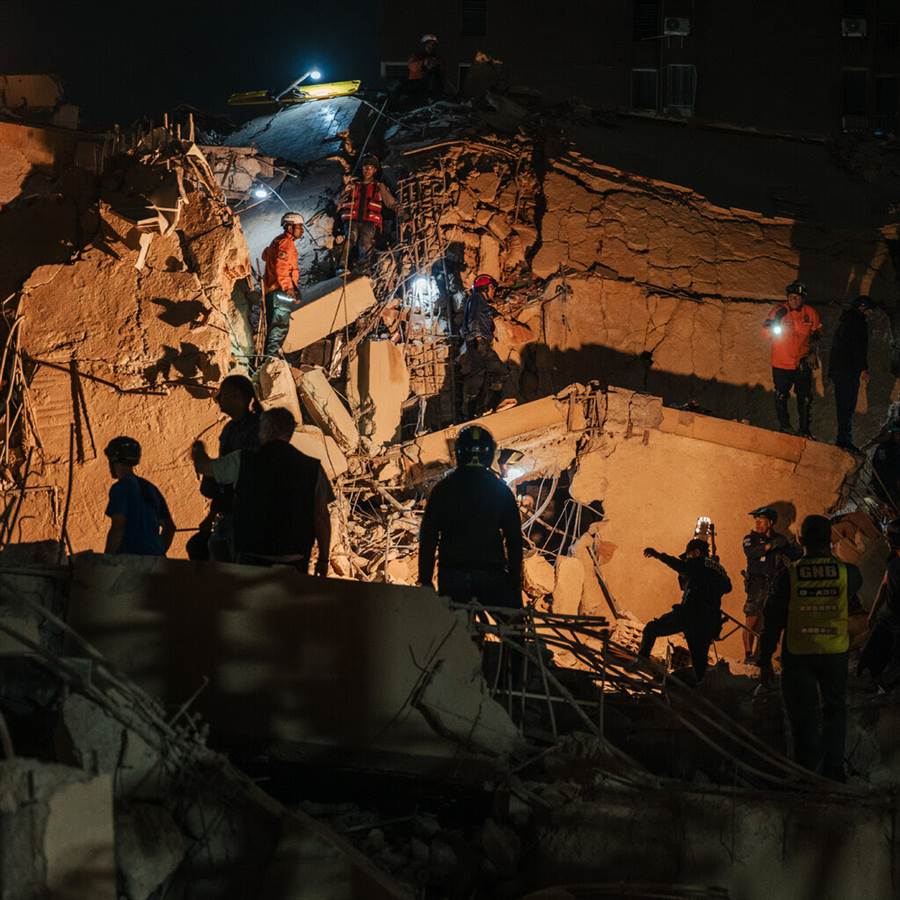
“Devastating” earthquakes hit Venezuela
Two major earthquakes struck central Venezuela yesterday evening, causing buildings to collapse in the capital, Caracas, and prompting a frantic rescue effort in a country already grappling with severe political and economic turmoil.
President Delcy Rodríguez of Venezuela declared a state of emergency and called on doctors and nurses to report to their jobs to care for the injured.
Video and photos have begun to emerge, though the scale of the damage was not immediately clear. A seismologist with the U.S. Geological Survey called the earthquakes “devastating.”
Follow our live updates and see maps of the affected areas.
| OTHER NEWS |
| France confirmed its first case of Ebola, in a doctor who had traveled to the Democratic Republic of Congo. Scientists are grappling with a mystery: Where did this virus come from? Here’s how bad it could get.Israel said its troops have surrounded Hezbollah tunnels in the hills of southern Lebanon, trapping dozens of militants inside.Secretary of State Marco Rubio visited the Gulf as he tried to reassure allies about the U.S.-Iran deal.Bahrain is restricting commemorations of Ashura, a Shiite religious day — the latest measures taken against Shiite Muslims during the Iran war.China detained two Japanese citizens on suspicion of smuggling banned products, which could be rare earths, according to news reports.Corruption cases keep piling up around Prime Minister Pedro Sánchez of Spain. Now, his wife is accused of graft, but that may actually help him. |
WHAT ELSE IS HAPPENING
| In an interview, Australia’s prime minister, Anthony Albanese, talked about steering his country through turbulent times: “The vibe out there is that governments can’t afford just to be defenders of the status quo.”A giraffe named Gracie wandered off a game reserve in Texas more than a week ago. There’s a $5,000 reward for information leading to her return. |
TOP OF THE WORLD
The most clicked link in your newsletter yesterday was about Dua Lipa’s Chanel wedding gown.
| WORLD CUP |
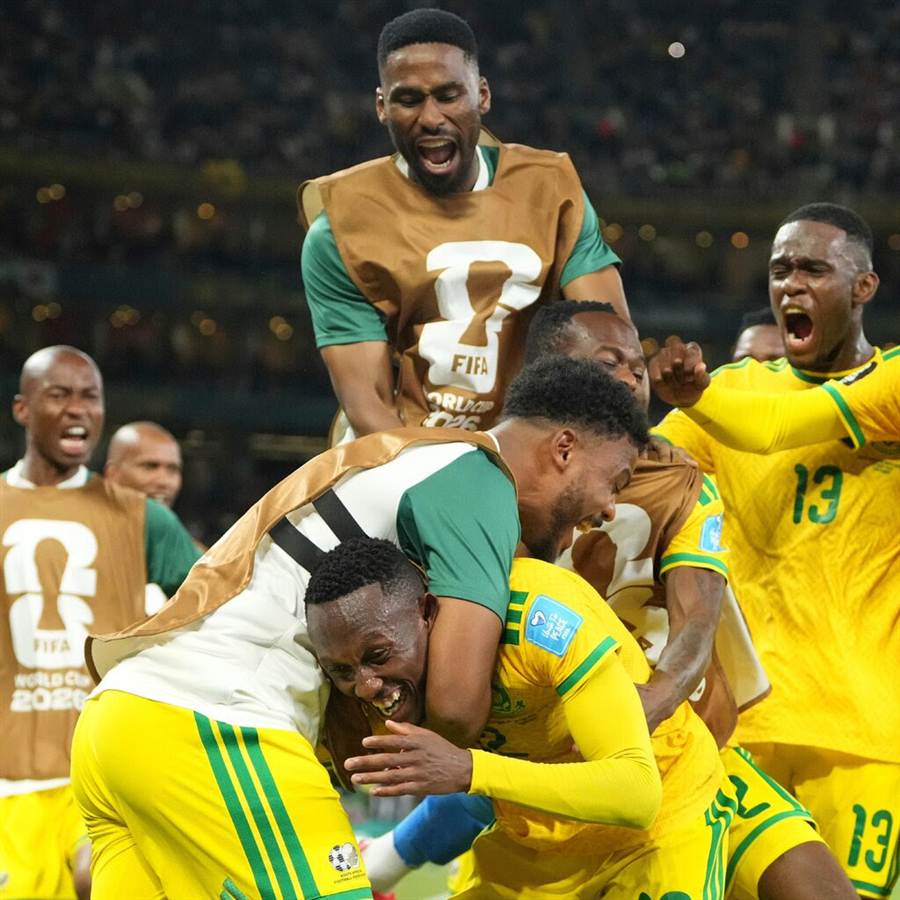
A history-making win for South Africa
South Africa reached the knockout stage of the World Cup for the first time after defeating South Korea, 1-0. Elsewhere, Bosnia routed Qatar, 3-1, in Seattle and will almost certainly face the U.S. in the knockouts.
Switzerland won its group after defeating co-host Canada, 2-1, in Vancouver. Canada still advances.
Brazil won its match against the Scottish side, which now faces an anxious wait to see if their World Cup campaign will continue. Here’s the knockout bracket forecast.
Off-pitch politics: The U.S. eased some of its travel restrictions on Iran’s team before their pivotal game with Egypt on Friday.
New scouts: Recruitment apps powered by A.I. are gaining ground in Brazil, promising to even the playing field and find the next Pelé.
| SUSPECTED WEDDING OF THE DAY |

Taylor Swift and Travis Kelce at Madison Square Garden
There are clues. A permit was filed to close streets near the New York City arena, and several members of Kelce’s football team have booked hotel rooms nearby. And a city official briefed on the preparations, speaking on condition of anonymity, confirmed it: The closest thing the U.S. has to a royal wedding will take place at the Garden on July 3.
The couple and their celebrity friends will draw packs of paparazzi and fans. Of course, it could all be an elaborate ruse — but that would make for a cruel summer indeed.
| MORNING READ |

Residents of Kyiv, who survived a brutal winter under Russian bombardment, are embracing summer. Shorts and T-shirts have replaced parkas, though the attacks continue. And the cost of the war is more visible in the missing limbs of former soldiers. One clinic estimates there are now at least 100,000 amputees in Ukraine.
Some of those soldiers are finding community for football on crutches, golf, paddle boarding, salsa dancing and more. “The main thing was to get out alive,” one veteran said of the day he was wounded. “Losing a limb is not a problem.” Read more.
| AROUND THE WORLD |

The ‘beautiful little universe’ of dive bars
New York City dive bars have a few key criteria: Can you buy a beer for less than $7? Is there a damp smell? Is its name a possessive proper noun, like “Frank’s” or “Rudy’s”? Is the bathroom scary?
And there’s another characteristic: A dive brings together people who would otherwise never be in the same room. “It’s this beautiful little universe within itself,” said a bartender in Manhattan. But in today’s New York, hole-in-the-wall establishments are facing high rents, rising costs and a vanishing clientele. Read more about what New York will lose if its dive bars go away.
| RECOMMENDATIONS |
Travel: From Malaysia to Malta, new boutique hotels keep the crowds at bay.
Read: The new novel “Nebraska” is an electrifying masterwork, our reviewer writes.
Don: Dress sneakers are everywhere. Our fashion critic has thoughts.
Consider: Do high-intensity workouts spike cortisol levels?
| RECIPE |

Changua, a simple Colombian soup from the dairy-rich areas of Cundinamarca and Boyacá, is divisive: warm onion milk with stale bread, cheese and half-curdled eggs may not seem particularly appetizing. But for fans it’s a comfort food — and a hangover cure.
