
| August 17, 2026 | By Katrin Bennhold |
Good morning, world. Donald Trump won election promising to deport millions of immigrants. Many dismissed that as campaign talk. But 19 months after taking office, the administration is as determined as ever to reach its targets.
Federal immigration agents have been arresting roughly 2,000 people a day. (Last week we also learned about a plan for ICE agents to get gloves that can deliver electric shocks.) Billions are being spent on new detention centers.
And around the world, the U.S. is paying developing countries, from El Salvador to Rwanda, to take deportees off its hands. Today, my colleague Nicholas Casey writes about how America is creating a system of indefinite detention abroad.
Also:
| Syria’s holdout province on edge An art heist in Italy Building a city from scratch in India |
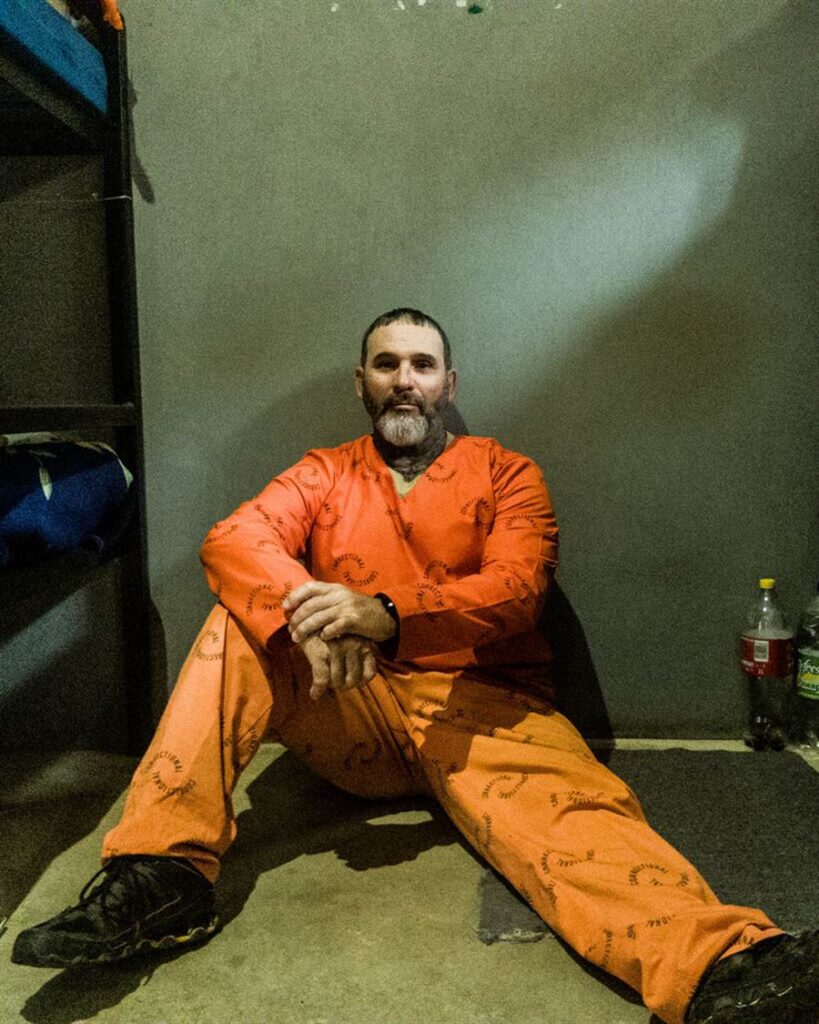
| Roberto Mosquera is being held in a maximum-security prison in Eswatini. Moises Saman/Magnum, for The New York Times |
‘Do you think I’ll ever get out of here?’
By Nicholas Casey
As he stepped out of the American military cargo plane, Roberto Mosquera had no idea where he was or why he had been taken there. He had never heard of a country called Eswatini.
The tiny, landlocked country in southern Africa, until recently called Swaziland, is one of at least 35 countries — including South Sudan, Ghana, Palau, Uzbekistan and Moldova — that have made deals with the U.S. to take deportees from other countries of origin.
Mosquera arrived in the U.S. on a fishing boat from Cuba in 1980, when he was 12. In his 20s, he took a plea deal and served time in prison after shooting a rival gangster in the leg. That would have been grounds to deport him, but Cuba wasn’t cooperating, so Mosquera was allowed to stay. He built a new life for himself, becoming a plumber and a born-again Christian; he married and had four daughters.
But all that changed last year when he went to renew his work permit. An immigration official told him that his time in America was up. After stints in U.S. detention centers, he was flown to Eswatini, where he’s being held in the country’s maximum-security prison with four other detainees from Jamaica, Laos, Yemen and Vietnam.
The Trump administration is building a growing detention archipelago overseas, often in unstable or autocratic countries. And in cases like Mosquera’s, it’s turning deportation into a form of indefinite imprisonment with no legal recourse.
“Can I ask you a question?” Mosquera asked me on a WhatsApp video call in June, using a phone he obtained after a hunger strike. “Do you think I’ll ever get out of here?”

‘Depraved monsters’
The first time the Trump administration paid a foreign government to take deportees was last year, in a deal with the autocratic president of El Salvador, Nayib Bukele.
Bukele accepted a $6 million payment to hold some 250 Venezuelan immigrants in a megaprison. The Venezuelans were later flown home, but many claimed that they were abused and tortured by their prison guards.
Since then, variations of this deal have multiplied. Many of the countries that have agreed to take deportees are unstable, or desperate for American cash. The Central African Republic is in the middle of a civil war. The Democratic Republic of Congo took 15 deportees shortly before the recent Ebola outbreak. Eswatini, which received $5.1 million in its arrangement with the Trump administration, is one of the world’s last absolute monarchies.
At home, the administration has justified its actions by casting those sent abroad as inhuman.
In a post on X, the Department of Homeland Security had called Mosquera and the four other men who were sent to Eswatini with him “depraved monsters” who were “so uniquely barbaric their home countries refuse to take them back.”
‘No way out’
The deportations — whether they involve immigrants with criminal histories or not — often happen before deportees can argue their cases before a judge.
And because they are foreign nationals, with no legal status in the countries to which they have been sent, they generally remain under indefinite detention abroad, without charges and with little or no recourse in any court of law.
As a result, for some detainees, there is no clear path to get out. They remain in the third countries to which they are sent, stuck in a legal purgatory. They are a new class of prisoner created by America’s widening crackdown on immigration.
More than a year after his arrival, Mosquera still sits in that same maximum-security prison. No charges have been brought against him. He has no way to appeal his predicament. And there is no sign that he will ever be released from prison. “It’s like you wake up, and you’re in this place, and there’s no way out,” his lawyer said.
In 2024, when Trump again set his sights on the White House, Mosquera saw himself as one of the working-class Americans whom Trump said he would defend. Mosquera’s sister told me she remembered Mosquera practically stumping for Trump. “He would sit on the patio and say, ‘Trump is going to change everything, you’ll see,’” she said.
Three more groups of men have landed in Eswatini since Mosquera arrived. He has a job now: showing new arrivals how to get money wired from home, where to wash their clothes, what to do when the power goes out.
The guards have been clearing space for more detainees.
| SYRIA’S HOLDOUT PROVINCE |
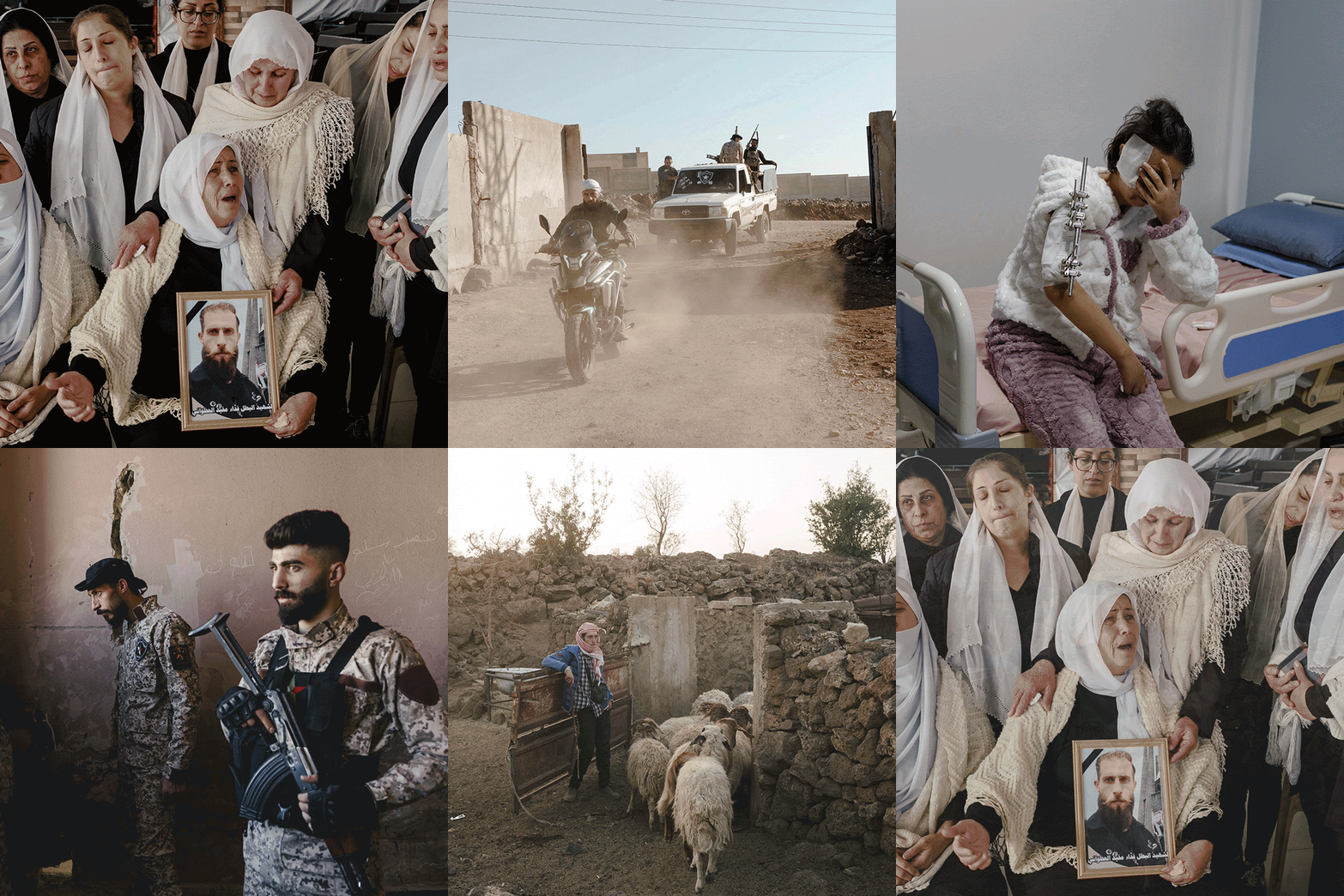
Sweida is the only Syrian province that is still resisting the authority of the central government. It is home to the Druse minority, many of whom are wary of the post-Assad authorities after sectarian clashes last year. My colleagues traveled to the province and spoke to residents who fear that violence could erupt again.
| MORE TOP NEWS |
| Jared Kushner, Trump’s son-in-law and close adviser, met with Hamas leaders in Egypt to try to advance Trump’s plan for the future of Gaza.Trump said he had ordered the reduction of joint military exercises with South Korea. He cited his “very good relationship” with Kim Jong-un — and alluded to South Korea sitting out the war against Iran.The U.S. and Iran missed their 60-day deadline, set under a June cease-fire deal, to reach a broader agreement to end the war.Syria said it had arrested a former police chief who was convicted in Austria for crimes committed during the country’s civil war.At least 93 patients have tested positive for cholera in Yangon, Myanmar, an outbreak that has been attributed to poor sanitation.Emergency workers in Hawaii combed through soggy wreckage yesterday to assess the damage caused by Tropical Storm Lala.At least 47 people were killed in Indonesia after it was rocked by a 7.7-magnitude earthquake on Saturday.A shooting at the U.S. consulate in Toronto has exposed an underground guns-for-hire network. |
WHAT ELSE IS HAPPENING

| Antonello da Messina’s 1473 “San Gregorio Polyptych.” Museo Regionale Accascina Messina, via Reuters |
| Four Renaissance paintings were stolen from a museum in Sicily, Italy, in a brazen heist.Hayden Panettiere, the star of the TV shows “Nashville” and “Heroes,” has died at 36. |
| Jeff Bezos is buying a piece of Liverpool Football Club, his first known investment into a sports team. |
TOP OF THE WORLD
The most clicked link in your newsletter on Friday was about Pakistan’s electric motorcycles.
| SPORTS |
Football: Cristiano Ronaldo said he will “probably” retire next summer and plans to have “more fun.”
Running: Finland’s Alisa Vainio and Amanal Petros of Germany set European Championship records in the women’s and men’s marathons.
| DISCOVERY OF THE DAY |

$10 million in gold
When the police chief learned last week that workers had found gold sealed inside a small brick cellar below a defunct brewery in Belgium, he was sure it was a prank. But then he saw the proof: 49 gold bars and more than 4,000 coins, a cache worth an estimated $10 million, its origin unknown. Who will get to keep it?
| MORNING READ |

VHS Dates, an Instagram account with nearly 900,000 followers, is about videos of people looking for romance in the 1980s and ’90s. Many viewers say they have been genuinely touched by the clips. “How would it feel to be in love?” asked a middle-aged man named Doug in one. “I would really, really, really like to know.”
Intrigued, a Times reporter set up an interview with the people behind the account. At the meeting, they had a confession: The dating videos weren’t from decades ago. They were staged. See how convincing some were.
| AROUND THE WORLD |

Building the city of India’s future
On the banks of the River Krishna in southeastern India, on what was once banana groves and vegetable fields, there’s a new city taking shape. The planners hope it will be the city of India’s future.
Building Amaravati as the new capital city for Andhra Pradesh, a state of 50 million people, is an enormous task: More than 25,000 people are working at the site on any given day. Sixty percent of the new city is expected to be covered by water or green space, complete with bike lanes and a technology hub worth hundreds of millions of dollars. Meet the man behind the most ambitious city-building project in modern India.
We’ve made this link free for you.
| RECOMMENDATIONS |
Plan: If you missed last week’s eclipse in Europe, don’t worry. You can catch a blockbuster eclipse next year.
Listen: Here are five classical music albums to enjoy right now.
Watch: The documentary “American Doctor” focuses on a planned medical trip to Gaza by U.S. physicians. It’s a critic’s pick.
Hunt: Which Manhattan apartment would you buy for $600,000?
| RECIPE |

Thicker than a crepe but lighter than a pancake, baghrir is enjoyed for breakfast across Northern Africa. Instead of the usual topping of melted butter and honey, this version calls for date syrup and salted yogurt.
