
| July 21, 2026 | By Katrin Bennhold |
Good morning, world. A few weeks ago, I spoke to my colleague Declan Walsh, who was reporting at the epicenter of the Ebola epidemic. One thing that stuck with me was the rage he described toward many of the health workers trying to contain the outbreak.
It reminded me of something I witnessed in Germany during Covid. There, too, anger was often directed at those whose goal was to help. There were weekly protests against restrictions, some of them violent. A gas station attendant was killed when he asked a man to wear a mask.
So what is it about health crises and rage? Today my colleague Sheri Fink explains why anger at health workers is something many societies have struggled with for centuries.
Also:
| A blockade in the Red Sea Andy Burnham’s first day Greeks react to “The Odyssey” |
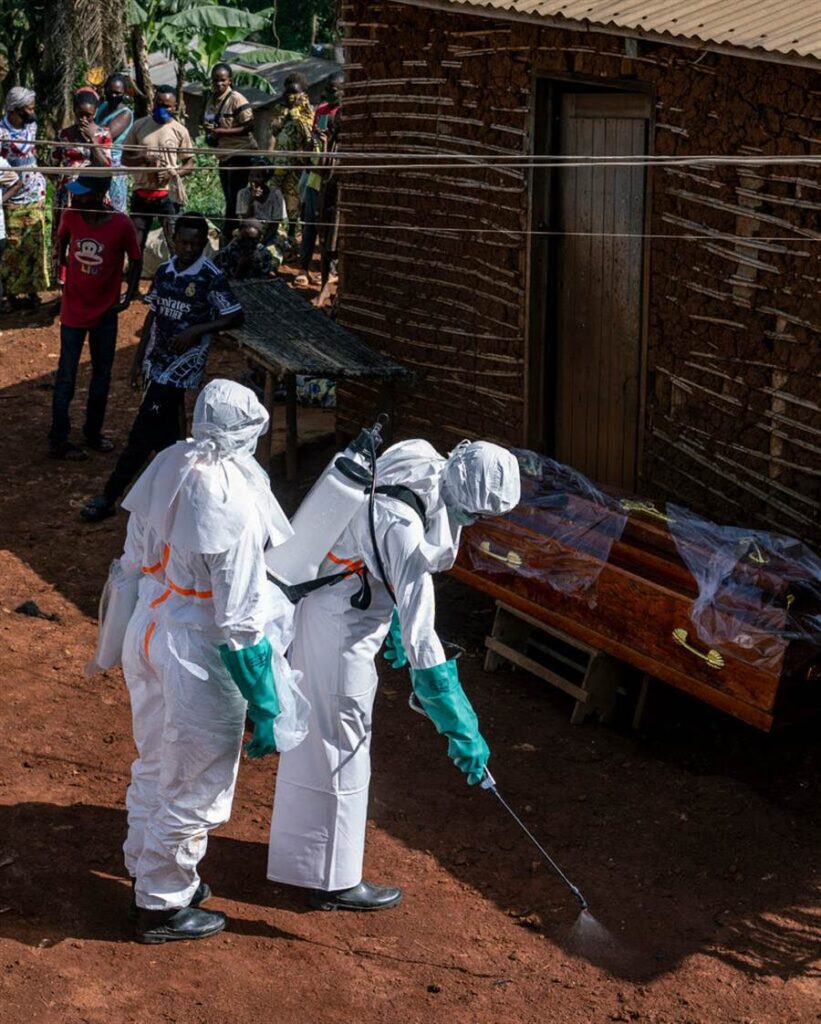
| The mining town of Mongbwalu, the epicenter of the outbreak in the Democratic Republic of Congo, in May. Arlette Bashizi for The New York Times |
Why epidemics breed rage at health workers
By Sheri Fink
Efforts to contain Ebola in the Democratic Republic of Congo did not begin well. Patients fled a treatment unit after community members set it on fire. Residents assaulted a burial team and forced the crew to turn over a coffin.
Reactions like this would be easy to chalk up to a poor understanding of how diseases spread. But unrest during epidemics is not about Ebola, Africa or education. It is something societies have struggled with for centuries, in rich countries and poor ones, in modern times and medieval ones. During the coronavirus pandemic, doctors, nurses and health officials around the world received not only applause and gratitude but also death threats. Patients denied that Covid existed even as they died of the disease.
Experts say outbreaks often elicit a contradictory mix of responses. First, people deny reality and put off behavioral changes that might slow the spread. Then they demand explanations, often blaming individuals, groups within society and, sometimes, doctors. Finally, people take action.
In the Democratic Republic of Congo, when armed community members remove a child from an Ebola treatment unit, “we may view that as irrational, illogical, kind of anti-science,” says Megan Schmidt-Sane, an American medical anthropologist who has briefed humanitarian groups fighting the current Ebola outbreak. “We know that this is about so much more than that. It’s about history and culture and politics and even just about how people love and care for others in their family who are sick.” Only when we understand these tendencies, she and other scholars say, can we navigate them.
Disease breeds distrust
Before the discovery that germs cause illness, humans searched for answers that might explain waves of disease and death. During the Black Death in the 14th century, Europeans massacred Jews, Catalans and others they accused of poisoning wells.
And even when scientific explanations came along, they still left people to fight over the science itself. Today, we can photograph the tiniest viruses and sequence their genetic codes, but considerable mystery and debate remain over how pathogens emerge, spread and kill.

Conspiracy theories about disease travel much more quickly now, but they have always been a part of outbreaks. Samuel Cohn, a professor of medieval history at the University of Glasgow, found that during cholera outbreaks in the 19th and 20th centuries, impoverished people in places as different as New York City and tsarist Russia “produced similar fantasies that accused elites of plotting to cull populations of the poor.” This mistrust led to the murder of medical professionals “and the ritualistic destruction of hospitals and medical equipment.” Sometimes the state is the party sowing blame. In the early 20th century, Ottomans accused Armenians of spreading typhus, and Nazis accused Jews of the same. And in recent years, conspiracy theories can travel the world faster than the disease itself.
There are some simple reasons people in the Democratic Republic of Congo are distrustful of hospitals in the current outbreak. The disease has no cure and acts very rapidly. Many patients have entered the hospital seeming not very sick but then quickly died, raising fears about sending relatives there.
But the Ebola outbreak is also just the latest shock after decades of conflict and suffering, state neglect, and colonial and postcolonial violence. Under Belgian rule in the 20th century, officials confined people suspected of having sleeping sickness — a parasitic disease spread by tsetse flies — and experimented with toxic, arsenic-based treatments. Research suggests these types of efforts contributed to persistent medical distrust across multiple African countries.
“Both medicine and humanitarianism have been used” to advance outsiders’ interests, says Myfanwy James, a British assistant professor of international development at the London School of Economics and Political Science. “These deeply held suspicions actually are based on historical experience.”
Breaking through
| Health workers near Bunia, the Democratic Republic of Congo, in May. Arlette Bashizi for The New York Times |
In recent decades, anthropologists have tried to bridge the understanding between public health responders and the communities affected by deadly diseases. Many African countries now include anthropologists on outbreak response teams, says Julienne Anoko, a Cameroonian anthropologist who works on community engagement for the W.H.O.
Drawing on previous outbreaks, health workers in the Democratic Republic of Congo are now adapting burial practices to honor community beliefs while reducing the risk posed by infectious bodies. And after complaints, the entrance to an isolation unit was moved so that incoming patients do not have to walk past a morgue.
That work is painstaking; the results can be unsatisfying. And the broader challenge of containing the epidemic remains: Two months into the response, new Ebola cases are still growing faster than in any previous outbreak. More than half of those who contract the disease are dying without making contact with Ebola response teams.
But in places where health workers have been able to impart the true nature of the threat, more people are seeking help. They “accept the virus is killing them,” Anoko says, “and they are scared of dying.”
| MORE TOP NEWS |
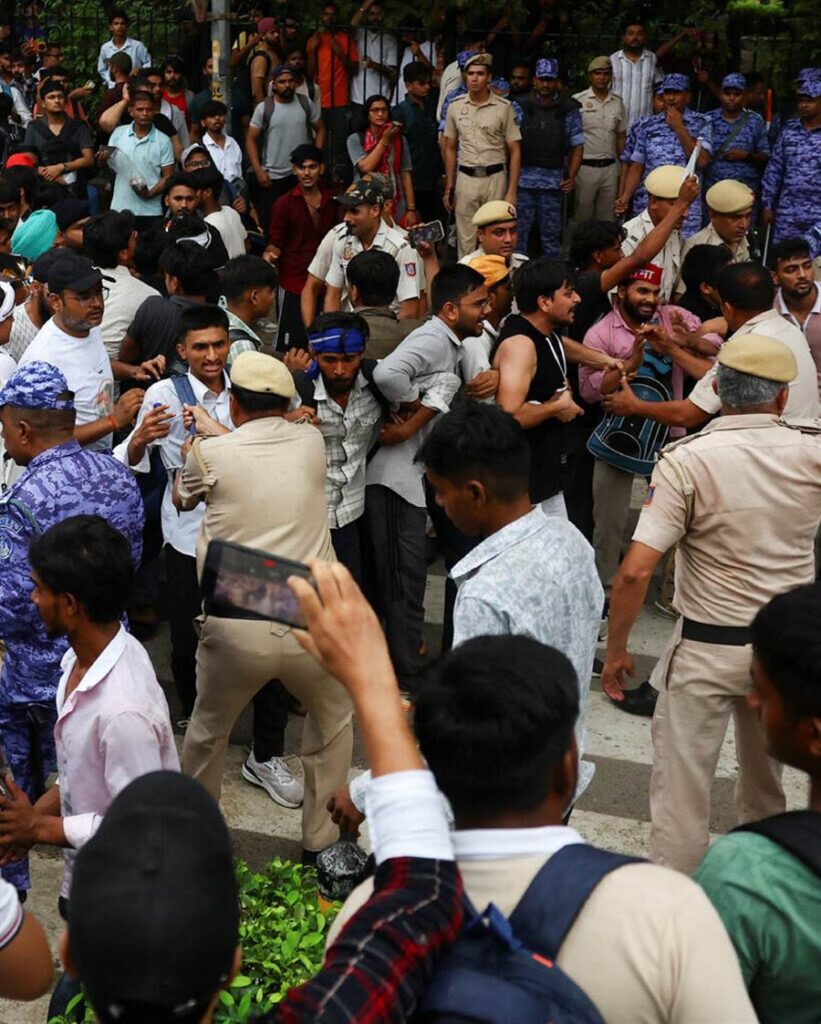
| The police in New Delhi used tear gas and batons to disperse tens of thousands of mostly young protesters marching on the Parliament.The Houthis said they would impose a maritime blockade on Saudi Arabia, threatening to open a new front in the war and adding pressure on energy markets.Andy Burnham’s first day as British prime minister involved a trip to a homeless shelter, a visit to Buckingham Palace and the forming of his cabinet.President Trump signed orders to impose a 50 percent tariff on a range of Canadian goods, reigniting a clash with one of America’s largest trading partners.President Volodymyr Zelensky is under increasing pressure to remove Ukraine’s top general, as soldiers and veterans join growing street protests.After a lengthy leadership vacuum, Hamas named Khalil al-Hayya as its new political chief.A Moroccan man died in Italy while being restrained by police officers, sparking an outcry and drawing comparisons to the killing of George Floyd in the U.S.Nicaragua’s president said he would abolish his nation’s elections, a move to strengthen his and his wife’s authoritarian grip.The White House sought the phone records of several Times journalists and their relatives — including one reporter’s mother — in its effort to unmask confidential sources. |
TOP OF THE WORLD
The most clicked link in your newsletter yesterday was my interview with Mayor Zohran Mamdani.
| OPINION |

Older generations are responsible for the decline in reading, writes David Wallace-Wells.
Being MAGA in Washington, D.C. has stopped being fun, writes Sally Quinn.
China and the U.S. aren’t playing the same game with A.I., writes Ross Douthat.
| KIWI SLANG OF THE DAY |

Skux
The New Zealand word, dating back to the 1990s, was pulled back into circulation in tributes to the actor Sam Neill, who died last week. “The original skuxes combined stereotypical masculine traits (rugby, power) with a gentler presentation (eye makeup, hair straightening, simply caring at all),” one Kiwi wrote. “Neill was a classic Kiwi bloke but with a beautifully gentle way of presenting himself, especially in his love of land and animals. Very skux.”
| MORNING READ |

After a fire tore through seven Hong Kong apartment towers last year, killing 168 people, the complex was sealed off for months. This spring, residents were allowed to return to the ruins. Some apartments were eerily frozen in time. In others, people had to sift through ashes for anything that survived.
The Times asked residents to share the objects they found that belonged to the loved ones they lost: a toddler’s favorite pacifier, a wedding ring, the blackened remains of an iPad. See the items they recovered.
| AROUND THE WORLD |

Watching ‘The Odyssey’ in Greece
In the weeks leading up to the release of Christopher Nolan’s “The Odyssey,” the film drew criticism in Greece, part of a broader debate about how one of the world’s most enduring myths should be retold.
As crowds left cinemas in Athens after the three-hour epic, many said they were excited that a work written thousands of years ago had inspired a major Hollywood production. “It took me back 45 years, when we were reading the story at school,” one man said. Read more about what Greeks think of the movie.
| RECOMMENDATIONS |
Read: Colson Whitehead pulls off another score in “Cool Machine,” the final installment of his Harlem crime trilogy.
Ogle: A house in California centers regenerative design, which aims to enhance natural ecosystems and social cohesion.
Dip: Here’s an insider’s guide to six of Vienna’s splendid outdoor public pools.
Drain: Does lymphatic massage actually make your skin healthier?
| RECIPE |
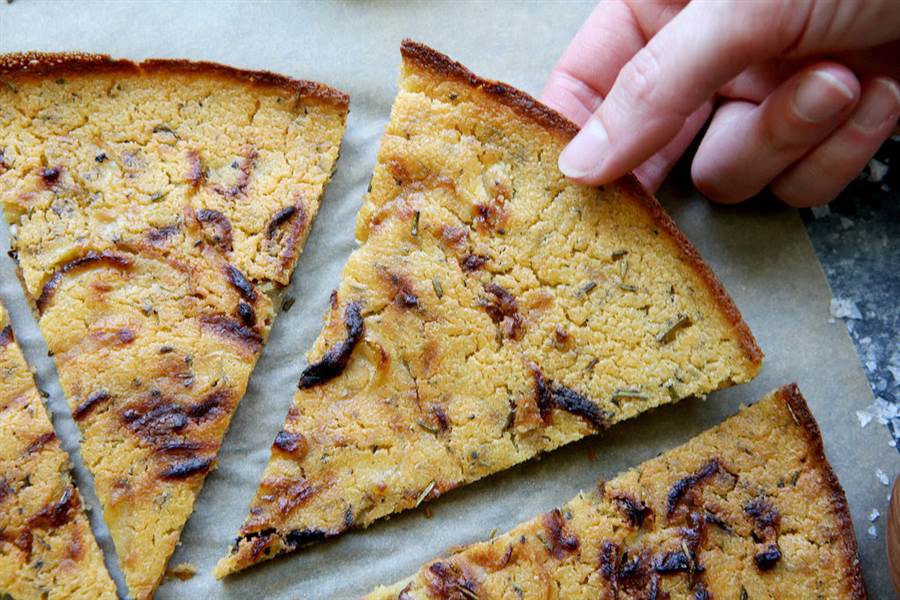
Socca is a large, savory chickpea pancake from Provence, and it’s a great source of protein. In the main market in Nice, it’s traditionally baked in wood ovens on copper disks and delivered by bicycle, to be wrapped in paper and eaten on the street.
