
| March 17, 2026 | By Katrin Bennhold |
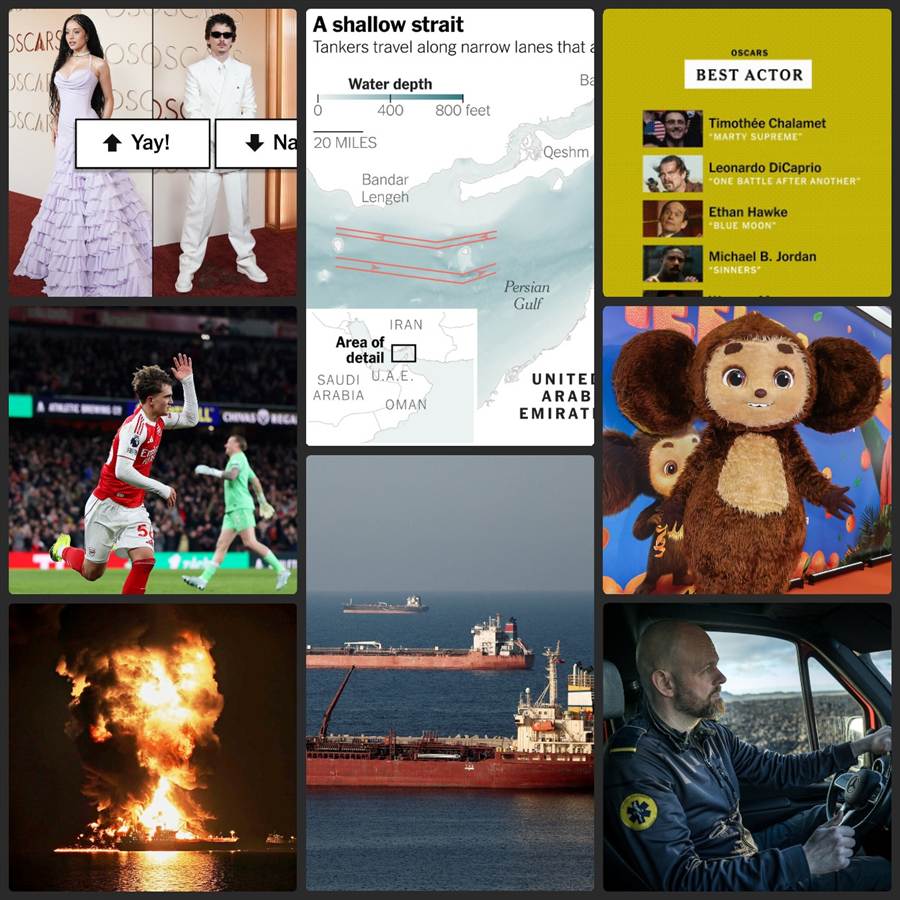
Good morning, world. Iran’s willingness and ability to disrupt the global economy by choking off the Strait of Hormuz, a vital shipping lane for oil and trade, caught the Trump administration by surprise.
That in itself is something of a surprise. Because this was not a secret plan.
Before the United States and Israel first launched strikes, Iran embarked on a tour of the Gulf and warned that if attacked, it would inflict maximum economic pain on the region and the world. Its best leverage for doing that? A narrow waterway that connects the Persian Gulf to the open ocean — and is fiendishly difficult to secure.
Also:
| A U.S.-China summit faces delays Nvidia shifts its strategy The best moments from the Oscars |
A very predictable problem
American military planners and Gulf oil companies have worried about this scenario for decades.
“Of all the risks the global energy system has long faced, none was bigger or better known than the potential closure of the Strait of Hormuz,” my colleagues Rebecca F. Elliott and Vivian Nereim reported.
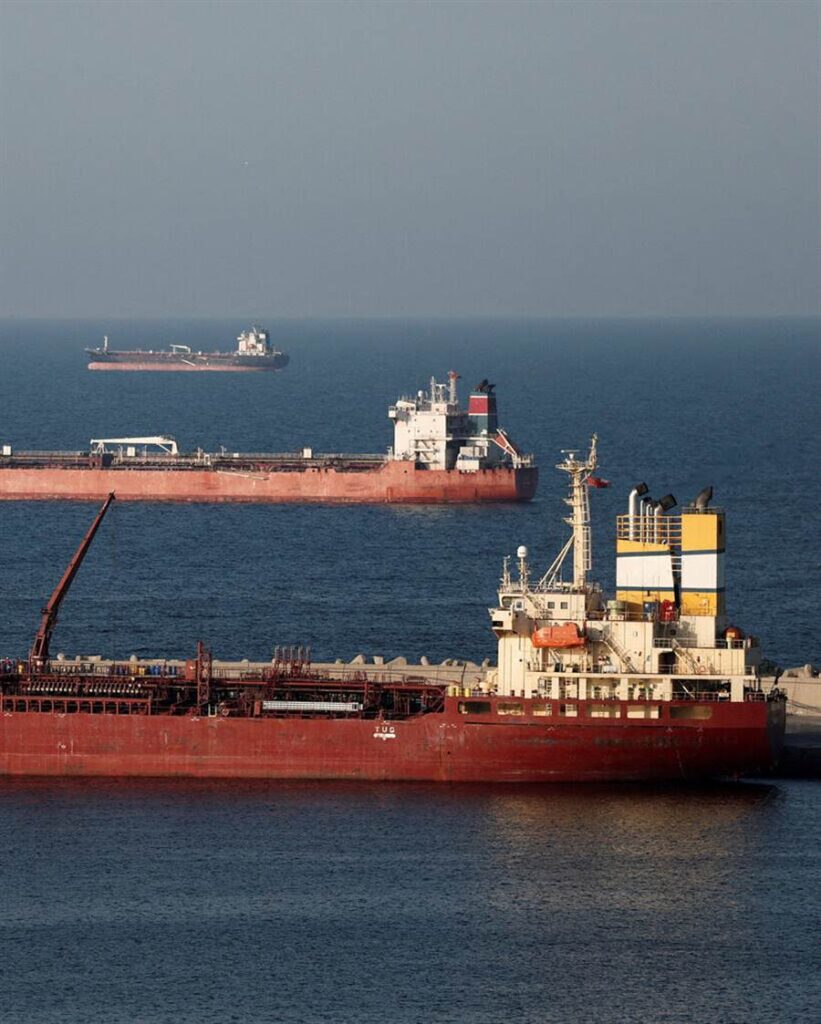
The strait is vital — a crucial artery for one-fifth of the world’s oil supplies — and extremely vulnerable to attack. It’s only 34 kilometers wide at its narrowest point: All ships are forced to pass within easy reach of Iran’s southern border.
The strait, as some of my colleagues reported, has become “exhibit A in Iran’s ability to seize an asymmetric advantage” against its more powerful enemies.
Much of Iran’s navy has been sunk by U.S. and Israeli strikes. Hundreds of its missiles have been destroyed. But as long as it retains the ability to harass ships across a narrow strip of water, it has a powerful tool at its disposal.
Iran’s near-total blockage of the strait has sent oil and natural gas prices surging around the world. Oil prices are above $100 a barrel, up more than 40 percent since the start of the conflict.
Now that the U.S. is facing this long-anticipated problem, it seems somewhat at a loss for what to do about it.
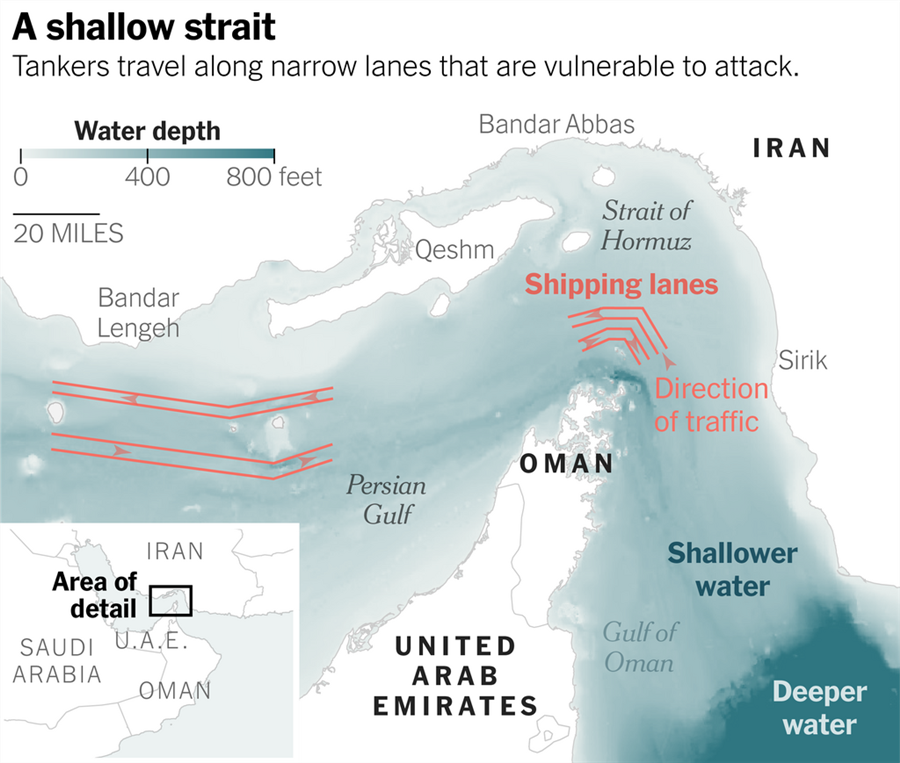
| Sources: Flanders Marine Institute, International Maritime Organization, GEBCO. Samuel Granados and Agnes Chang/ The New York Times |
A geography lesson
President Trump is frustrated. Last week he asked America’s highest ranking military officer, the chairman of the Joint Chiefs of Staff, why the U.S. could not reopen the strait.
The answer is simple, he was told: A single Iranian soldier or militia member zipping across the narrow strait in a speedboat can fire a mobile missile into a slow-moving supertanker, or plant a limpet mine on its hull.
I spoke to my colleague Eric Schmitt, one of our national security correspondents. He said Iran’s Revolutionary Guards operate scores of these speedboats. The threat alone is enough to disrupt shipments.
Since the war started two and a half weeks ago, Iran has attacked ships in and around the strait, bringing traffic to a near standstill.
Trump’s options for improving the situation aren’t great.
He has exhorted tanker owners to “show some guts.” And the administration has talked about having the U.S. Navy escort commercial ships. There is precedent, Eric pointed out: In the 1980s during the Iran-Iraq war, the U.S. Navy successfully secured passage through the strait.
But today, as technology has evolved, Eric said, that would be “extremely costly and extremely risky.” Forming such an escort could take weeks. It would require destroying the many Iranian missiles along the strait. And it would probably mean diverting even more warships to the Middle East.
Over the weekend, Trump leaned heavily on other countries to send their own warships to the strait. He warned NATO members that not heeding his call would be “very bad” for the alliance.
But, so far, few seem inclined to cooperate. China, South Korea, France and Britain did not respond directly to Trump’s demand. Japan, Australia and Germany explicitly ruled it out. The European Union’s top diplomat spoke bluntly when she said: “This is not Europe’s war.”
Having other countries send ships wouldn’t be a long-term solution, Eric said. The cost and risk would be too high to sustain.
 |
| An oil tanker burns near Basra, Iraq, after an Iranian strike last week. Associated Press |
How to open a strait
The question of how to keep the strait open is not a new one. In the 2000s, my colleagues report, the Pentagon asked one of its senior strategists in the Middle East to assess a similar situation.
Lt. Gen. S. Clinton Hinote, who retired from the Air Force, concluded that while the U.S. could use advanced sensors and precision strikes to mitigate Iranian attacks, it could not stop them completely. The shipping lanes are too narrow, and vessels too vulnerable to rockets, missiles and swarms of small boats.
“The Strait of Hormuz is a difficult, almost impossible, problem to solve through military means alone,” Hinote said.
Keeping the waterway open militarily, he said, would mean taking and holding the Iranian territory bordering the strait. In other words: boots on the ground.
“It would require large numbers of ground forces to seize the coast,” he said. “Short of that, the only lasting solution to the strait is a diplomatic one.”
Other developments:
| Trump asked to postpone a planned meeting with the Chinese leader Xi Jinping, following his demand that Beijing help reopen the Strait of Hormuz.Israel escalated ground attacks against Hezbollah in Lebanon. The town of Khiam has emerged as a focal point.More than a million people in Lebanon — roughly one out of six people — have been displaced by Israel’s offensive, according to the Lebanese government.Trump went to war without consulting allies. But they may still have to pick up the pieces.Our correspondents answered readers’ questions about the war. |
| MORE TOP NEWS |

Upsets and triumphs at the Oscars
For once, the Oscars got a lot right this year, our film critics say: The awards ceremony had real emotion and some nice surprises. The most suspenseful Oscar, for best actor, went to Michael B. Jordan, who played the diabolical twins Smoke and Stack in “Sinners.” Watch my colleague Kyle Buchanan, our awards columnist, talk about Jordan’s win in the video above. Here are the best and worst moments from the Oscars.
| OTHER NEWS |
| Cuba is expected to announce that it will welcome foreign investment as it faces a severe energy crisis.The U.S. is threatening to withhold lifesaving H.I.V. treatments unless Zambia provides more access to critical minerals.Nvidia announced new A.I. chips to defend its dominant position as the market rapidly evolves.Susie Wiles, Trump’s chief of staff, said that she had been diagnosed with breast cancer.The U.S. government released a Palestinian protester who had been detained for more than year without being charged with a crime.The convicted sex offender Jeffrey Epstein promised to influence admissions at elite private schools for friends and acquaintances. |
Top of The World
The most clicked link in your newsletter yesterday was about a Cambodian temple.
| SPORTS |

| Football: At age 16, Arsenal’s Max Dowman is the Premier League’s youngest-ever goal scorer.Baseball: Venezuela defeated Italy to advance to the World Baseball Classic finals, where they will face Team USA. Here’s what to know. |
| LOOK OF THE DAY |
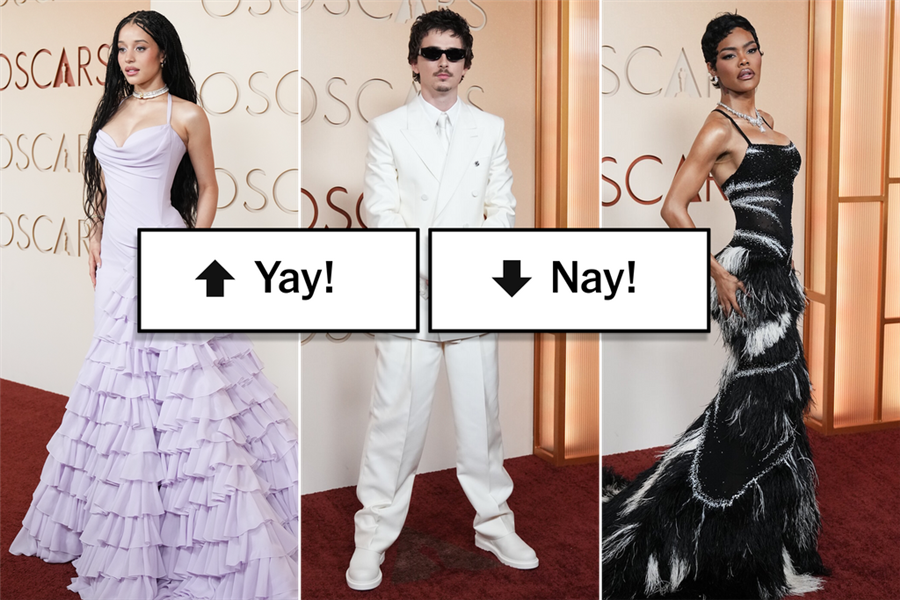
Vote for your favorite Oscar outfit.
— Do you say yay or nay to Timothée Chalamet’s all-white ensemble, Wunmi Mosaku’s full-body sequins and Renate Reinsve’s minimalist asymmetry? Rank these looks and dozens of others. Check out our favorites here.
| MORNING READ |

Helgi Hjorleifsson is Iceland’s only “lava cooling manager.” He leads a group of firefighters who try to control the flow of molten magma from the island’s volcanoes.
In 2023, lava threatened the Blue Lagoon, one of the country’s most popular tourist attractions. Hjorleifsson and his team managed to divert the flows by hosing them down with water from six-story earthen barriers. Here’s how they’re preparing for the next eruption, which could be imminent.
| AROUND THE WORLD |

Is this creature bad for Russia?
Generations of children in Russia and the Soviet Union have loved Cheburashka, a cartoon character with big ears and a gentle disposition.
He might be a monkey, or possibly a bear, and he’s the star of four short stop-motion animated films, the first of which appeared in 1969. Recently, his popularity has reached new heights, thanks to two live-action features, including “Cheburashka 2,” which was released in January.
But some Russian conservatives aren’t amused. They accuse the cuddly rascal of undermining Russian values, rotting young minds and weakening national pride. Among the critics is Aleksandr Dugin, an influential political theorist with ties to the Kremlin, who says his country’s affection for Cheburashka is “unhealthy.” Read more about this fight over identity and culture.
| RECOMMENDATIONS |
Read: Mieko Kawakami’s “Sisters in Yellow” follows a group of scheming young women on the margins of Japanese society.
Envision: Is this vacation on a private island worth the heart-stopping price tag?
Decorate: Elevate your dishes and glassware to recreate the restaurant experience at home.
| RECIPE |

It’s St. Patrick’s Day today, so why not whip up a Guinness pie? This recipe was created with advice from the British chefs Jamie Oliver (about the stew) and Fergus Henderson (the pastry). It’s sure to deliver good cheer and contentment.
