
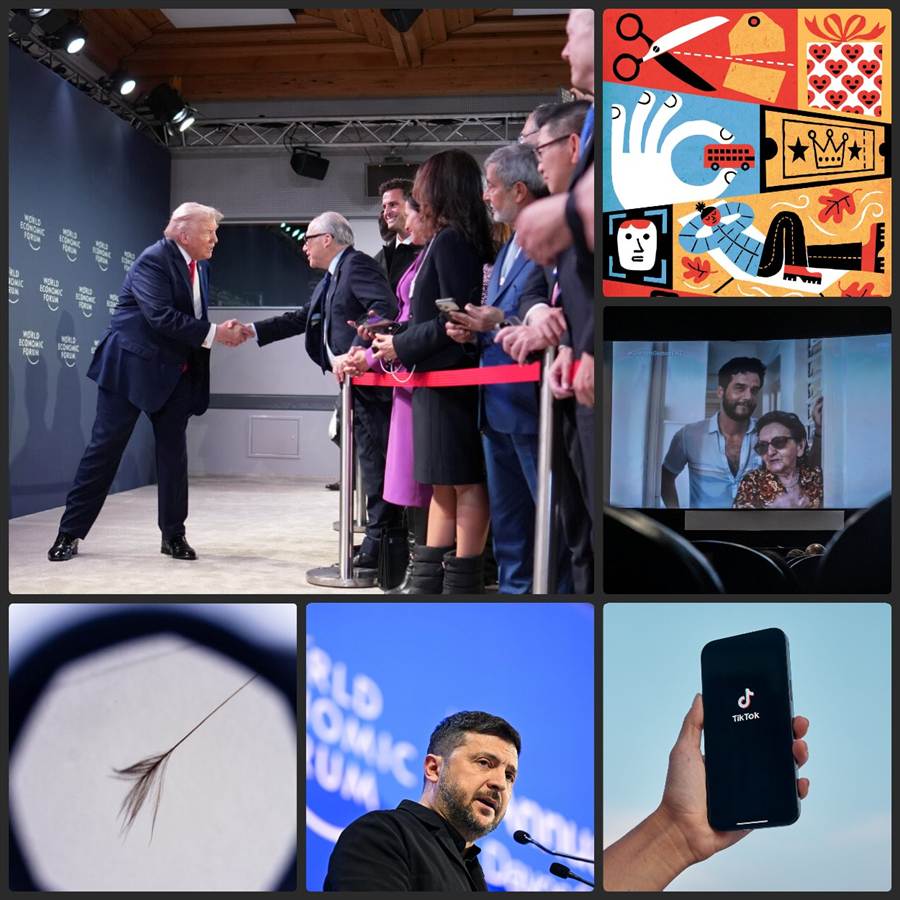
Good morning, world! It was a dramatic week in Davos. President Trump gave a speech mocking Europeans. Christine Lagarde walked out of a private dinner hosted by the U.S. commerce secretary. Emmanuel Macron, in noteworthy sunglasses, cracked sarcastic jokes about living in a “predictable” time. And Mark Carney earned a standing ovation for urging countries to stand up to bullies. (He did not name names.)
Davos has long been a weather vane for the world, a perch from which to observe big shifts like the rise of China, the disruptive power of A.I. and now the breakdown of the postwar order. I spoke to my colleague Peter Goodman, a regular at Davos over the years, about what this annual gathering of the powerful can tell us about the strange moment we’re in.
Also:
| A deal for a new U.S. TikTok Zelensky criticizes Europe’s weakness Brazil’s breakout movie star |
Davos stops pretending
 |
| Doug Mills/The New York Times |
Peter, you’ve come here, what, 12 times? And you’ve written a book: “Davos Man: How the Billionaires Devoured the World.”
Tell us about Davos Man — shorthand for the hundreds of business and tech magnates and political leaders who flock to the event every year — and how he’s adapting to the Trump era. (And yes, it’s still mostly men.)
Davos men used to tell us that they were gathered here on the mountaintop, not just to do deals and make themselves richer, but to make the world better. They would have us believe that if we just deregulate more and cut more taxes and give them greater largess to do what they do, they will take care of climate change and gender inequality and social injustice.
That was always a completely absurd proposition, this idea that the ultimate beneficiaries of the status quo would be the ones to fix it. And now that pretense is more or less gone.
Take me back to the origins of this meeting in Davos. How did it start?
Well, it goes back to 1971, which was actually another year of trans-Atlantic tension. Nixon left the gold standard. The dollar fell. The U.S. imposed tariffs on European imports. And the Europeans were totally blindsided. This German economist, Klaus Schwab, convenes this gathering of politicians and academics and business people in Davos. It gradually grows into this giant business conference that’s also an exercise in virtue signaling. The Davos motto is: “Committed to improving the state of the world.”
Has Davos changed since you first started coming?
The change is dramatic. Some of it is physical, and some of it is ethos.
There’s like a Las Vegas Strip element to how things have developed. These pop-up storefronts for the world’s biggest multinationals have totally taken over the village. When I first came here, there was a chocolate truffle place and a toy store where I bought a present for my kids. Now it’s all been taken up by giant tech companies, consultancies and crypto companies.
The people paying the bills here like to boast: “Oh, I was in Davos for four days.I never left my hotel suite because everyone else had to come to me to court me for investments.”
What about the change in ethos?
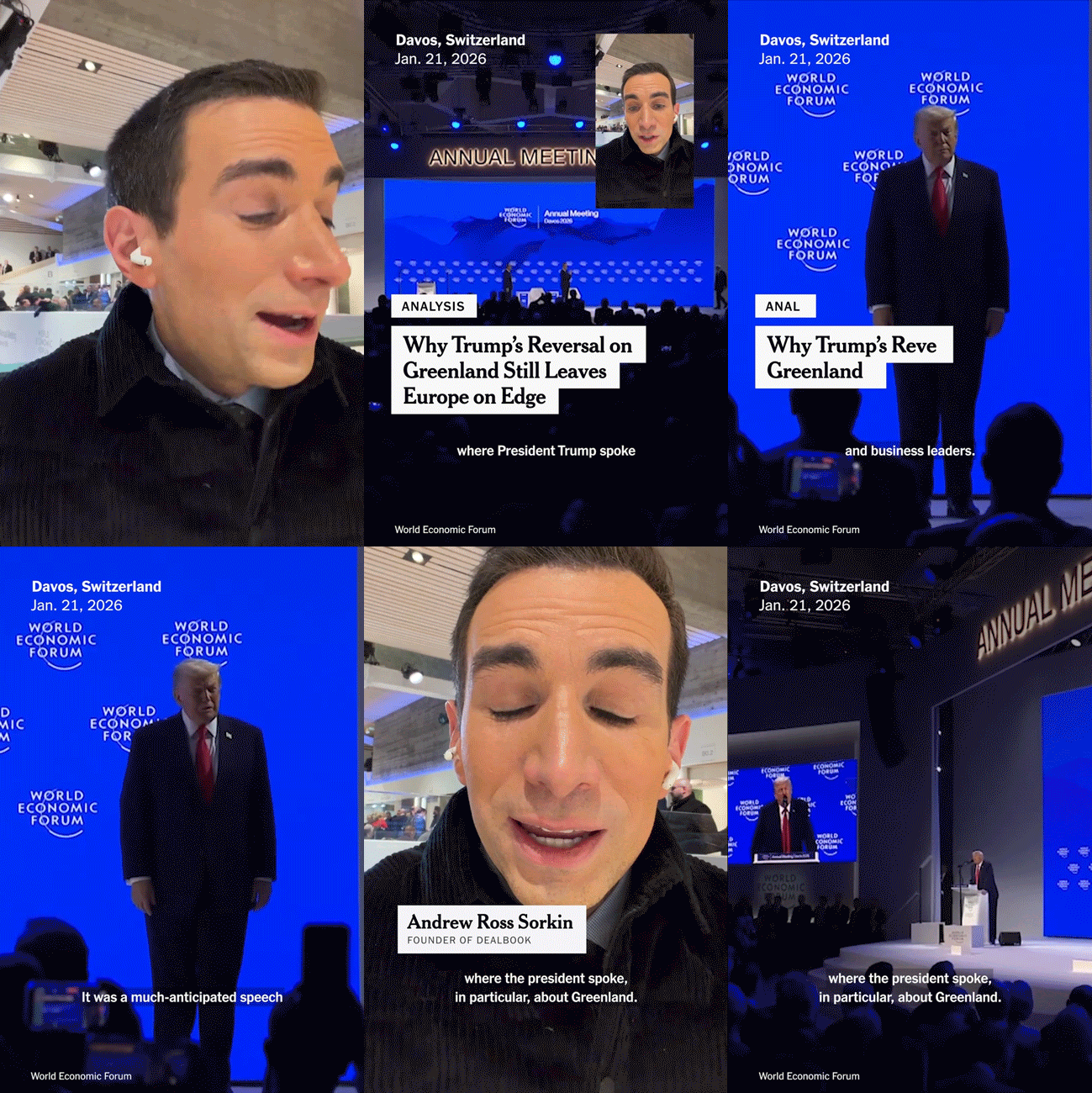
It seems pretty clear that Larry Fink of BlackRock, who took over from Klaus Schwab, is leaning into making this purely a business conference. “Committed to improving the state of the world” has mostly disappeared from view.
All the former buzzwords — social justice, sustainability — have gone. They’ve sanitized virtually every part of it to make the Trump administration feel welcome. It was a big score that they got Trump to attend.
During Trump’s first administration, people described Trump and Davos as opposing forces. That seems to have changed.
The last time Trump was here, in 2018, the conventional narrative was, it’s a clash of worlds, the globalists who want to make everything better rubbing up against the guy who’s like a wrecking ball pointed at the liberal democratic order.
It wasn’t really true even then, right? The C.E.O.s who pay the bills here were mostly delighted with this guy, who represented tax cuts and deregulation.
And there’s a similar dynamic now. I mean, these C.E.O.s work for shareholders. They’re publicly traded companies. And by the way, they’re looking quarter to quarter. So if you ask them, what’s the long-term damage from the erosion of central bank independence? They’ll give you an answer that all things being equal, they’d prefer that the Fed’s independence be sacred, and that rule of law prevail. But all things are never equal, right?
We know that Trump is at war with anything he considers woke. Larry Fink used to write annual shareholder letters about corporate responsibility and how climate change would be solved by the capital markets. Now there’s no talk of sustainability whatsoever.
So the old virtue signaling is gone?
Right, to the extent that’s there’s virtue signaling, it’s signaling to Trump.
More from Davos:
| After Trump’s ultimatum on Greenland, negotiators are considering plans to create sovereign U.S. bases and ban resource extraction by Russia.Denmark is pushing back hard on any concessions on its sovereignty.The Trump administration laid out a highly speculative vision for the future of Gaza at a gathering to inaugurate its “Board of Peace.” (Watch the video.)Friedrich Merz, the chancellor of Germany, urged Europe to strengthen its militaries to survive in an international order whose “very foundations have been shaken.” |
| MORE TOP NEWS |
 |
| Andres Kudacki for The New York Times |
TikTok strikes a deal for a new U.S. entity
ByteDance, TikTok’s Chinese owner, struck a deal with a group of non-Chinese investors to create a new U.S. TikTok. The agreement concludes a six-year legal saga that saw the app banned in Congress and ensnared in politicking between two global superpowers.
Without the deal, the app would have had to leave the American market.
The investors include the software giant Oracle; MGX, an Emirati investment firm; and the personal investment entity for Michael Dell, the tech billionaire behind Dell Technologies.
The deal is intended to loosen TikTok’s ties to China and address national security concerns that Beijing could use the app to surveil or manipulate its more than 200 million users in the United States.
 |
| Fabrice Coffrini/Agence France-Presse — Getty Images |
Zelensky criticized ‘lost’ European allies
President Volodymyr Zelensky of Ukraine criticized European countries for what he described as their geopolitical weaknesses.
“Instead of becoming a truly global power, Europe remains a beautiful but fragmented kaleidoscope of small and middle powers,” Zelensky said in a speech. “Instead of taking the lead in defending freedom worldwide, especially when America’s focus shifts elsewhere, Europe looks lost, trying to convince the U.S. president to change. But he will not change.”
Zelensky’s speech came after he held private talks with Trump in Davos. The leaders tersely described their talks as “good.”
| OTHER NEWS |
| Elon Musk’s Grok chatbot generated millions of sexualized images of women, according to a Times analysis.Hours after Japan restarted a reactor at a large nuclear complex, a technical malfunction forced it back offline.U.S. immigration agents detained a 5-year-old boy in Minneapolis, incensing residents who feel they are under siege. |
| A Filipino journalist was convicted on charges of financing terrorism and sentenced to up to 18 years in prison. Rights groups called it an attack on press freedom. |
| SPORTS |
Football: Check out our Champion’s League projections.
Skiing: How Lindsey Vonn’s new titanium knee brought her back to the Olympics at 41.
| FEATHERS OF THE DAY |
 |
| Bryan Anselm for The New York Times |
Filoplumes
— They are nature’s super feather, one of six types on a bird’s body. Tiny, hairlike filoplumes detect pressure, touch and vibration, and translate them into neuronal signals. They provide birds with detailed information as they fly, telling them to adjust their feathers to stay warm, or to release heat. They may also detect the movement of parasites, prompting the birds to preen or emit oil in that area.
| MORNING READ |
 |
| Dado Galdieri for The New York Times |
Tânia Maria de Medeiros Filha is causing a major cinematic stir in Brazil and abroad. At 79, she has become a breakout star as the hostess of a safe house in “The Secret Agent,” which earned four Oscar nominations yesterday.
Despite only appearing onscreen for 11 minutes in the film, Tânia Maria has amassed a cult following and drawn praise from international film critics. “I think it’s because of my simplicity,” she told our reporter in an interview, chalking up the frenzy to her authenticity in a role not far from her real-life persona. Read more about her newfound celebrity.
More on the Oscars: “Sinners” scored a record 16 nominations, followed by “One Battle After Another,” which earned 13. Catch up on all the nominations here.
| AROUND THE WORLD |
 |
| Tim Cook |
Oh, the places we’ll go
The world of travel can be full of surprises — disrupted unexpectedly by weather and by politics — but our travel reporters are doing their best to look ahead at what trends we can expect to take off this year.
Some predictions: A rise in “microvacations,” or one- to three-day trips, often to far-flung destinations, for travelers short on time. And at wellness destinations, a growing focus on the healing effects of sound, such as “vibroacoustic” spa treatments that use specialized beds and headphones so that guests not only hear but physically feel therapeutic tracks. Read more.
| RECIPE |
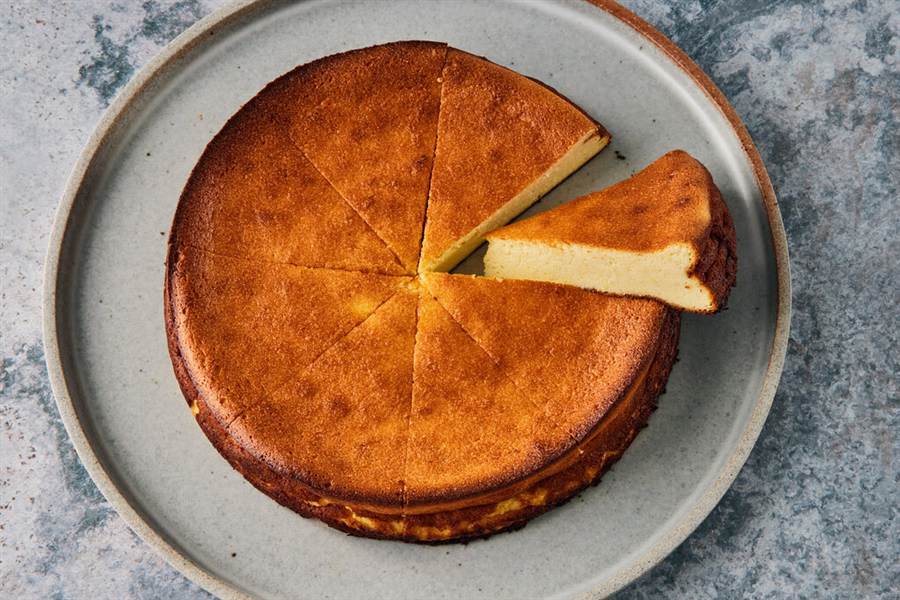
This Turkish yogurt cake is similar to a lemon-scented cheesecake, but it’s lighter and has a fresher, tangier flavor. It’s good both warm and cold, either on its own or topped with berries. Make sure to use a thick, strained yogurt, or the texture won’t be as creamy.
