
| April 16, 2026 | By Katrin Bennhold |
Good morning, world. The American president has been sparring with the American pope. After Pope Leo XIV condemned “absurd and inhuman violence” in the Middle East, President Trump called the pontiff “weak on crime” and “terrible on foreign policy” and said Leo was in the Vatican only because of him.
That, along with an A.I.-generated image of Trump as a healing Jesus — Trump later argued it portrayed him as a doctor — made for a lot of dramatic headlines this week. But from the church’s perspective, all this is overshadowing the main focus of Leo’s current trip. Today my colleague Motoko Rich, who is on the road with him, writes about a place that is central to the future of Catholicism: Africa.
Also:
| Pakistani mediators arrive in Iran Adopting a ruined city in Ukraine Diverse roots in a Cape Town garden |
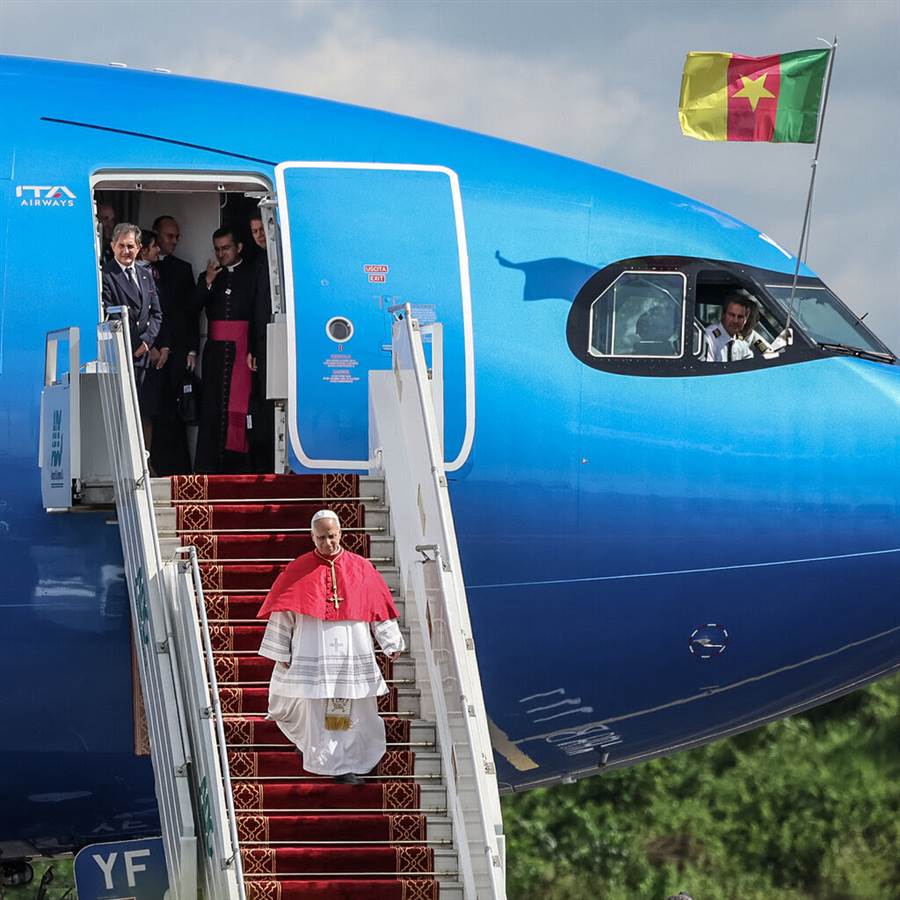
| Pope Leo XIV arrived in Cameroon’s capital, Yaoundé, yesterday. Daniel Beloumou Olomo/Agence France-Presse — Getty Images |
The future of the Catholic church is in Africa. It could get complicated.
By Motoko Rich
There are already 288 million African Catholics, representing more than one fifth of the faithful worldwide. The religion is growing faster in Africa than on any other continent.
In a sign of the region’s growing importance to the church, Leo is visiting Africa before traveling to either the U.S. — his homeland — or South America, one of Catholicism’s traditional strongholds, where he spent two decades of his career before assuming the papacy.
But Africa is also tricky ideological territory. It’s where resistance to some of the reforms enacted by Leo’s predecessor, Pope Francis, runs deepest. When Francis allowed priests to bless same-sex couples, it inflamed Africa’s conservative bishops, many of whom still discourage priests from performing the blessings today.
It’s a place where Catholicism is in competition with conservative evangelical and Pentecostal rivals for worshipers, and where church leaders worry that Francis’ reforms might have hurt the church’s prospects for expansion.
Leo, who is about a quarter of the way through an 11-day trip, is potentially wading into long-running tensions over some of Catholicism’s most charged issues.
The ideological battles being fought in Africa “will define the future of the Catholic Church,” said Ebenezer Obadare, a senior fellow for Africa studies at the Council on Foreign Relations in Washington.
 |
| Waiting for the pope’s arrival in Yaoundé. Daniel Beloumou Olomo/Agence France-Presse — Getty Images |
The Cameroon case study
One country that encapsulates the tensions over Africa’s place within the church is Cameroon, which Leo is currently visiting.
The country has deep Catholic roots dating back to the 19th century. Close to 30 percent of the population — about eight million people — identifies as Catholic, including the president, Paul Biya.
It’s also a place where homosexuality is outlawed, as it is in dozens of African countries. After Francis said of gay priests, “Who am I to judge?,” and later let priests bless same-sex couples, Cameroonian bishops were among the fiercest opponents.
“Africa operates with its cultural values, its ancestral customs,” said Paul Engoulou, a parish priest in Yaoundé, the capital of Cameroon. “As such, it cannot adapt to unnatural practices such as homosexuality.”
So far, Leo, who has tried to walk a middle ground on social issues after Francis’ reforms, has not brought up homosexuality on his trip. (One theology professor told me he thought the topic might be “a lion that he wants to let sleep.”)
He also hasn’t brought up polygamy, a practice that is legal in Cameroon and a common cultural practice on much of the continent — but a violation of Catholic doctrine. Late last month, a commission of African bishops released a report discussing the need for the church to offer Catholics in polygamous relationships a path to participate in the faith. The report made clear that anyone with multiple spouses could not be baptized. But it offered support to those who might consider how to combine their faith with polygamy as they slowly worked to move away from the practice.
In Yaoundé, Leo made a speech yesterday at the presidential palace, where he stressed the importance of government transparency and the rule of law. The speech helped assuage the concerns of some that Biya, the world’s longest-serving authoritarian leader, could use the papal visit to rehabilitate his image. But so far this trip — though we’re just a few days in — the church’s ideological fault lines have gone unaddressed.
A power disparity
The tensions between the church’s leadership in Rome and its followers in Africa are arguably a reflection of a long-running disparity: Africa’s importance to the future of Catholicism is not reflected in the makeup of the Vatican’s leadership.
There are no Cameroonians in the College of Cardinals, the group of 121 senior church leaders who advise and elect popes. Only 14 are from the entire continent of Africa. By comparison, 18 are from Italy.
“Cameroon and Africa provide the numbers to keep the church alive,” said Henry Michael Gueche, 36, a technology entrepreneur in Yaoundé, who described himself as a faithful Catholic. But while Africans have “a seat at the pew,” Gueche said, they don’t have “a real seat at the table in Rome.”
As an Argentine, Francis was the first non-European pope since 741 A.D. He has since been followed by Leo, another non-European. The church’s leadership is moving toward what Francis called the “peripheries,” where Catholicism is most vibrant. Before Leo’s selection, there was speculation that the next pope could be African.
That didn’t happen. But Leo’s visit highlights both the continent’s ongoing importance and the tensions that may deepen as that importance grows.
For more: How do you ask the pope about Trump? Here’s how.
| MORE TOP NEWS |
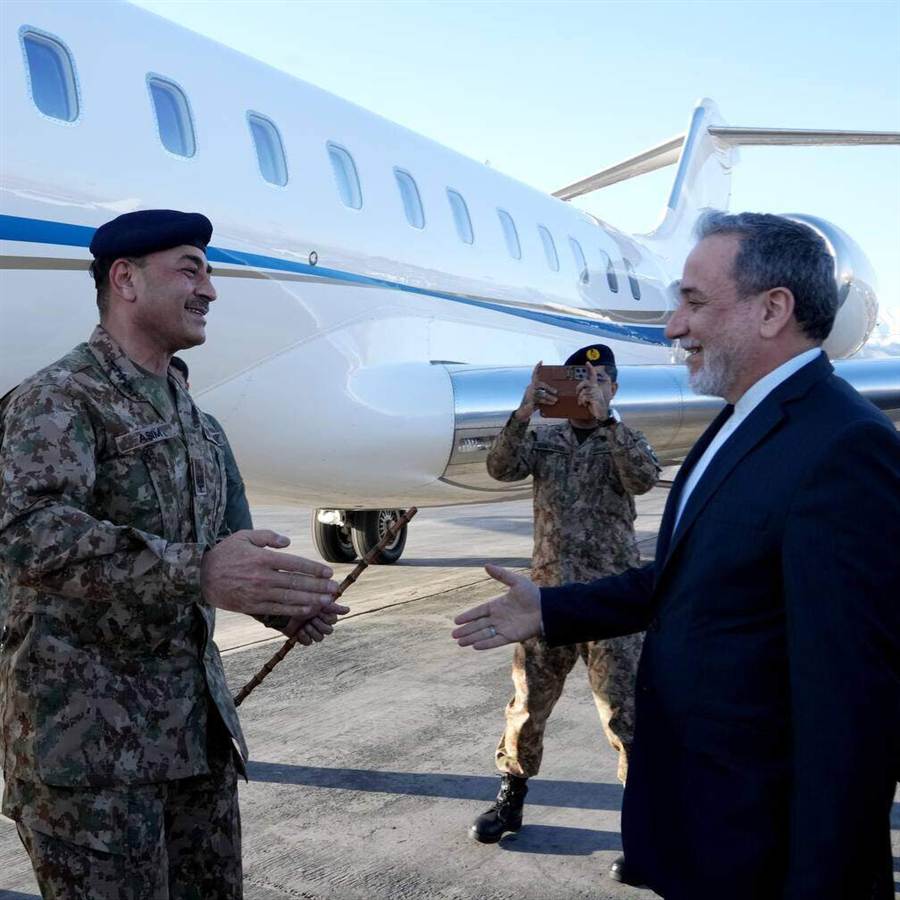
| This photo, depicting the Iranian foreign minister, Abbas Araghchi, was released by Mr. Araghchi’s office. Telegram channel of the Iranian Foreign Minister Abbas Araghchi, via Associated Press |
Pakistani mediators arrive in Iran as the U.S. blockade tightens
Pakistani mediators arrived in Tehran yesterday in an effort to shore up the cease-fire between Iran and the U.S. The standoff over access to the Strait of Hormuz is threatening the fragile truce.
Iran has continued to exchange messages with the U.S. through Pakistan since the initial talks ended without an agreement last weekend, and the two sides have yet to agree to another round, an Iranian spokesman said yesterday.
The U.S. military said it had “completely halted” sea traffic in and out of Iran as it enforced a blockade of the country’s ports. Iran threatened to halt all shipping in the Persian Gulf, the Sea of Oman and the Red Sea if the U.S. blockade continued.
The U.S. said yesterday that nine vessels had complied with directions to turn around and re-enter an Iranian port or coastal area, though it did not give details. The actual efficacy of the U.S. blockade is unclear.
Other developments in the war:
| Israel is considering a short-term cease-fire in Lebanon that could pause the war against the Iran-backed Hezbollah, three Israeli officials said.After years of trying to impose his own reality on the world, Trump has run into a crisis that is not bending to his narrative, my colleague Anton Troianovski wrote.The war is endangering the friendship between Trump and Prime Minister Giorgia Meloni of Italy. |
| Japan said it would provide about $10 billion to help Southeast Asian nations cope with soaring oil prices.FIFA’s president said the Iranian football team would be in the U.S. for this summer’s World Cup.Follow our live updates. |
| OTHER NEWS |
| Yesterday marked three years since the start of the conflict in Sudan, a war that had led to the world’s largest humanitarian crisis.Saudi Arabia’s sovereign wealth fund, under financial pressure, is on the verge of announcing it will withdraw support for LIV Golf.A student opened fire inside a school in Turkey, killing at least nine people — the second school shooting in Turkey in two days.The top U.S. diplomat in Venezuela announced she was leaving her post just months after her arrival.Trump threatened to fire Jerome Powell if he stayed on as chair of the Federal Reserve. |
WHAT ELSE IS HAPPENING
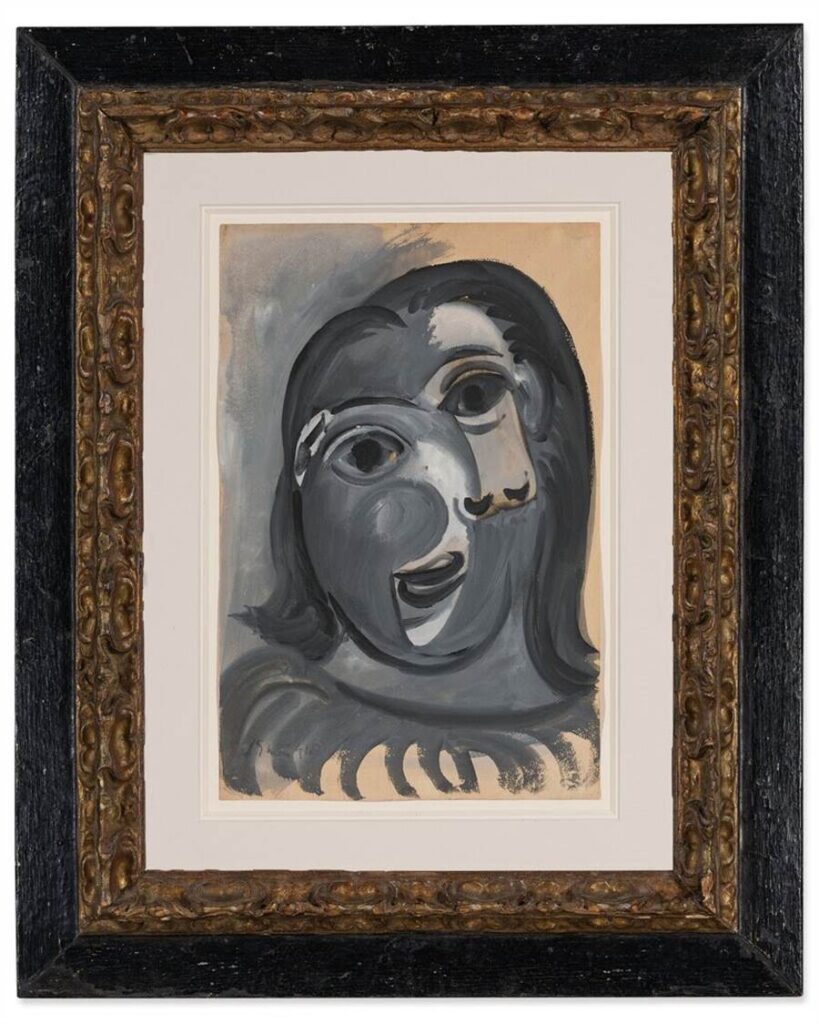
| A Parisian software salesman won a $1.2 million Picasso painting, titled “Tête de Femme.” He had entered a charity raffle.A scholar in Britain has uncovered the precise location of a London property owned by William Shakespeare.The BBC will cut about 2,000 jobs, or around 10 percent of its work force.Ye, the rapper formerly known as Kanye West, postponed a concert in France that the authorities were considering banning. |
| Johnny Somali, a U.S. YouTuber known for “rage bait,” was sentenced to six months in a South Korean prison for distributing sexual deep fakes and other online stunts. |
Top of The World
The most clicked link in your newsletter yesterday was a profile of Peter Magyar, Hungary’s next prime minister.
| SPORTS |
Champions League: Bayern Munich are heading for the semifinals after beating Real Madrid 6-4 on aggregate. See the highlights.
Tennis: Carlos Alcaraz withdrew from the Barcelona Open because of an injury to his right wrist and forearm.
| PETS OF THE DAY |

Dumb dogs
Many dog owners tend to consider their pet to be smarter than the average dog. In one study, just 6 percent of respondents rated their dogs as having below-average intelligence. But statistically speaking, many of us must be sharing our lives with pets on the slower end of the spectrum — and that’s OK. Because unless you tend sheep for a living, a gentle, goofy and loving animal is probably everything you need in a pet.
| MORNING READ |
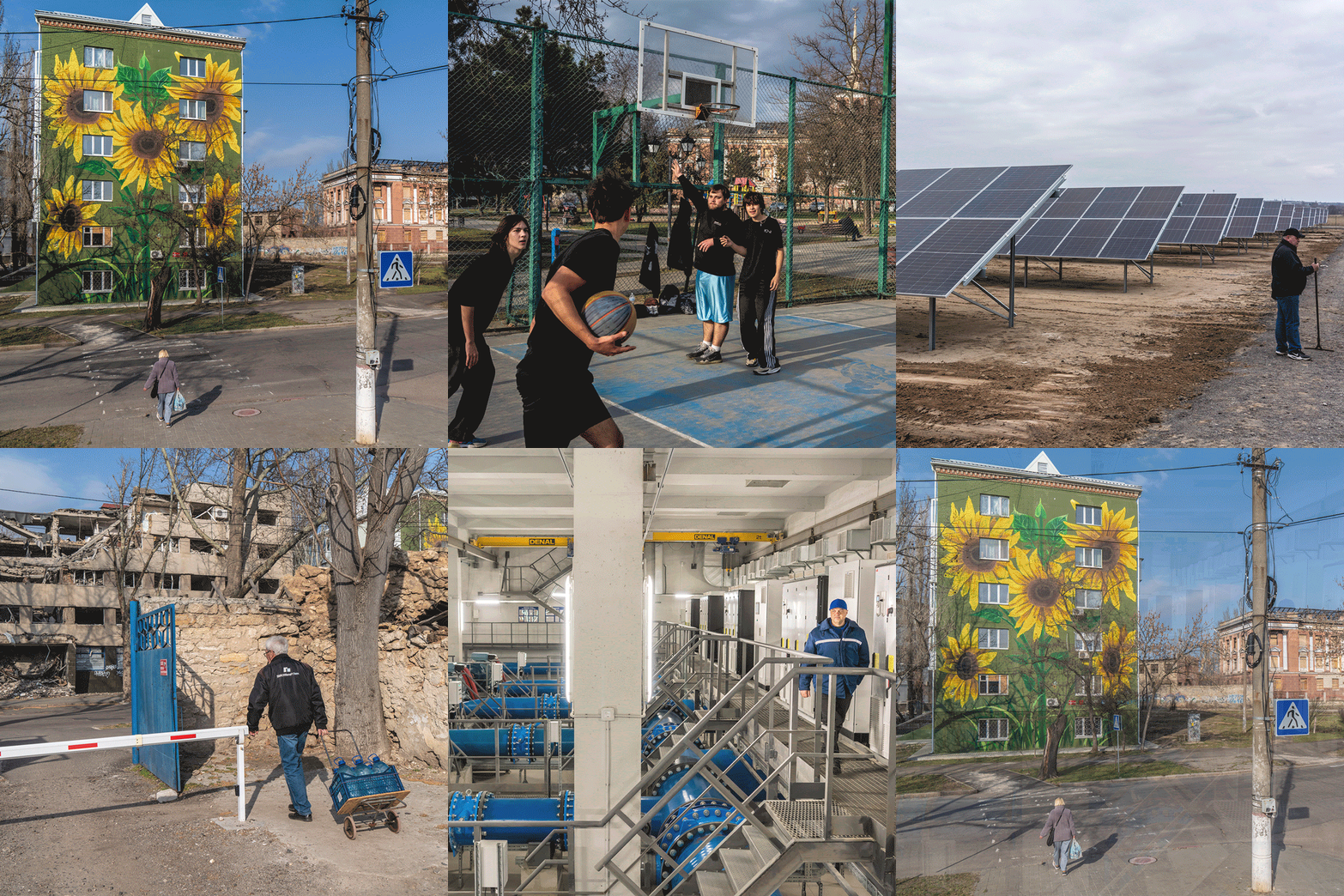
For a time, the city of Mykolaiv in southern Ukraine teetered on the edge of being uninhabitable. Electricity blinked on and off. Orange water sputtered from faucets and bombed buildings lined the deserted streets.
Then Mykolaiv was adopted by the Danish government, which directed 60 percent of its Ukraine reconstruction aid to the city. Denmark paid for solar panels for schools and hospitals, built bomb shelters, invested in water filtration stations and sent demining teams into fields outside the city so that farmers could go back to work. Read how Mykolaiv is bouncing back.
| AROUND THE WORLD |
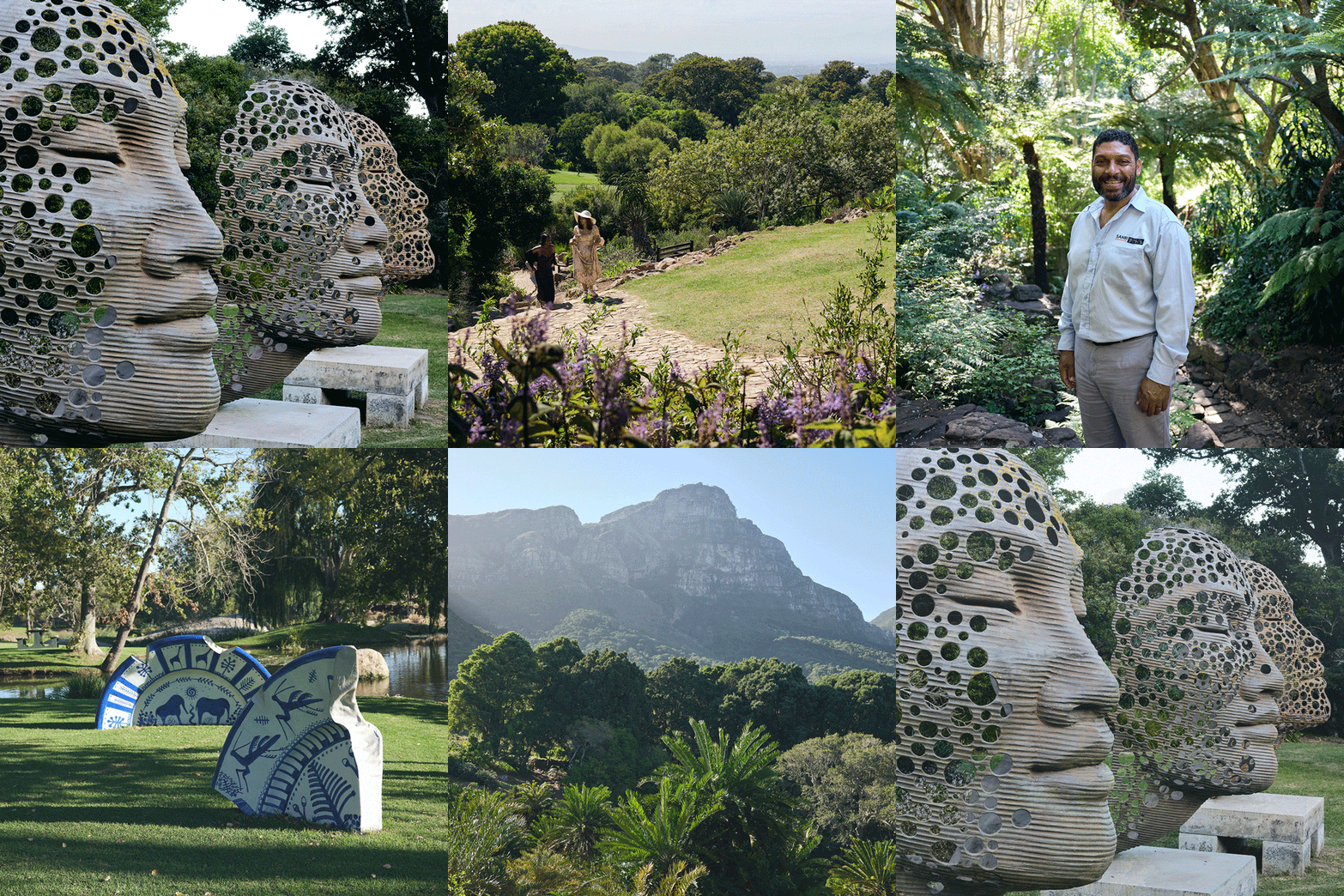
In Cape Town, change is in full bloom
South Africa’s green spaces have historically been seen as the province of the white population, even though much of the labor to shape them has come from Black and colored workers. That is starting to change.
Kirstenbosch, the country’s most celebrated botanical garden, now has its first Black curator, Werner Voigt. In Cape Flats, an arid area relegated to nonwhites during apartheid, a wetland that had been set aside for a shopping mall has been restored by the community. At a 300-year-old wine estate outside Cape Town, a landscape architect and his head gardener have spent two decades quietly returning farmland to its natural state. Read more.
| RECOMMENDATIONS |
Listen: Sofia Isella’s dark pop confronts taboos and divisive subjects head-on.
Watch: Here are nine new movies our critics are talking about this week.
Escape: These six spas let you tune out the world.
Compete: Can you match these memorable lines to the books they’re from? Take our quiz.
| RECIPE |
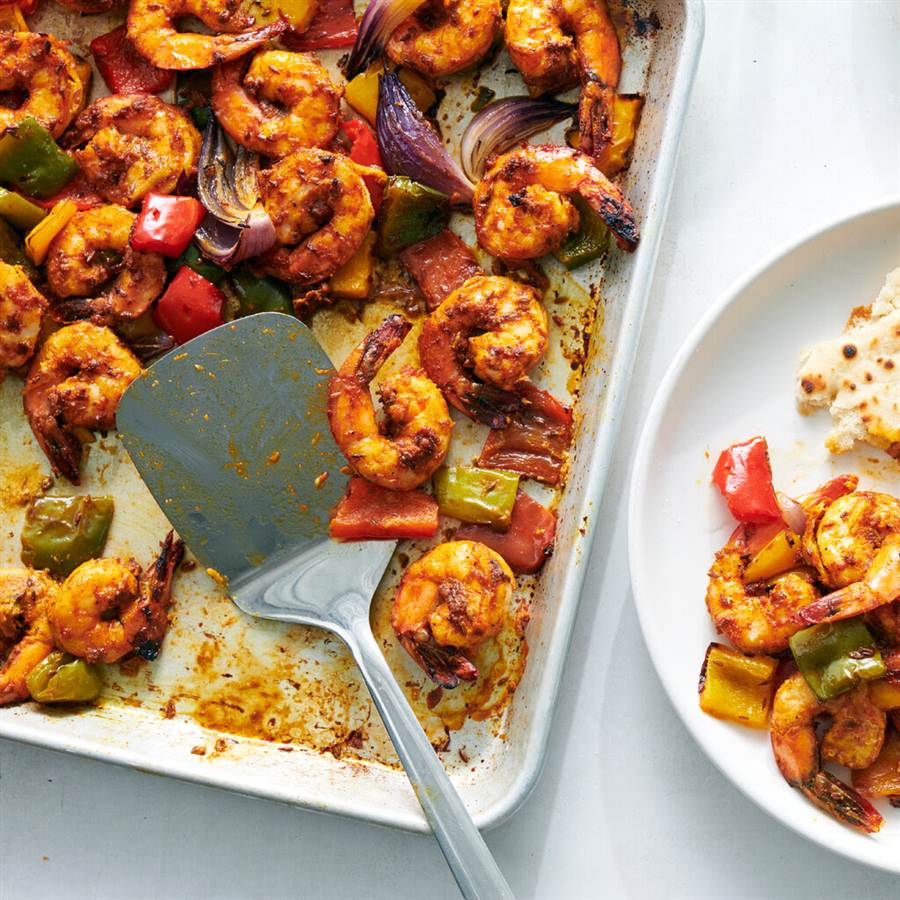
This quick sheet-pan shrimp brings the smoky, tangy essence of tandoori-style cooking into the kitchen with minimal effort. The shrimp are marinated in spiced yogurt. Serve with warm naan, roti or fluffy basmati rice and a cooling raita for a complete meal.
