
October 14, 2026  | By Katrin Bennhold |
Good morning, world. I’m in France this week at a gathering with journalists from around the world to debate the future of our profession. There are some incredibly brave people here, reporting from the front lines of conflicts we often cover in this newsletter. More on that later.
For now, speaking of conflicts: Last week, President Trump bypassed America’s own sanctions on buying Russian energy and cut a deal to, well, buy Russian energy. That means one NATO member may soon be helping to fund not just Russia’s war on Ukraine, but also its ongoing hybrid warfare against other NATO members. Today, I’m handing the mic over to my editor, Alicia Wittmeyer, who is writing about what Trump’s diesel deal means for Ukraine, and for Europe.
Also:
| Pope Leo diagnosed with lung cancer Chinese E.V.s in Europe: It’s love-hate A Welsh town that’s crazy about Elvis |
 |
| Pool photo by Mikhail Metzel; Kenny Holston/The New York Times |
Diesel for America, funding for Russia’s war machine
By Alicia P.Q. Wittmeyer
It had already been a terrible week in Ukraine.
Last Wednesday, Russia hit an apartment building in the town of Pryluky in northern Ukraine, hundreds of kilometers away from any combat zone. The strike killed 22 people, including five children.
On Thursday, Russia struck a bus in the town of Kramatorsk, killing 33 on their commute.
On Friday came the surprise. Trump announced he had reached a deal with President Vladimir Putin to import Russian diesel fuel into the United States. The agreement undermines years of efforts by the West to deprive the Russian state of funding for its war efforts. If it goes ahead, the exchange could send some $4 billion of American money into the Russian economy, energy experts estimate. Our Moscow bureau chief, Paul Sonne, writes about why this has been a gift to Putin.
Trump’s announcement was followed, on Saturday, by a new Russian attack. This time it was on the city of Zaporizhzhia — 22 dead, including four children.
For Ukraine, the deal comes at a particularly bad time.
Russia, as it does every winter, is stepping up efforts to target Ukraine’s civilian infrastructure, including, crucially, its energy infrastructure — part of an ongoing effort to both cripple Ukraine’s economy and break its will to fight. This coming winter might be the hardest yet. Ukraine is facing a critical shortage of air defenses; Russia is equipped with new, deadlier weapons.
For Ukraine, the problem with Trump’s deal is not just the money, my colleagues in Ukraine tell me. We still don’t know whether the deal will go through, and if it does, how much money the Russian government will actually collect.
The bigger problem is that Moscow is engaged in an “unrelenting campaign to make Ukraine’s towns and cities unlivable,” as one of our Ukraine correspondents, Marc Santora, recently put it. And in the aftermath of the deal announcement, Trump is pressuring Ukraine to give up the best tool it has for fighting back.
 |
| The Russian strike on Pryluky, Ukraine, last week. Genya Savilov/Agence France-Presse — Getty Images |
A lopsided “ENERGY CEASEFIRE”
Remember the dramatic video from this summer of the roof of an oil-storage facility on the outskirts of Moscow flying into the air on top of a plume of black smoke? That was the result of a Ukrainian attack on a Russian oil refinery.
I spoke to my colleague Constant Méheut, who is based in Kyiv and has been covering the economic side of this war. He told me about how good Ukraine has gotten at hitting Russian refineries, and how important that’s become to the country’s war efforts.
Ukraine has targeted Russia’s oil infrastructure since early 2024, but in the last year and a half, it’s become incredibly effective. According to the International Energy Agency, in the first eight months of 2026, a Russian refinery was hit on average once every three days.
The attacks have taken a toll. Russia’s reported gas output is down by 20 percent compared with 2025 levels; diesel production has fallen by nearly 30 percent — all of which means less money for the fight.
Now, Trump wants Ukraine to stop. The day after he announced the deal with Russia, he accused Kyiv of causing a “world problem” with the attacks, blaming it for high diesel prices in the U.S. (Most energy analysts see the high prices as primarily driven by the war in Iran, with Russia’s decreased capacity an aggravating factor.)
On Sunday, Trump announced — seemingly unilaterally — an “ENERGY CEASEFIRE.” It wasn’t clear what he meant; neither Ukraine or Russia confirmed they’d agreed to anything. But a person familiar with Trump’s thinking told my colleagues that Trump meant only an end to refinery attacks.
Ukraine effectively has no operational oil refineries — meaning this cease-fire, such as it is, would really only tie the hands of one party. As if to underscore the point, shortly after the announcement, Russia struck a power plant in eastern Ukraine.
 |
| After a drone strike on a Russian oil refinery last month. Reuters |
A stepped-up hybrid war campaign
The diesel announcement follows a pattern that’s become familiar over the course of Trump’s second term. The administration does something that undermines Ukraine; European leaders — many of whom see Ukraine’s fight as partly their own — are left stunned and at a loss for how to respond.
If the deal comes at a bad time for Ukraine, it also comes at a bad time for Europe. The continent has worked since the start of the war to reduce its own consumption of Russia energy, but has not eliminated it completely, even as Russia has grown increasingly aggressive in its hybrid war efforts on the continent. Yesterday, the prime minister of Bulgaria, a NATO member, said drones had struck two ships off the country’s Black Sea coast. He pointed the finger at Russia, which has targeted the area in an effort to cut off Ukrainian seaborne grain exports.
The world now waits to see what comes next — whether Ukraine will really stop attacking Russian oil refineries and, if it doesn’t, whether the U.S. will really cut off intelligence sharing, as it has threatened to.
On Monday, though, Europe’s leaders witnessed the strange sight of NATO’s top military commander, a member of the U.S. Air Force, giving a speech in which he sought to reassure members that NATO had a plan for deterring Russia. They watched him with the knowledge that NATO’s most important member could, very soon, be helping fund the Russian war machine.
Related: A bipartisan group of 12 senators called on Trump to drop his decision to ease sanctions on Russia’s exports of diesel fuel.
| MORE TOP NEWS |
 |
| Pope Leo at a clinic in Rome yesterday. Alessandra Tarantino/Associated Press |
The pope has lung cancer
Pope Leo XIV was diagnosed with lung cancer yesterday during surgery to remove a lower lobe of his right lung, the Vatican said. He has lung adenocarcinoma — a common form that can be highly treatable when caught early.
For a relatively young and vigorous pope who appeared to have time on his side, the diagnosis has raised questions about his longevity and brought new urgency to his plans for the Church. Prayers for a speedy recovery were offered around the world, and some took the opportunity to stress the importance of cancer screenings.
| OTHER NEWS |
 |
| Doug Mills/The New York Times |
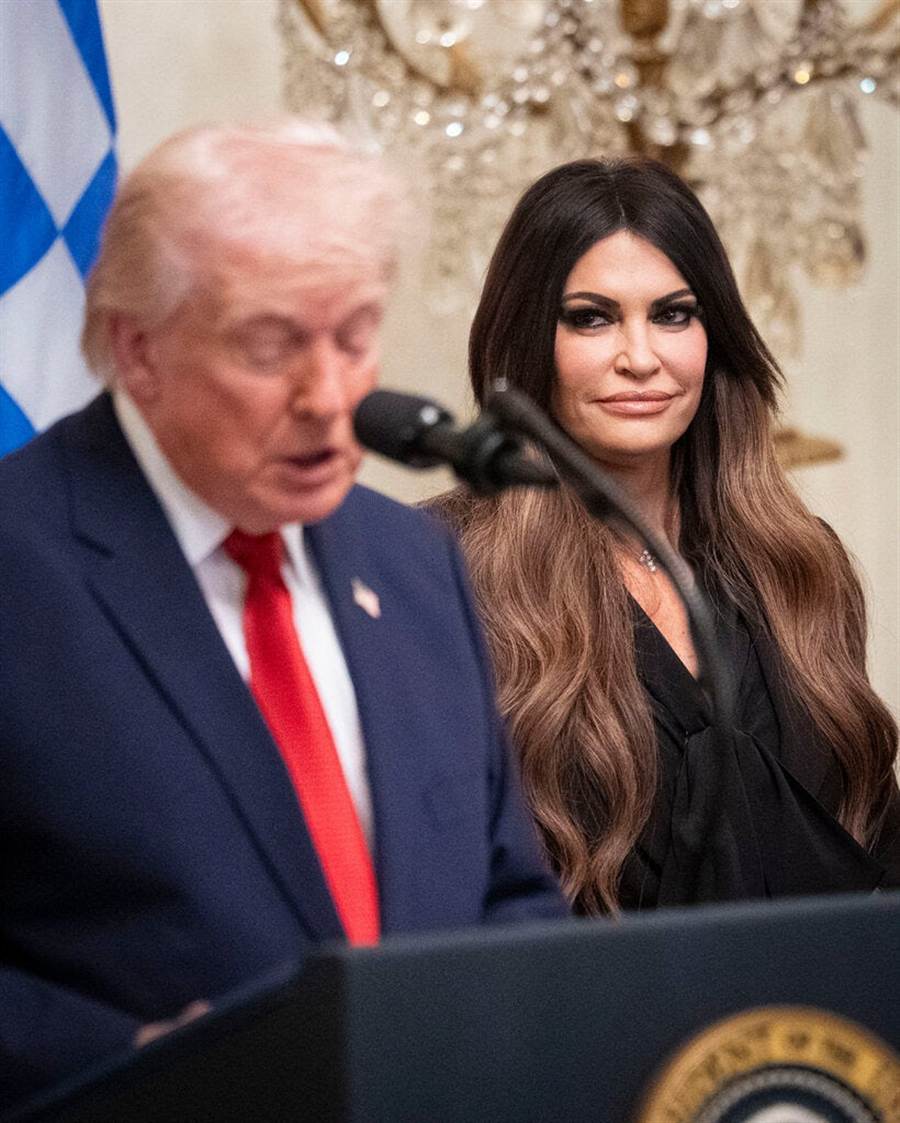
| Trump cut Kimberly Guilfoyle loose as the U.S. ambassador to Greece after damaging news reports about her tenure. We recount her steep rise and sudden fall. A building belonging to Saudi Arabia’s oil giant Aramco was set ablaze yesterday, shortly after the Iran-backed Houthi militia had threatened the company’s headquarters. Ethiopia and Eritrea, allies just a few years ago in bloody battles with the Tigray People’s Liberation Front, are now on the brink of fighting each other. Russia detained a Japanese journalist on suspicion of espionage. He had been reporting on military recruitment in Russia’s far east. Critical infrastructure in Japan has been targeted in a wave of cyberattacks, which experts say are rising because of artificial intelligence. Another cyberattack hit refrigeration systems in more than 400 supermarkets in France this week. No one claimed responsibility. A Times investigation has found that violent threats have become a new normal among American elected officials. My colleague Nick Corasaniti interviewed some of them about living under the threat of political violence. Watch the video. |
 |
| Click to watch. The New York Times |
WHAT ELSE IS HAPPENING
| Joni Mitchell announced she has become a U.S. citizen. A judge in Las Vegas sentenced a man to 40 years to life in prison for orchestrating the murder of Tupac Shakur in a 1996 drive-by shooting. The Haitian Canadian author Thélyson Orélien admitted to plagiarism but denied using A.I. to write parts of his book. A track built on the outskirts of Kigali, Rwanda, will host Formula 1’s new African Grand Prix. |
| SILVER LINING OF THE DAY |
 |
| Merijn Hos and Jurriaan Hos |
Superhabitable worlds
In a half-billion years or so, we might have to move. That’s because our sun will start to swell, making Earth too hot to sustain complex life. But scientists say there are superhabitable planets outside our solar system where carbon-based life could persist and perhaps become even more diverse than it is now.
| MORNING READ |
 |
| Owen Richards for The New York Times |
Germany is the birthplace of the automobile. It’s the home of Volkswagen, BMW and Mercedes-Benz. These days, it’s also a top destination for Chinese companies selling cheaper cars.
Shut out of the U.S. by tariffs, Chinese automakers are focusing on Europe. BYD, the dominant Chinese maker of electric vehicles, wants everyone in Germany to be within 20 minutes of a showroom. That doesn’t sit well with some in Europe. Read more about Europe’s love-hate relationship with Chinese cars.
| AROUND THE WORLD |
 |
| Clementine Schneidermann for The New York Times |
Crazy about Elvis
Like many British seaside destinations, the Welsh town of Porthcawl offers surfing, fish and chips, and an amusement park. But it is perhaps best known for something decidedly American: Every September, it hosts one of the world’s largest gatherings of Elvis tribute artists and fans.
The festival draws about 40,000 each year, more than doubling the town’s population for a weekend. “You couldn’t think of a more inappropriate place to put an Elvis festival,” the organizer said. “But it seems to work.” Take a look.
When you think of Wales, your head probably doesn’t fill with images of celebrities. But the country has produced lots of them. Which star below is NOT from Wales? Click to see if you’re correct.
| RECIPE |
 |
| Bryan Gardner for The New York Times |
This pasta with fish ragù can take you straight to Sicily, no passport needed. The roasted fish pieces tossed with a sauce of sweet peppers, a splash of white wine and a bit of tomato is reminiscent of a meaty Bolognese, but lighter and fresher.
