
| May 11, 2026 | By Katrin Bennhold |
Good morning, world. In Britain, where I’m based, everyone is talking about the meteoric rise of the nationalist populist Reform U.K. party. In local elections across England last week, Reform obliterated the Labour Party and the Conservatives, two parties that have governed Britain for decades. We will keep a close eye on what it all means for Prime Minister Keir Starmer. Can he survive this?
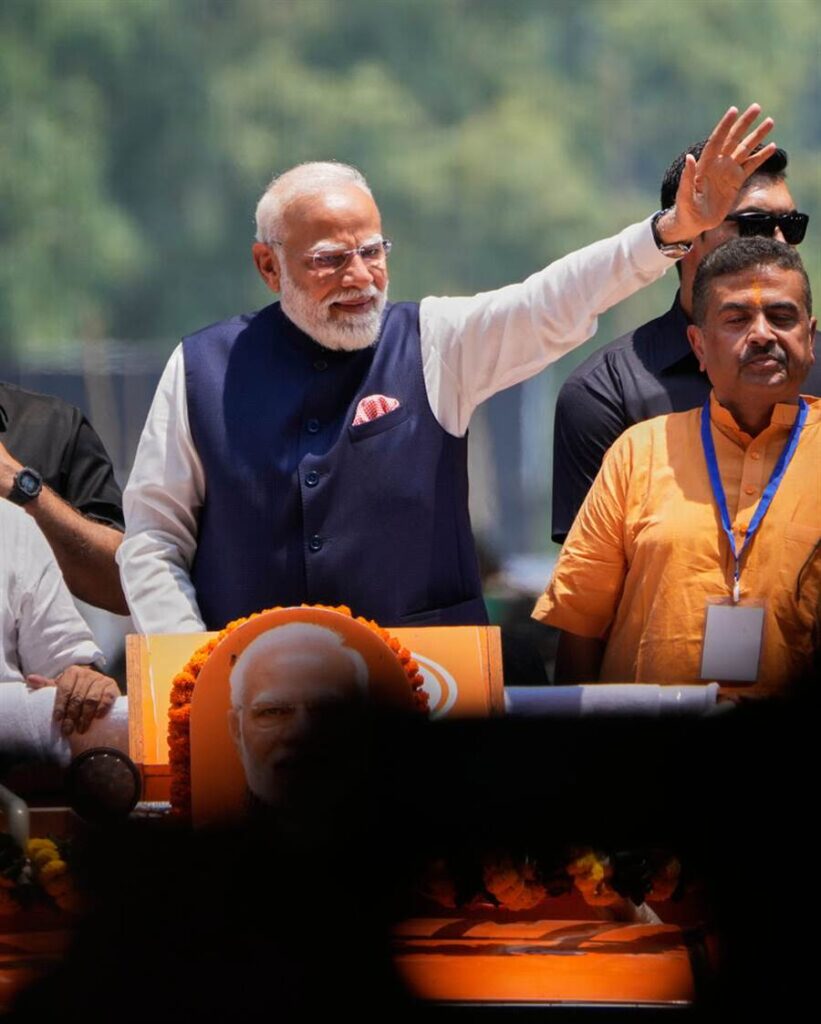
If you widen the lens, though, this election looks like part of a much broader global trend. Nationalist populists are on the march from the Americas to Europe to Asia, where the world’s largest democracy recently held state elections. The Hindu nationalist party of Prime Minister Narendra Modi in India won a major opposition stronghold for the first time, further consolidating its power. Today, my colleague Alex Travelli, one of our India correspondents, writes about how India now risks turning into a de facto single-party state.
Also:
| Trump rejects Iran’s response Passengers leave stricken cruise ship Perfectly sliced ham |
Why Narendra Modi has no rivals left
By Alex Travelli
When Narendra Modi first campaigned to lead India more than a decade ago, he vowed not to just defeat the main opposing national party, but to eliminate it entirely. He pretty much succeeded.
Congress, the founding party of independent India and the country’s only national opposition party, barely exists as a governing force. It holds fewer than 100 seats in the country’s 543-member Parliament; it controls only four out of India’s 28 states.
That has left the country’s regional parties and their leaders as the most important counterweight to Modi’s Bharatiya Janata Party and its Hindu nationalist agenda.
But over the past two years, the B.J.P. has been laser-focused on winning state elections across the country. It has notched victory after victory — and in doing so, has steadily chipped away at this source of opposition, too.
Then, last week, the B.J.P. won legislative elections in West Bengal, one of the country’s most populous states and an opposition stronghold it had never come close to ruling. Its win ended 15 years of rule by Mamata Banerjee, one of Modi’s most outspoken critics.
The result is that today, Modi finds himself at the helm of an India in which his opponents hold almost no political power. The world’s most populous democracy looks a lot like a one-party state.
A string of triumphs
Just two years ago, the electorate seemed to be tiring of Modi, after a decade that included Covid-19 and an economy that was delivering too few jobs for too many ambitious young Indians.
In the most recent national election in June 2024, his alliance won 42.5 percent of the vote. The B.J.P. managed to stay in control, but only after Modi roped two regional parties into a coalition government.
The shock was profound. It also concentrated minds.
Since then, Modi’s administration has avoided the flashy and contentious projects that he took on during his first two terms as prime minister — like invalidating India’s currency, revoking Kashmir’s statehood or building a giant temple to the Hindu god Ram — and instead has focused on bread-and-butter issues. His party, the B.J.P., has gone door-to-door across India, refining tactics, recruiting former rivals as candidates and reaching out to new voters.
The result has been a string of unexpected triumphs: Haryana in the north in October 2024, where Congress was heavily favored; Maharashtra, home to Mumbai, the country’s commercial capital, a month later; Delhi last February, which the B.J.P. won for the first time in 27 years; Bihar, also in the north, last fall.
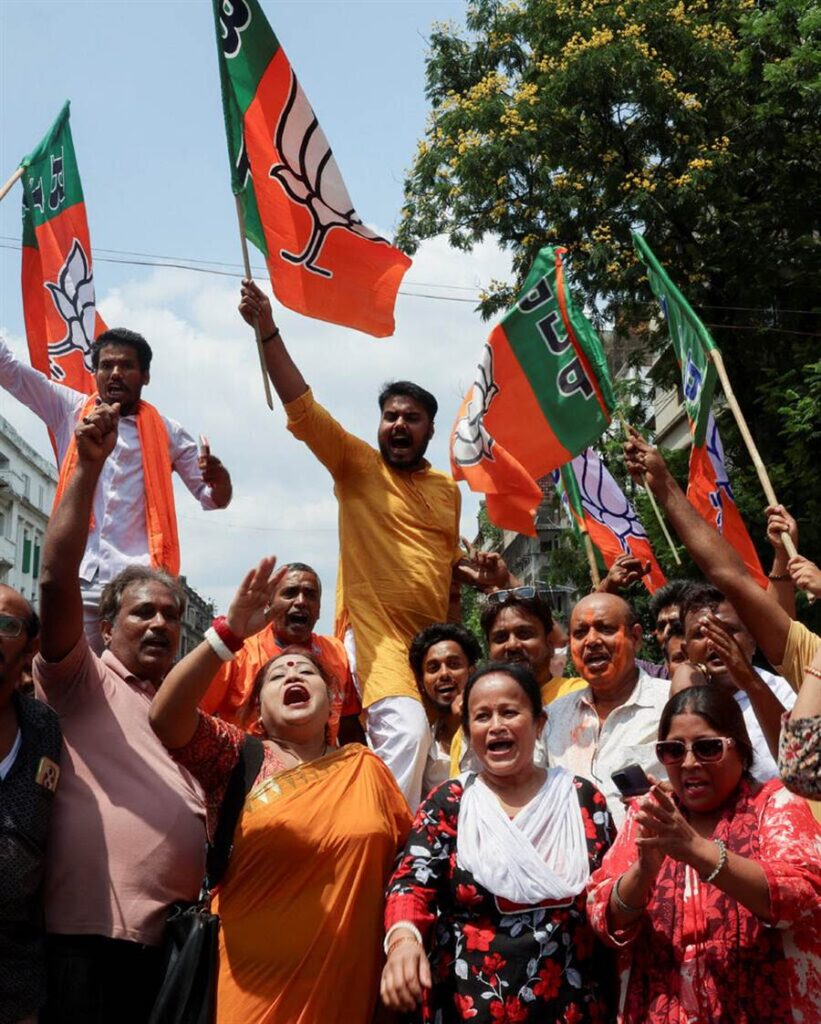
How has the B.J.P. pulled this off? Some of it is local circumstances. In West Bengal, for instance, voters told us they were sick of a sluggish economy and the state’s corruption.
But many of the B.J.P.’s opponents have also cried foul. In Delhi, the former chief minister and his lieutenants were repeatedly raided and arrested by federal police on charges that never resulted in conviction. Modi, they argue, was abusing the tools of government to harass them.
In Bihar, the Election Commission of India, which is supposed to be independent but has a leader chosen by Modi, started an intensive housekeeping exercise to remove names that didn’t belong on voter rolls. Members of the state’s Muslim minority said they were targeted unfairly with deletion. Something similar happened in West Bengal, where 9 million names, disproportionately belonging to Muslims, were struck from voter rolls.
Some argued that these efforts played into Modi’s strategy of whipping up anti-Muslim sentiment to win Hindu voters. And in both cases, these moves disenfranchised Muslim voters.
But in both Bihar and West Bengal, the election results were also not close enough for these machinations to have made the critical difference.
“The idea of India”
Whether by fair means or foul, the B.J.P. has become an election-winning machine. Last year, estimates suggest it raised 10 times more money than all of its opponents combined.
It’s not clear when, or if, Modi, will face any real political competition again. The next time India elects a new Parliament, in 2029, Modi will be 78. No one knows whether he will represent his party then or who might replace him, or what sort of India he will leave behind when he finally goes.
“The idea of India,” as formulated by Jawaharlal Nehru, its first prime minister after independence, was the ideal of political pluralism to match the country’s human diversity of religion, language and culture.
Nowadays, however, India’s surviving smaller parties are dwindling. Across the country, they’re being replaced by an electoral juggernaut focused on building an orthodox Hindu nation, led by an organization that defines India in terms of a cultural majority.
Against this backdrop, Nehru’s idea of India is looking increasingly like a relic.
| MORE TOP NEWS |
Trump calls Iran’s response ‘unacceptable’
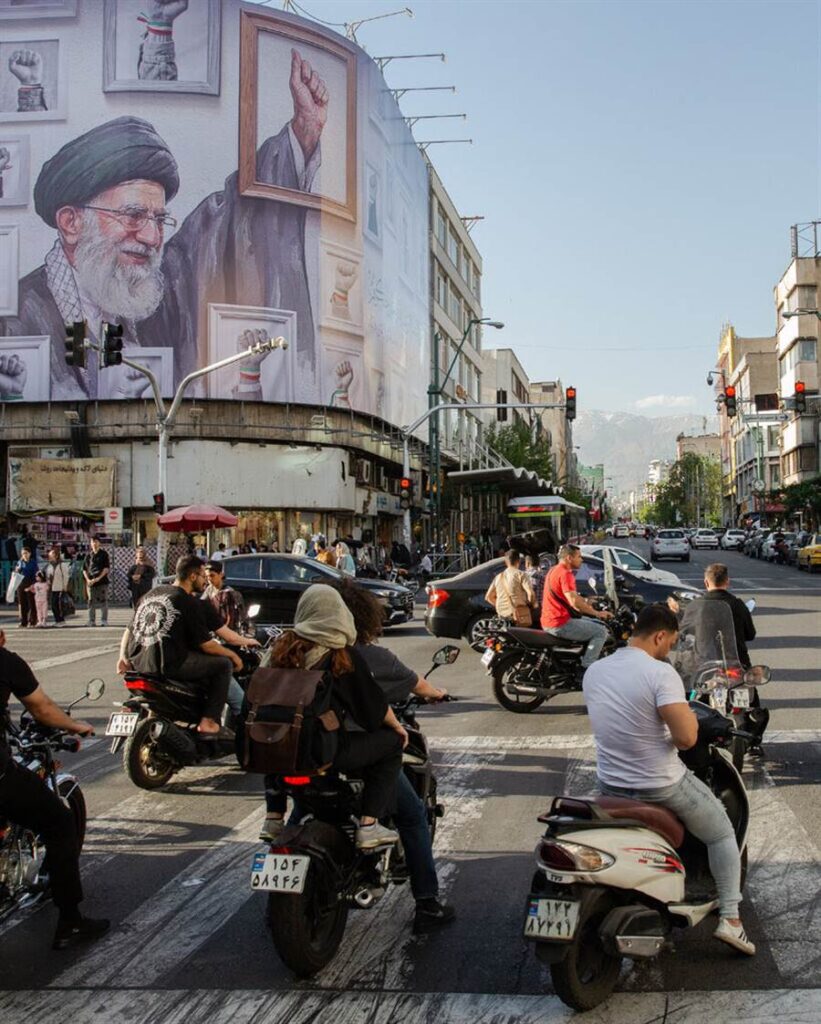
Hours after the Iranian government said yesterday that it had sent a counteroffer to the latest U.S. proposal to end the war, President Trump called it “TOTALLY UNACCEPTABLE!” His reaction cast doubt on whether the stalemate between the two countries was any closer to being broken.
The details of Iran’s proposal were not made public, and Trump did not say what was objectionable.
In Iran, an internet shutdown has crippled the tech industry, leading to round after round of layoffs. For the Trump administration, Iran’s severe economic struggles are part of a strategy to pressure the country into submission.
Lebanon: Israel has escalated attacks on Lebanon since Thursday. On Saturday, at least eight members of one family were killed in an airstrike that Israel had launched with no advance warning.
| OTHER NEWS |

| The passengers and crew on a cruise ship hit by a deadly hantavirus outbreak were evacuated after the vessel arrived in Spain’s Canary Islands.Prime Minister Keir Starmer turned down calls to resign after disastrous elections for Labour in England, Scotland and Wales. But here’s how a challenge could still unfold.Thaksin Shinawatra, a former prime minister of Thailand, was released from prison today. He has long been a foil to the country’s conservative establishment.Peter Magyar was sworn in as prime minister of Hungary after unseating Viktor Orban and pledged to “change the system.”Protests are growing across Japan against Prime Minister Sanae Takaichi’s efforts to build up military power.An anti-immigration party won a seat in Australia’s lower house of Parliament for the first time.Russia has lost about 352,000 soldiers in its war with Ukraine, according to a new estimate.The U.S. pressed Argentina and Chile to review two Chinese telescope projects in the Andean deserts. My colleague Emma Bubola traveled to the site, where the telescope now sits dismembered. Watch her video. |

Top of The World
The most clicked link in your newsletter Friday was about the sights of the Venice Biennale.
| SPORTS |

Football: Barcelona beat Real Madrid in El Clásico to seal the La Liga title. Here are the highlights.
Boxing: Daniel Dubois won the WBO heavyweight title by defeating Fabio Wardley with an 11th-round TKO.
| VOICE OF THE DAY |

David Attenborough
The English broadcaster turned 100 on Friday, a milestone in a remarkable life that took him from hunting fossils as a boy to becoming perhaps the world’s most celebrated naturalist. In an audio recording, he said he was “completely overwhelmed” by the number of birthday greetings he had received.
“I had rather thought that I would celebrate my 100th birthday quietly, but it seems that many of you have had other ideas.”
| MORNING READ |

It’s heating up in South and Southeast Asia, with temperatures in April climbing beyond 37 degrees Celsius in some areas. This heat wave has collided with the energy crunch linked to the war in Iran. As a result, air conditioning has become restricted or increasingly unaffordable.
Asia’s lower- and middle-income countries have begun promoting all sorts of energy-saving measures. For example, people in Malaysia have been advised to wear lighter fabrics. Read more.
| AROUND THE WORLD |

A true slice of Spanish life
Ernesto Soriano started learning how to cut ham nearly 40 years ago as a 15-year-old high school dropout in Madrid. Now, he is the top-ranked cutter for Joselito, one of Spain’s oldest and arguably most prestigious producers of jamón ibérico.
It’s a job that has grown in prominence. In recent years, jamón-cutting stations have become a fixture at high-society events. These days, a wedding is judged, Soriano said only half-jokingly, less by the sanctity of the union than by the state of the ham.
“They don’t pay as much attention to the bride and groom,” Soriano noted. Our reporter followed him for a day.
| RECOMMENDATIONS |
Travel: Free music and a storytelling tour are some of the ways to explore Dublin without spending a fortune.
Read: In “From Life Itself,” a journalist plumbs an Istanbul neighborhood for insights into Turkey’s hard-right turn.
Choose: The right wedding dress is the one with the right hue of white.
| RECIPE |

This Brazilian chicken stroganoff is a riff on the classic Russian-American beef, mushroom and sour-cream stew. In Brazil, it’s often made with a tomato base and heavy cream instead of sour cream. The biggest difference is in the accompaniments: The stew is served with rice and topped with crispy potato sticks that you shouldn’t omit.
