
November 9, 2026  | By Katrin Bennhold |
Good morning, world. Before the U.S. midterms last week, one big question was whether Donald Trump would contest the election results.
There were certainly reasons to wonder: Trump has never publicly conceded his 2020 loss to Joe Biden. And in the run-up to the 2026 midterms, he tried to interfere with the process to tilt it in favor of Republicans.
But on election night, amid a dramatic wipeout, he accepted the results readily. Today I write about why that might be — and what it can tell us about the conditions under which leaders with authoritarian tendencies accept election results, even when they lose.
Also:
| Calls to impeach Hegseth grow A mass shooting in Poland Samoan cuisine that shines |
 |
| U.S. voters in Maine last week. Lexi Parra/The New York Times |
Big victories, ready concessions
Hungary, Serbia and, now, the United States. This year, in a string of elections, voters unexpectedly rebuked nationalist populist leaders and their movements.
For many voters, there was a fear hanging over all of these ballots: Had these leaders tilted the playing field so much that they could not be defeated? And if they lost, would they accept the results?
The voting may have been free enough, but those in power had in some cases spent years trying to bend the systems to their advantage.
Viktor Orban, Hungary’s prime minister of 16 years until May, controlled the news media, stacked courts and rewrote electoral laws in his party’s favor. Aleksandar Vucic, who dominated Serbia’s politics from 2012 until last month, controlled the police and the electoral commission.
In the U.S., Trump and the Republican Party undertook extraordinary efforts to gerrymander voting districts; filed pre-emptive lawsuits in competitive states; challenged mail-in voting and voter rolls; and peddled false claims that the 2020 election was stolen.
Given the lengths to which they had gone to undercut democratic norms, it was something of a surprise that, in the end, all of these leaders accepted a democratic outcome.
But these elections had something else in common — they were not close.
And so there’s a lesson here. Leaders who have shown themselves willing to bend the rules to stay in power may have little choice but to concede if their opponents’ victory is simply too big to deny.
 |
| Budapest, Hungary, in April. Sean Gallup/Getty Images |
The turnout factor
In the U.S., voters were on track to hand Democrats one of the largest House majorities in generations and flipped states that had been red for decades. In Hungary’s elections, Orban’s rival won an absolute majority. So did Serbia’s students who ousted Vucic last month.
As my colleague Amanda Taub writes, the outcomes were so decisive that they not only overcame a less-than-level playing field, they also made it virtually impossible to blame the results on fraud.
These decisive outcomes, Amanda explains, were driven by exceptionally high voter turnout, especially among young people.
In the U.S. midterms, turnout was one of the highest in the past century, and 70 percent of voters under 30 cast their ballots for Democrats, according to New York Times data. In Serbia, turnout was the highest since the breakup of the former Yugoslavia, at nearly 70 percent. And in Hungary, it reached the highest level since the fall of Communism in 1989 — about 80 percent.
The high stakes in all of these elections clearly mobilized voters. As Amanda put it, people are still more likely to go to the polls to defend their pocketbooks than democratic principles. But when those issues align — for instance, anger about corruption at the top at a time when many voters struggle to make ends meet — it can be a powerful motivator.
 |
| Gadi Eisenkot, the Israeli opposition leader, in Jerusalem yesterday. Ilia Yefimovich/Agence France-Presse — Getty Images |
And now govern
But big turnout alone is not enough to defeat leaders who would try to undermine an election’s legitimacy; ultimately, their opponents have to come together to govern.
In Israel, where Prime Minister Benjamin Netanyahu’s party has sought to overhaul the judiciary and accused his opponents of trying to steal the vote, turnout was also exceptional, especially among Arab citizens.
Netanyahu’s coalition lost its parliamentary majority. But the opposition is divided. Some Jewish opposition parties have said that they don’t want to rely on Arab parties to form a government. It remains to be seen whether Netanyahu’s leading rival, Gadi Eisenkot, who was tapped on Saturday to try to form a government, can unite a fractious anti-Netanyahu camp.
It’s an instructive example: The flip side of these sorts of campaigns is that they may yield a sprawling opposition united by little more than a desire to defeat the person in power. Easy fracture is a danger. So is ineffectiveness.
In Serbia, a student-led movement run as a collective must now designate a leader from among a disparate parliamentary majority of doctors, lawyers, basketball players, actors and other members of civil society.
A challenge also awaits a Democratic Party whose big tent includes the likes of California’s governor, Gavin Newsom, who has at times tried to position himself as a centrist, and progressives like Representative Alexandria Ocasio-Cortez. As the party looks ahead to the presidential election in 2028, the priority will be figuring out which candidate and which policies to unite around.
The big tent may have made securing a concession easier. It could make governing messier.
| MORE TOP NEWS |
 |
| U.S. House Minority Leader Hakeem Jeffries in Washington last week. Kenny Holston/The New York Times |
U.S. POLITICS
| Hakeem Jeffries, the Democratic leader poised to become the next House speaker, said that he would support impeaching Defense Secretary Pete Hegseth. In the days since his party’s defeat, Trump has sounded like a man in denial. The rest of his presidency is uncertain, Peter Baker writes. Trump’s new chief of staff, Stephen Miller, has already demonstrated his intention to forge ahead with an agenda that many voters rejected. |
Our U.S. politics coverage is still free in The New York Times app for a limited time.
OTHER NEWS
 |
| In Krakow, Poland, yesterday. Beata Zawrzel/Associated Press |
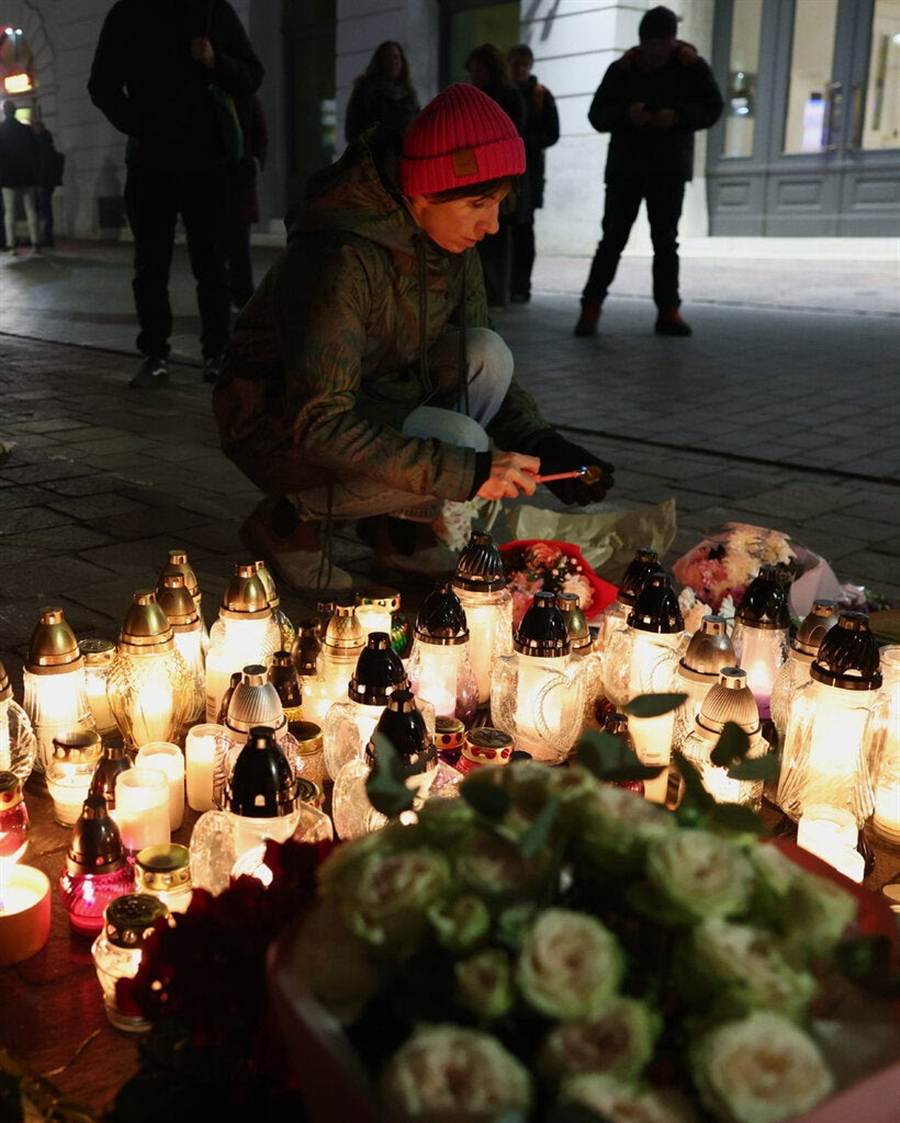
| A man fatally shot six people in the central market square of Krakow, Poland. Officials said the gunman, believed to be a 24-year-old Polish man, also killed his parents and sister at their home. The tech giant Nvidia opened an investigation into Jensen Huang, its chief executive, after he acknowledged that he had been intimate with a businesswoman who U.S. intelligence determined to be a Chinese spy. At least seven people were killed and more than 100 injured in a passenger train collision near Cairo. Pope Leo began a visit to Argentina amid tensions between President Javier Milei and much of the country’s Catholic Church. The African National Congress had its worst election showing in South Africa since the end of apartheid. The race to replace António Guterres as U.N. secretary general has been jolted by last-minute candidates and deep divisions among members of the Security Council. A popular music venue in Port-au-Prince, Haiti’s capital, is sheltering hundreds of families fleeing gang violence. My colleague Frances Robles spoke to some of them in the video below. |
 |
| Click to watch. The New York Times |
WHAT ELSE IS HAPPENING
| Officials in Peru discovered thousands of tarantulas in suitcases at an airport in Lima. They were hidden in socks. India’s top court ordered that only environmentally friendly fireworks be set off during Diwali. Activists called it a “green wash.” |
TOP OF THE WORLD
The most clicked link in your newsletter on Friday was about the strict control that K-pop labels place on their big acts.
| ROADSIDE ATTRACTIONS OF THE DAY |
 |
| David Buzzard/Alamy |
Giant statues
Across North America and Australia, thousands of communities have used oversize roadside sculptures to put themselves on the map. Decades after their construction, these landmarks face a crossroads as novelty fades, costs escalate and local groups are left holding a steep bill. Take a look before they’re gone.
| MORNING READ |
 |
| Universal History Archive/Universal Images Group, via Getty Images |
From a federal courthouse in Virginia, Judge Rebecca Beach Smith presides over perhaps the most intriguing case in maritime law: the salvaging of the Titanic.
For decades, Judge Smith has overseen all matters involving the Titanic. The ship’s original owner, the White Star Line, is defunct. The insurers who paid out after the 1912 disaster are long out of the picture. So Judge Smith is the closest thing to the wreck’s owner. Read more about how she handles the job.
| AROUND THE WORLD |
 |
| Tatsiana Chypsanava for The New York Times |
A Samoan chef’s mission
About as many Samoans live in New Zealand as back home, but their cuisine has often been relegated to takeout counters, night markets and greasy spoons. Henry Onesemo wanted to change that.
Onesemo opened his restaurant, Tala, in an affluent neighborhood of Auckland in 2023. Tala has earned growing acclaim, with its latest recognition being a Michelin star awarded in June. That recognition has also meant a different kind of representation for Samoans in New Zealand. Read more about Samoan fine dining.
| RECOMMENDATIONS |
Listen: Here are 10 essential songs by Juan Atkins, the late techno pioneer.
Watch: “It Gets Worse,” from the British comedian Leo Reich, expresses Gen Z angst with self-awareness.
Pick: Which $1 million Athens home would you choose?
Discover: Two New York City designers found success outside the fashion mainstream.
| RECIPE |
 |
| Christopher Testani for The New York Times |
These lemon pancakes are made with cottage cheese and beaten egg whites, which makes them puff up like a soufflé. Serve with blueberries or raspberries and a dollop of plain yogurt.
