

In 2025, EU ports handled 423.4 million passengers, marking an all-time high since comparable data collection began in 2002. This was an increase of 5.5 million passengers compared with 2024 and 5.2 million compared with 2019, before COVID-related disruptions in the transport and tourism sectors.
This information comes from data on maritime passengers published by Eurostat today. This article presents a handful of findings from the more detailed Statistics Explained article on maritime passenger statistics.
In 2025, 97.5% of all EU maritime passenger transport took place in 11 countries, each recording more than 13 million passengers.
More than half of all the seaborne passengers were handled by 3 countries: Italy (96.5 million; 22.8% of the EU total), Greece (81.2 million; 19.2%) and Denmark (42.1 million; 9.9%).

Source dataset: mar_mp_aa_cph
Compared with 2024, the largest increase in the number of passengers was recorded in Italy (+3.0 million), while the largest decrease was in France (-0.9 million). Compared with 2019, the largest increase was also in Italy (+10.0 million) and the largest decrease was in Sweden (-5.9 million).
1 in 12 maritime passengers handled by 3 Italian ports
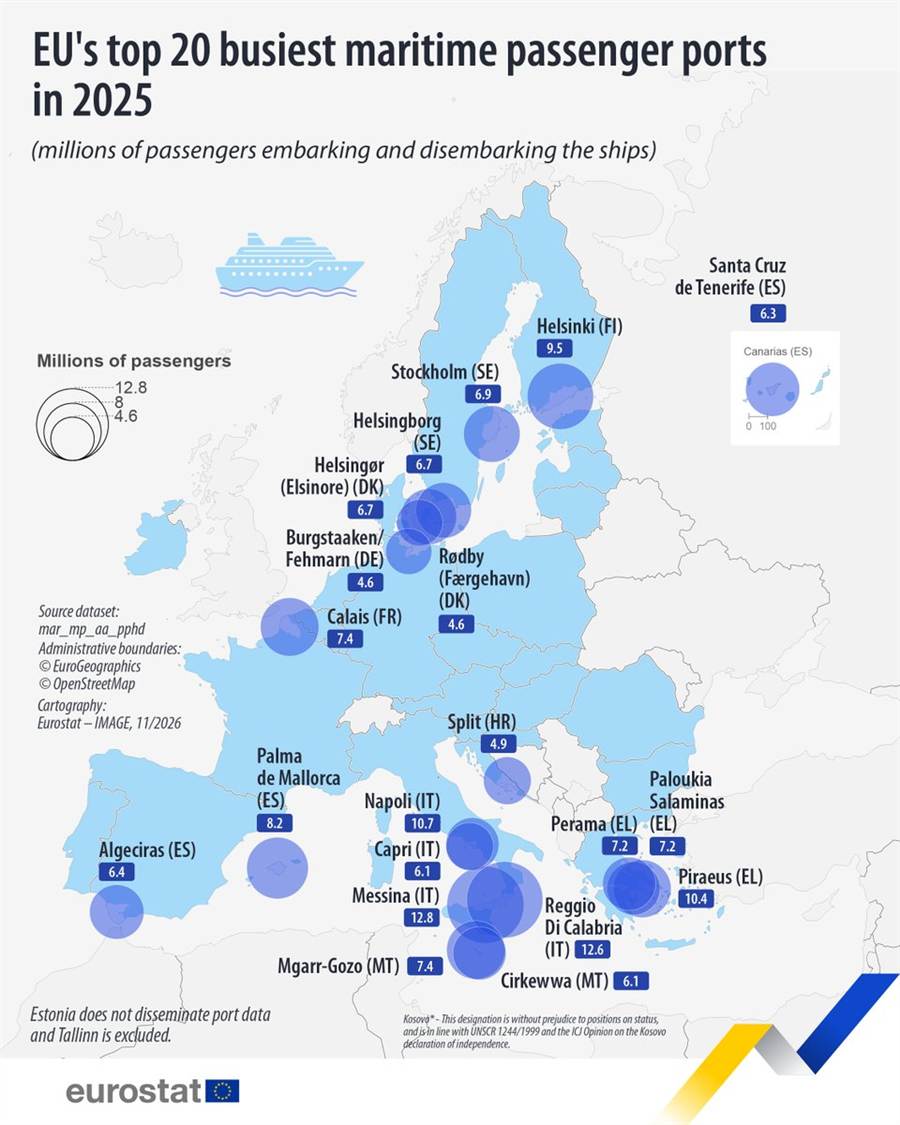
The top 20 passenger ports accounted for 36.0% of all seaborne passengers in the EU. They included 4 ports in Italy, 3 in Greece and Spain, 2 in Malta, Sweden and Denmark, and 1 in Finland, France, Croatia and Germany.
The 3 busiest EU passenger ports, all located in Italy, handled 8.5% of all maritime passengers, or roughly 1 in 12 passengers. Messina was the busiest with 12.8 million passengers, followed by Reggio di Calabria (12.6 million passengers) and Napoli (10.7 million). Next were Piraeus in Greece (10.4 million) and Helsinki in Finland (9.5 million).
 Click to enlarge
