
November 27, 2026  | By Katrin Bennhold |
Good morning, world. I first met my colleague Dylan Freedman at a conference this spring. I already knew about him. He’s kind of a legend at the paper for the investigative work that he has enabled. A software-engineer-turned-journalist, he puts A.I. agents to work to sift through vast data sets and help break stories.
But he’s also a purist when it comes to A.I.-proofing the more creative parts of our work. And what Dylan told me in March was that he writes on a typewriter. I was amazed — and I had so many questions. Today, he writes on what it is about this old-school tech that so effectively keeps him in touch with his humanity (an essay first drafted, of course, on his vintage Olivetti Lettera 22).
Also:
| Brazilians lured to fight for Russia London cracks down on pedicabs A cute, furry friend. But clingy. |
 |
| Lola Dupre |
An A.I. editor’s ode to his typewriter
By Dylan Freedman
I use artificial intelligence in my work every day.
As the A.I. projects editor for The New York Times, my job is twofold: I enlist A.I. to help reporters find needles in vast haystacks of documents and multimedia data — like the Jeffrey Epstein files or President Trump’s speeches — and I report on developments in A.I. technology. But I also draw a thick line: I never, ever, use A.I. for writing.
Which is why I often write with a typewriter.
I compose most of my first drafts, including for this article, on an Olivetti Lettera 22 from the 1950s. The typewriter provides me with an essential dose of minimalism, a break from the crowded browser tabs and blinking terminal windows on my computer screen.
I was a software engineer at Google before pursuing a journalism degree. As a technologist, I am always itching for the best tool to get a job done. And when it comes to translating my thoughts into words, the typewriter is a marvel.
You can use it outside, without glare. You don’t need to recharge it. A single ribbon lasts longer than most novels and is cheaper than printer ink. Made from solid steel, most mechanical typewriters are practically indestructible.
The typewriter has few comforts but also no distractions. Using one feels intentional, like taking photographs on a film camera. Typing on this metal machine, I find a rawness that better captures my voice. You can’t easily undo — nor should you.
 |
| The used Olivetti Lettera 22 after a deep cleaning. Dylan Freedman/The New York Times |
A satisfying need for force
A.I. is rapidly becoming superhuman at tasks with clear solutions like coding and math. The more I use A.I. — and I use it a lot — the more I worry about surrendering my cognition. A study published in Nature this year found that researchers who used A.I. assistance tended to be more productive than their peers but also studied fewer new topics.
My analog moment arrived in early 2025. I opened Gmail, began to compose an email reply and noticed a full potential draft generated by A.I., like an apparition from an undesired future.
This bland, synthetic reply was an assault to my creative flow, interrupting my train of thought with some statistical average of soulless prose. Around the same time, Google Docs automatically enabled A.I. writing suggestions in its Workspace accounts, and Apple brought its own version of intelligent autocomplete to computers and phones. I felt betrayed, deprived of opportunities to think, uninhibited, for myself.
So that May, I bought an old Olivetti from Goodwill’s online auction house.
The keys were gummy and almost impossible to press. But after a few late nights watching maintenance videos on YouTube, I learned the basic cleaning rituals that often loosen up neglected typewriters. After a modest cleanse, the machine sprang to life with crisp, responsive action.
The keys still required much more force than my MacBook’s one-millimeter keyboard, but as a lifelong pianist, I found the action incredibly satisfying. My keystrokes crescendoed as I excitedly unearthed words that modern tech had stopped me from digging up. There is a certain violence to using a typewriter, firing hammers into a ribbon of ink with enough force to imprint a page. Some writing ought to be more violent, more evocative, more expressive. Otherwise it might blend in with the timidity of much A.I. prose.
The typewriter is a technology that is perfect for what it needs to do: a co-pilot that speeds up your work but keeps you in control of your own thoughts. In an era of overly rapid technological progress, that feels just right.
 |
| The first draft of this article. Dylan Freedman/The New York Times |
The nuanced uses of A.I.
My job using A.I. in journalism has always been nuanced. I have an engineer’s appreciation for the science behind artificial intelligence, a journalist’s skepticism of its irresponsible uses, and an artist’s ire over the millions of creative thinkers whose work was appropriated to train it. Toeing that line, I have found that the careful application of A.I., as a background element in the investigative reporting process, can reveal stories that otherwise would have been impossible to tell.
When a Toronto man entered a delusional spiral while using ChatGPT, I leaned on A.I. to unravel his 300 hours of conversation with the bot. I performed a large-scale A.I. analysis of financial records to help uncover that the footwear company Crocs was dodging taxes with a shell office in Malta. And, as Trump faces the realities of aging in office, I leveraged A.I. to quantify his use of rambling, profane and absolutist language across millions of words of his speeches.
When I’m reporting articles like these, I think of A.I. as the middle of a sandwich between human judgment and human review.
But when it’s time to write, I close my laptop and pull out my typewriter. I type up a rough draft, take a picture of it with my phone and command Google’s Gemini chatbot to transcribe it. Then, I copy the text into a word processor to edit, revise and share it with others.
| MORE TOP NEWS |
 |
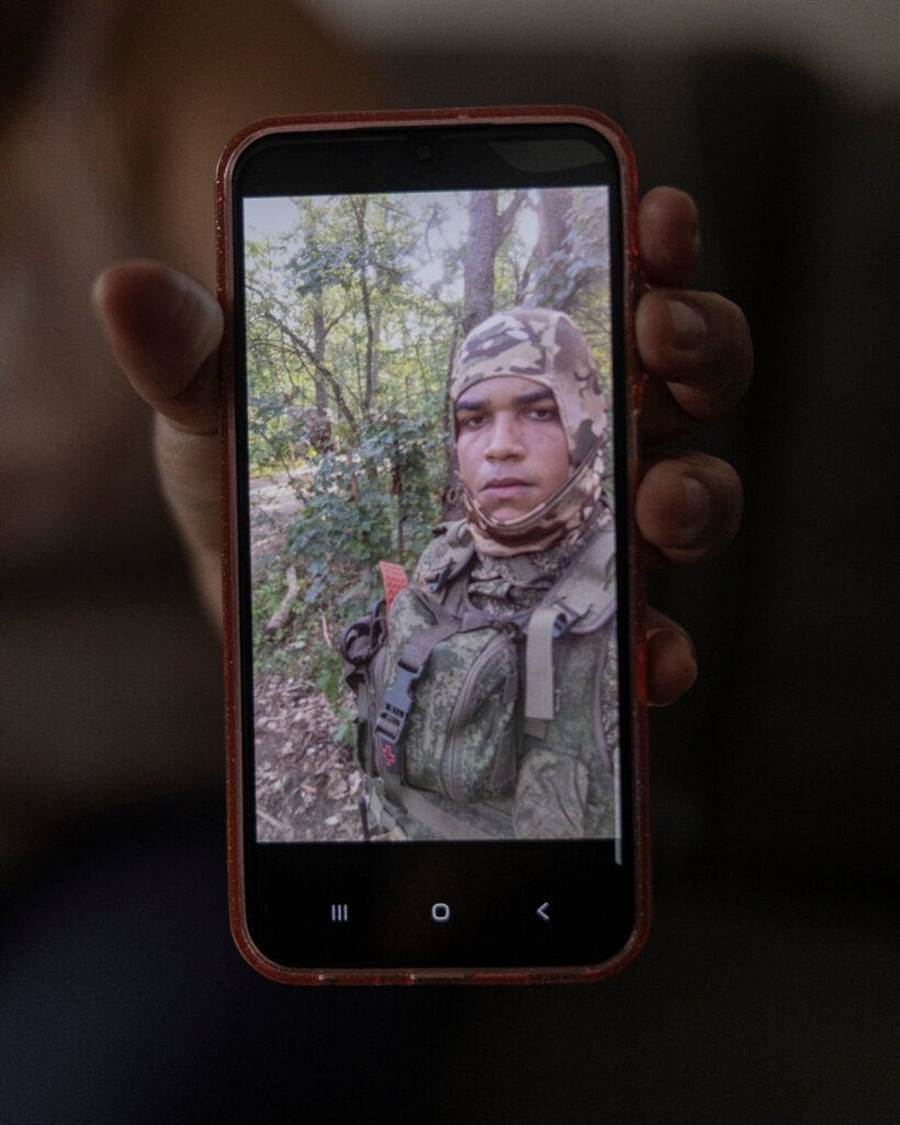
| Chairon Vitor Sepulvida de Souza vanished in eastern Ukraine. Victor Moriyama for The New York Times |
| Dozens of Brazilian men joined the Russian Army and were sent to the front lines with little training. Here is one soldier’s story. Nvidia halted some sales of its A.I. chips to Malaysia, Singapore, Thailand and Indonesia as the U.S. seeks to restrict China’s access to the technology. Net migration to Britain has fallen to 77,000, its lowest level in almost three decades, excluding the Covid pandemic. The U.K. government released new documents relating to the ambassadorial appointment of Peter Mandelson, who was fired over his friendship with the sex offender Jeffrey Epstein. Pablo Hernández de Cos, a long-serving Spanish policymaker, is set to be the next president of the European Central Bank. An Iranian drone attack in Kuwait killed two Italians. |
OTHER NEWS
| A Paris court ordered Gérard Depardieu to stand trial over an accusation that he raped a young aspiring actress eight years ago. An attack in Syria blamed on the Islamic State killed two security personnel and wounded five others. The latest batch of proposed tariffs revived Trump’s focus on pressuring China to reduce its role in supply chains. Hong Kong is holding low-key events to remember the deadly high-rise fire a year ago after Chinese authorities warned against using the disaster to sow division. Was Japan’s prime minister, Sanae Takaichi, snubbed at the Asia summit in China? See our visual evaluation. |
WHAT ELSE IS HAPPENING
 |
| Carl Court/Getty Images |
| London’s transit authority will today impose rules barring pedicabs from blasting loud music and charging exorbitant fees.Vera von Lehndorff, who as Veruschka was one of the first supermodels, died at 87. |
TOP OF THE WORLD
The most clicked link in your newsletter yesterday was about conversations to have with your aging parents.
| HEALTH STATISTIC OF THE DAY |
 |
| Stephan Dybus |
619 million
That is how many people worldwide suffer from some form of low-back pain, a 60 percent increase from 1990, according to a new study. Spikes in diagnoses have been recorded in nearly every part of the world, from Latin America to Asia and Africa.
| WHAT IN THE WORLD?! |
 |
| Click to watch. The New York Times |
Cute but clingy: Mirumis, the furry bag charms that turn their heads at the sound of your voice and latch onto your purse with their little arms, are selling like hot cakes.
The Lion Sting: Turkish officials deployed drones and traps after a lion was reported near Istanbul. But then they said there was no lion.
Sobering prices: Luxury water, like a sparkling option from Spain at $13 a bottle, is becoming a thing for drinkers turning away from beer and other alcohol.
An immovable feast: Crowds are showing up at major U.S. landmarks to try to push them. They have not succeeded so far, but they seem to be having fun.
We’ve made this link free for you.
| RECIPE |
 |
| Julia Gartland for The New York Times |
Full of coconut flavor and chew, cocadas, found across Latin America, are similar to coconut macaroons. Ambitious bakers start by cooking down coconut milk and sugar to create condensed coconut milk, but using the canned version is a shortcut.
