
November 19, 2026  | By Katrin Bennhold |
Good morning, world. Brexit was one of the most seismic events in modern British history. It’s had political, cultural and, perhaps above all, economic ramifications. So it’s been striking that in recent years, few politicians have been willing to say much about Britain’s 2016 vote to leave the European Union. That includes those who campaigned in favor of leaving the E.U. and those who opposed it.
But that’s changing. Prime Minister Andy Burnham is talking about Brexit — a lot. Today, I write about why Britain seems to be restarting a conversation about its relationship with the E.U., and what that actually means for its future.
Also:
| Trump’s meeting with Xi and Putin Anthropic’s record I.P.O. A very expensive Van Gogh |
 |
| Kirsty Wigglesworth/Associated Press |
A post-Brexit reset. But what kind?
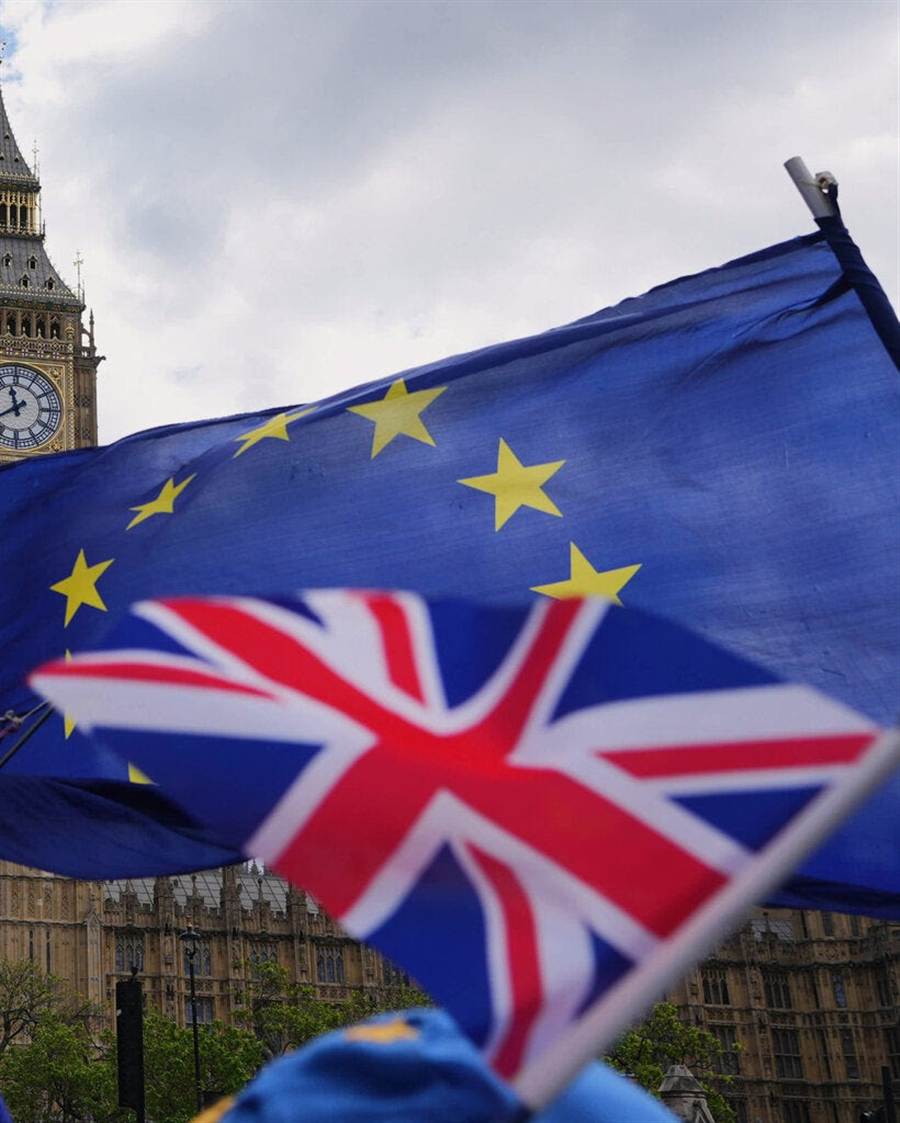
Andy Burnham wants a reset with the European Union.
This week, in his first major foreign policy speech since becoming prime minister, Burnham had one clear message for the dignitaries assembled before him: “The Brexit we were given has not worked.”
It’s not the first time he’s used strong language about Britain’s decision to leave the E.U. Addressing Parliament this fall, he listed it as one of Britain’s historic “wrong turns.”
At his party conference a few weeks later, he said, “Brexit has done more harm than good.” When pressed, he told journalists that every option for a reset with Europe needed to be on the table, including going “all the way” — that is, rejoining the union.
For now, the goals of a Britain-E.U. summit in Brussels tomorrow are more modest: The two sides are expected to talk about re-establishing ways for young people to move between Britain and the E.U. more freely, a deal on agricultural products and linking their emissions markets, among other topics.
But the bigger question hanging over this rapprochement is whether Britain could actually rejoin the E.U. in the future, a question no one has dared to go near for the past decade. If Burnham has broken that taboo, it’s both because the politics around Brexit have shifted as the economic costs have become increasingly undeniable, and because the world in which Britain voted to leave has changed.
But that doesn’t mean Brexit is about to be reversed any time soon.
 |
| Prime Minister Andy Burnham in London yesterday. Carlos Jasso/Agence France-Presse — Getty Images |
A perilous new world
Brexit was complicated territory for both major parties from the start. It split the Conservatives between those who wanted to stay in Europe’s single market and those who wanted to leave in the name of sovereignty and immigration control. It also divided Labour, whose educated and younger urban voters supported staying in, and whose traditional working-class base did not.
The 10 years since the vote have been messy. Six prime ministers have struggled to navigate Brexit’s aftermath, and essentially no major politicians have seen it in their interest to talk about it much.
But recently, a few things have changed, said Anand Menon, a professor at King’s College London who also spent a decade as the head of a think tank studying the relationship between Britain and Europe.
A consensus has more or less taken hold in Britain that Brexit was a bad idea. Two in three Britons now consider Brexit more of a failure than a success, polls show. It cost the economy 2 to 6 percent of G.D.P., according to a recent report, while not succeeding in lowering immigration. In fact, immigration from outside the E.U. has gone up.
But it’s not just that Brexit has hurt Britain’s economy. It’s that the economic case some Brexiteers once made no longer makes sense, if it ever did.
The referendum took place in a very different world from the one we live in now — before Russia’s full-scale invasion of Ukraine; before Donald Trump’s trade wars; before the Iran war.
The vision one camp of Brexiteers painted, of Britain as a small, wealthy sovereign nation outside the E.U., signing lucrative trade agreements with the whole world — Singapore-on-Thames, as they called it — relied on a rules-based, free-trading global order. It was a stretch at the time, Menon said; today, it’s impossible to envision.
And so the politics around Brexit have evolved too.
The Tories are still divided, Menon said, and also on the wrong side of an increasingly unpopular policy. With a few exceptions, they’re still largely staying away from the Europe question.
But Labour strategists say the party has already lost all the Leave voters it seems likely to lose. Its voters are now overwhelmingly people who voted against Brexit and those too young to have voted in the 2016 referendum. A pro-European stance, some have argued, could help Labour attract back voters who defected to more left-leaning parties. It could also make it harder for the Conservatives to lure young, educated voters away.
Labour, in other words, finally looks as if it has more to gain than to lose from talking about Brexit again.
 |
| Brexit supporters in London in 2016. Adam Ferguson for The New York Times |
Easier said than undone
Even as Burnham is ready to declare Brexit a mistake, though, there’s no consensus on how to fix it.
Even if most Britons now wish they hadn’t left the E.U., it’s far from clear whether they would be prepared to rejoin when faced with the policies they rejected: paying billions of pounds into the E.U. budget every year, for instance.
In that sense, Menon said, “the poll numbers are soft.”
And even if Brexit did economic damage to Britain, there’s a danger in casting rejoining as any sort of magic bullet. Any deal would take years to negotiate and could be slow to bring many benefits. And even then it would be unlikely to turn Britain’s economy around on its own.
In the meantime, some worry that the politics that up until recently made Brexit untouchable could quickly turn toxic again. What was once the Leave campaign is already mobilizing, rebranding itself as Stay Out.
In a recent interview, David Cameron, the former Conservative prime minister who called the fateful referendum in a bid to bury divisions and settle the Europe issue for good, had some words of advice for Burnham: Don’t go there.
| MORE TOP NEWS |
 |
| In Shenzhen yesterday. Pool photo by Iori Sagisawa |
Trump, Xi and Putin are set to meet
The meeting today between Donald Trump, Xi Jinping and Vladimir Putin will be the first time in history that the leaders of the United States, China and Russia — which have more than 90 percent of the world’s nuclear weapons — sit down together.
The three leaders want to project the image that they are guiding the world order, but they are unlikely to settle major issues during their talks in Shenzhen, China. Follow our live coverage.
Hours before the three-way meeting, Trump sat down with Putin for their first in-person meeting in more than a year.
David Sanger, our White House and national security correspondent, explains in the video below what’s at stake when you put three leaders with vast powers, vast nuclear arsenals and big egos in the same room.
 |
| Click to watch. The New York Times |
Some analysts are calling the meeting “Yalta 2.0” — comparing it to the conference between Roosevelt, Churchill and Stalin at the end of World War II. But the parallel has limits.
| OTHER NEWS |
| Anthropic completed the largest initial public offering of all time, selling $81.3 billion of its stock.Trump is weighing plans for another round of extensive military strikes on Iran as Israel presses for action, officials said.Kuwait and Bahrain said that they had intercepted Iranian aerial attacks amid fears of a return to full-blown fighting.Israeli forces advanced into an area of the central Gaza Strip controlled by Hamas.Democrats nominated Hakeem Jeffries to be speaker of the House of Representatives. He would become the first Black lawmaker to hold the post.The International Court of Justice will rule today on whether Myanmar committed genocide against Rohingya Muslims. Here’s what to know about the case.Russia vowed to rebuild the bridge to Crimea that was damaged in a major Ukrainian attack. It could take years.At the DealBook summit, Elon Musk said that he felt “pretty foolish” about spending heavily in midterms to help Republicans. He also sought to paint himself as a moderate, saying he was “not MAGA.” |
WHAT ELSE IS HAPPENING
 |
| Eduardo Munoz/Reuters |
| A Van Gogh sold for $190.4 million at Sotheby’s, setting an auction record for a work by the Dutch painter and becoming the sixth most expensive painting ever sold at auction. The Cambridge Dictionary’s word of the year is meant to capture the moment. |
TOP OF THE WORLD
The most clicked link in your newsletter yesterday was video of the damage from the Ukrainian attack on the Crimea bridge.
| FRIED CHICKEN DIPLOMACY OF THE DAY |
 |
| Eloisa Lopez/Reuters |
Filipino fast food for Trump
President Ferdinand Marcos Jr. of the Philippines had food from Jollibee, a fried chicken chain that is considered a national treasure, delivered late night to President Trump during his stay in Manila on Tuesday. The gesture appeared to be a nod to Trump’s love for fast food. As of our deadline, it was not clear whether the American president actually ate any Jollibee chicken.
| MORNING READ |
 |
| Gabriella Angotti-Jones for The New York Times |
For two years, J. Galen Buckwalter, 70, allowed researchers in a lab to record the neural signals in his brain — signals that fired when he thought, spoke or moved. Scientists say the research could eventually help lead to technology that sounds like science fiction: the regulation of pain or fear, the instant transfer of knowledge like a new language or the merging of human consciousness with A.I.
But when Buckwalter asked for a copy of the data from his own brain, the researchers said no. That’s when things got complicated.
We’ve made this link free for you.
| AROUND THE WORLD |
 |
| Juan Arredondo for The New York Times |
Dusting off the Monet
Anny Aviram spent more than 50 years working at the Museum of Modern Art in New York, tending to some of the world’s most famous works of art.
A senior conservator, she used tools for maintaining priceless artworks that could’ve been assembled from a household cleaning closet: dusters, sponges, brushes, rags, vacuums. One of her favorite parts of the job was cleaning Claude Monet’s “Water Lilies.” She usually saved the task for her birthday. In July, on the day she turned 79, Aviram grabbed her dusting tools and climbed a ladder. It was her last time cleaning the masterpiece.
Can you guess which one of these masterpieces does NOT hang at MoMA? Click to see if you’re right.
| Vincent van Gogh’s “The Starry Night”Pablo Picasso’s “Les Demoiselles d’Avignon”Leonardo da Vinci’s “Mona Lisa”Salvador Dalí’s “The Persistence of Memory” |
| RECIPE |
 |
| Christopher Testani for The New York Times |
In these delicious onigiri, the tuna is broken down into very fine pieces to create a creamy filling. Here’s a tip: Instead of adding salt to the water when making the rice, salt your hands before shaping the balls to season the onigiri perfectly.
