
October 12, 2026  | By Katrin Bennhold |
Good morning, world. Three years ago, Israel suffered the worst attack in its history. On Oct. 7, 2023, Hamas-led gunmen killed nearly 1,200 people and took 251 people hostage. Some called it a pogrom. It shattered any sense of security Israelis had.
What followed has radically reshaped the region: Israel’s war against Hamas in Gaza, which has killed more than 75,000 Palestinians and prompted allegations of genocide that Israel has denied. Military campaigns in Lebanon and Iran.
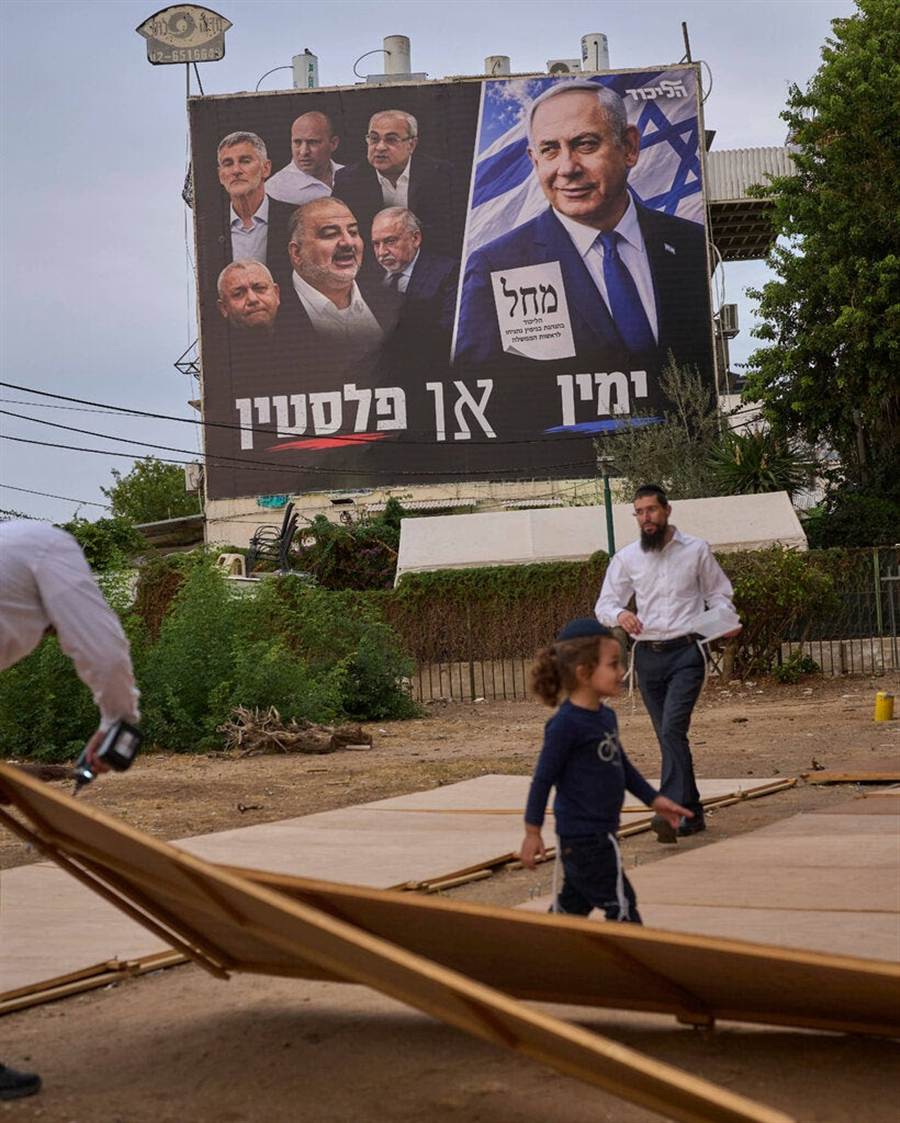
But inside Israel, the trauma of Oct. 7 itself is still fresh. Many Israelis feel there has been no reckoning with the failures that preceded the attack at home. When they go to the polls in two weeks, for the first time since the attacks, one thing many will be voting on is who they think is most likely to keep them safe. I spoke to my colleague Isabel Kershner about what many describe as the most consequential elections in the country’s history.
Also:
| Europe breaks a Taliban tabooSaudi and Yemeni airports hitThe Inuit creatives of Canada’s Arctic |
 |
| Ashdod, Israel, last week. Ohad Zwigenberg/Associated Press |
‘What kind of a country do you want Israel to be?’
Isabel, it’s been three years since the Oct. 7 attacks. How have these attacks changed Israel?
Profoundly. Israel is no longer holding back. It’s going beyond its borders and occupying territory. It’s rejecting any international condemnation of its conduct in Gaza and the West Bank. You see a lot of Israelis who are forever traumatized by that one day. And that manifests in two ways: There’s a very large consensus within Israel in support of the military campaigns in Gaza, in Iran and against Hezbollah in Lebanon.
At the same time, people have lost trust in everything they previously assumed would keep them safe at home. Hamas and its allies carried out the attack. But leading up to the attack, there were years of government failure: failed policies in Gaza, failure to gather intelligence and failure to interpret available intelligence. And on the day itself, the military was slow to respond. All that has shaken people’s confidence in the state.
What does that mean for the elections coming up in two weeks’ time?
In one sense, if you look at the polls, the country is divided along very familiar lines, between those who broadly support Prime Minister Benjamin Netanyahu and those who broadly oppose him. But the stakes feel a lot higher. Many people are saying this is the most important election in Israel’s history. The question hanging over this campaign is: What kind of a country do you want Israel to be?
How so?
The current government is the most right-wing and religiously conservative that Israel has ever had. This government is still pursuing a version of the judicial reform that critics say would compromise the independence of the judiciary and which led to mass protests before Oct. 7. And this government is enabling a huge expansion of settlements in the occupied West Bank and has taken little action against violent extremist settlers there.
So looking ahead, people are having to decide: Do they want more of that? Or do they want to go back to a more secular liberal democracy with different priorities?
 |
| Prime Minister Benjamin Netanyahu at the United Nations General Assembly in September. Dave Sanders for The New York Times |
Who are the main personalities and parties to watch?
On Netanyahu’s side, there are the far-right parties and the ultra-Orthodox parties. Then you have the opposition, which is fragmented. The front-runner is a center-right former general named Gadi Eisenkot, who leads the Yashar party, but overall, it’s a very mixed bag. There are right-wing parties; there are more centrist parties; the traditional Israeli left in favor of a two-state solution barely exists anymore. There are also some Arab parties. What unites most of the opposition is that they are against what they see as the zealotry of the current government and they want it to take responsibility for the failure to prevent Oct. 7. They want an independent inquiry into Oct. 7, which Netanyahu has so far blocked.
What are Netanyahu’s chances of winning another term?
Many of the polls are telling us Netanyahu’s bloc and the opposition are running neck and neck. The predominantly Jewish parties in the opposition could win a majority together with the Arab parties. But many Israeli voters, even those who don’t like Netanyahu, don’t want their government to rely on Arab parties.
At the end of the day, there’s likely going to be a drawn-out process of coalition talks before we know who can form the next government — if anyone.
Do issues around Gaza and the West Bank feature at all in the election?
Not as much as people outside of Israel might imagine. Nobody’s clamoring for Israel to withdraw from Gaza at this point. And even on the subject of the West Bank, a lot of the opposition parties are treading very carefully. They say they would rein in the extremists attacking Palestinians. But mostly they’re trying to avoid the issue for fear of alienating the soft-right voters they’re trying to win over. The only side mentioning the prospect of a Palestinian state is the pro-Netanyahu camp, which is saying that will be the outcome if it loses.
As for the international criticism, that’s barely featuring at all.
 |
| In Jerusalem last week. Ammar Awad/Reuters |
We just witnessed that very dramatic FlyDubai incident in which the pilot and a group of passengers stopped the co-pilot from downing the plane. Has that entered the campaign?
Yes. Netanyahu’s critics are drawing a connection between Oct. 7 and the narrowly averted aviation disaster, saying, “Look, once again the government is responsible for security failures.” They say the Omani co-pilot should have been vetted and stopped from flying into Israel.
Netanyahu, meanwhile, has been basking in the glory of the heroism. He held a video call with the wounded pilot in hospital and met on camera with some of the passengers who rushed forward to take action. He’s been very quiet on the failure aspect.
Isabel, you’ve been covering this story for decades. What does it feel like in Israel right now?
It does feel like a critical juncture. You hear people say another four years of this and it won’t be the same country they knew. You hear people talking about leaving or thinking about whether there’s a future for their children here if things don’t change. It really does feel very fateful.
Related: Navi Pillay, a South African jurist who led a U.N. commission that said Israel had committed genocide, won the Nobel Peace Prize. The decision drew Israel’s condemnation and underscored the country’s isolation on the world stage.
| MORE TOP NEWS |
 |
| Tomas Munita for The New York Times |
The Taliban and Europe’s fear of migrants
Governments in Europe have long shunned the Taliban, primarily because of their severe restrictions on women and girls. But under pressure to appear tougher on migration, they are deporting refugees to Afghanistan, and in recent months have been negotiating with the Taliban to make more expulsions possible. Some details are being reported here for the first time.
For their part, the Taliban see sustained engagement on deportations as a gateway to acceptance of their rule, five years after sweeping back to power.
| OTHER NEWS |
| The war between the Saudis and the Houthis escalated dramatically. The Saudi and Yemeni capitals were rocked by new strikes yesterday, killing at least two people, a day after 12 were killed in a Houthi strike in Riyadh — the deadliest attack on a Gulf Arab country since the Iran war began.The Pentagon again quietly raised the number of U.S. casualties related to the Iran war amid widening criticism over a lack of transparency.Ukraine shrugged off President Trump’s suggestion that it ditch Volodymyr Zelensky as its president.The Palestinian Authority postponed the first major Palestinian elections in two decades.Pope Leo XIV said that he would undergo surgery to remove a small growth on his lung.New York’s mayor, Zohran Mamdani, said he would skip today’s Columbus Day parade in the city, to the dismay of some Italian Americans.The leaders of the Cockroach Janta Party, an Indian youth movement, were released yesterday. They were among thousands detained in New Delhi on Saturday in a sweeping crackdown on planned protests over voting rights. Our reporter Mujib Mashal was there. |
 |
| Click to watch. The New York Times |
| TEST OF THE DAY |
 |
| The New York Times |
Can you tell this photo is an A.I. fake?
A.I.-generated images used to be easy to suss out: too many fingers, uneven ears, garbled shapes instead of letters. But those obvious mistakes have been almost entirely eradicated, making it harder to determine what’s real. See if you can spot the errors.
| MORNING READ |
 |
| Philip Montgomery for The New York Times |
The International Committee of the Red Cross is a secretive organization, not well known outside of war zones. It upholds the Geneva Conventions, a series of international agreements created in the wake of World War II that laid out the rules of war.
In her role as the I.C.R.C.’s president, Mirjana Spoljaric travels to all sides of active war zones — Gaza, Ukraine, Iran — meeting with the heads of governments and armed groups. She rarely gives interviews because of the politically fraught and confidential nature of her work, but she sat down with my colleague Lulu Garcia-Navarro because she believes her entreaties to global leaders about the rules of war are increasingly falling on deaf ears. Watch her interview.
| AROUND THE WORLD |
 |
| Renaud Philippe for The New York Times |
A new chapter for Inuit culture in Canada
Growing up in a treeless Arctic hamlet, Louise Flaherty, 57, read government-supplied textbooks that didn’t reflect her world. “I remember drawing pictures at home of myself as a blonde kid, with blue eyes, next to an apple tree,” she said. “My culture wasn’t visible, our language was not visible, in the literature that we were reading in school.”
Twenty years ago, she helped establish a publishing house in Iqaluit, the only city in the Canadian Arctic, that now releases books by Inuit authors in English and the Inuit language.
Its success reflects head-spinning cultural change in three Inuit generations. Ms. Flaherty’s grandparents were nomads; her parents’ generation was forced into settlements and residential schools. Now, a new generation is exploring questions of language, land and identity through books, films and even tattoos. Read more about what it means to be Inuit today.
| RECOMMENDATIONS |
 |
| Click to watch. The New York Times |
Discover: The influential performance artist Marina Abramović divulges everything from her favorite TV show to her biggest regret.
Listen: The Irish rock band Fontaines D.C.’s upcoming album, “Dopamine Chamber,” is the most anticipated of its career.
Style: At Paris Fashion Week, attendees embraced all black. See the photos.
Consider: Exercise can improve cancer outcomes. Why is no one talking about it?
| RECIPE |
 |
| Bryan Gardner for The New York Times |
Why is it so satisfying to flatten a grilled eggplant with a fork, dip it in beaten egg and pan-fry it? Find out by making tortang talong, a staple of Filipino home cooking and one of the world’s most ingenious egg dishes.
