
September 11, 2026  | By Katrin Bennhold |
Good morning, world. My adopted home country of Britain is gripped by “Bayeux mania.” Everyone wants to see the Bayeux Tapestry, an epic embroidery, nearly 70 meters long, that went on display at the British Museum yesterday.
The tapestry itself is remarkable. Made almost 1,000 years ago, it tells the story of a pivotal moment in British history: The bloody Battle of Hastings, in which William the Conqueror, the Duke of Normandy, defeated Harold Godwinson, England’s last Anglo-Saxon king, laying the foundation for many aspects of modern Britain.
But another source of excitement is simply that it’s here. How was it moved from France? Very, very carefully. Today my colleague Alex Marshall writes about what its improbable journey might mean for other supposedly immovable priceless works of art.
Also:
| 25 years after the 9/11 attacks Trump promises free money Making it rain in Malaysia |
 |
| The Bayeux Tapestry at the British Museum in July. Joanna Yee for The New York Times |
They said it couldn’t be moved
by Alex Marshall
When Emmanuel Macron of France first announced he’d loan the Bayeux Tapestry to Britain, in 2018, I had a thought: That isn’t going to happen.
Napoleon might once have shifted the embroidery, which depicts the Norman invasion of Britain, from its home in Bayeux, along bumpy roads to the Louvre in Paris. But in 1803, who was going to argue with him?
The Nazis also managed to shift the tapestry around France — ultimately hoping to steal it away to Germany — but few were going to resist them, either.
In 2018, Macron didn’t have the power of Napoleon, or the Nazis, and I thought he would struggle to overcome objections from the tapestry’s conservators, who said the tapestry was too fragile to leave its hometown, let alone travel to Britain, where the embroidery was made.
I was wrong. Eight years later, the tapestry is in the British Museum in London, the centerpiece of the most eagerly anticipated museum show of the year, which opened yesterday and runs through July 11.
The artifact’s high-security move proves that conservation science has developed to the point where an object once thought immovable can cross borders. And that raises an intriguing question: If it’s now safe to move the tapestry, surely it’s safe to shift other supposedly immovable priceless objects, too?
 |
| The Bayeux Tapestry depicts the invasion of England by William the Conqueror in 1066. Kin Cheung/Associated Press |
16,445 wrinkles, 9,646 holes and 30 tears
The Bayeux Tapestry is not a sturdy object. A 2020 study found it had 16,445 wrinkles, 9,646 holes and 30 tears, among other damage. After Macron’s 2018 announcement, numerous conservators expressed their horror.
So what changed? The conservators I spoke to said a main difference was that they could now work with scientists and engineers to model the vibrations that might occur during transport, then develop methods to limit them. And in this case, they had the financial backing to do such work properly.
For its move to Britain, about 100 technicians carefully put the tapestry into a crate, then a climate-controlled case suspended in a spring-mounted cage. The huge springs surrounding that cage are sometimes used in earthquake zones, and have in recent years been used to move other fragile artworks including valuable pastels, sculptures and paintings.
The technology isn’t perfect. Thalia Bajon-Bouzid, one of the tapestry’s conservators, said in an email last week that the tapestry arrived in Britain with two thread breaks, a few millimeters long. Still, she said, there was “no major visible damage.”
Should a museum want to move a supposedly-immovable masterpiece, there is now more evidence that this is possible. It also has more evidence that doing so can reap huge rewards.
The return of the blockbuster exhibition?
The strange thing about the British Museum exhibition is that such blockbusters were meant to be a thing of the past. Around the time of the coronavirus pandemic, some European museum leaders, faced with plunging visitor numbers and a tough financial environment said it was becoming too expensive to ship masterpieces around the world for mega-exhibitions.
Those comments now seem premature. The British Museum’s show isn’t even the only blockbuster exhibition in London this fall. In November, the National Gallery will open a show of work by the Dutch master Jan van Eyck bringing together all nine of his painted portraits “for the first time in history.”
Blockbuster exhibitions almost always require that objects travel. Those van Eyck paintings will come from Berlin, Bruges, Vienna and Sibiu in Romania, as well as the museum’s own collections. “Only once, only at the National Gallery,” the show’s marketing goes.
 |
| At the British Museum yesterday. Henry Nicholls/Agence France-Presse — Getty Images |
So if more objects can be moved safely than ever before, are we about to enter a new era of blockbusters, with priceless art crisscrossing the globe? Could Picasso’s “Guernica” leave Madrid for the first time in over 40 years? Will Michelangelo’s David, which not even World War II could move from its home in Florence, suddenly pop up in New York? Is the Mona Lisa OK to travel the world again, as it did in the 1960s and 1970s?
Perhaps we’re one step closer. But it’s not just conservators who have to agree. Museums have to be willing to let their artworks go, too, and many would still prefer to keep their masterpieces to themselves. One key reason the tapestry could move to Britain was that its home in Bayeux is closed for refurbishment.
The Louvre, for one, is not going to give up its masterpieces easily. When I recently contacted it about the possibility of Da Vinci’s Mona Lisa going out on loan again, a spokeswoman acknowledged recent scientific advances, but said they didn’t eliminate the potential for vibrations entirely. The Mona Lisa’s backing panel is cracked, she added, so sending the painting outside the Louvre would risk it splitting in two.
No one would want that, of course. Unless, that is, a French president decides the risk is worth taking after all.
| MORE TOP NEWS |
 |
| Photo illustration by Chantal Jahchan |
25 years after 9/11
New York City will hold a solemn ceremony today commemorating the 25th anniversary of the Sept. 11 attacks.
Across the country, it’s been a time of reflection as Americans navigate the legacy of that day. Did 9/11 change everything? A quarter-century on, it is possible to consider the question with some critical distance, Charles Homans writes in The New York Times Magazine. The day’s influence is not as singular as it might have once seemed. It’s a “middle chapter in the story of American fracture rather than the pyrotechnic beginning,” he writes.
Al Qaeda now: The Taliban claim Afghanistan is no longer a sanctuary for terrorist groups, but Al Qaeda and others are still present.
| OTHER NEWS |
| President Trump said he would give $5,000 checks to every American adult if his party keeps control of Congress in the November elections. The proposal, like many others, may not come to pass.Trump’s Republican Party is holding a convention this week that looks more like a rally ahead of the midterm elections. But some candidates are staying away. Maggie Haberman explains in this video. |
 |
| Click to watch. The New York Times |
| Britain’s sanctions against Jewish settlements in the Israeli-occupied West Bank have incited public divisions among British rabbis.The Houthis in Yemen captured the port city of Mokha, in an offensive that could give the militia greater control over an important Red Sea shipping route. |
| At least five people died and more than 80 were missing after a fire on a passenger ferry in the Philippines.Anthropic said it had blocked research using its A.I. models that could have helped develop biological weapons.To counter inflation driven by the war in the Middle East, the European Central Bank raised interest rates to their highest level in more than a year. |
WHAT ELSE IS HAPPENING
 |
| In December 1990. Kyodo, via Reuters |
| Toyohiro Akiyama, a journalist who became the first Japanese person in space, died at 84. He earned the nickname “space antihero” for his lack of bravura and chain smoking. |
TOP OF THE WORLD
The most clicked link in your newsletter yesterday was about Apple’s new foldable iPhone Duo.
| ICONIC LOOK OF THE DAY |
 |
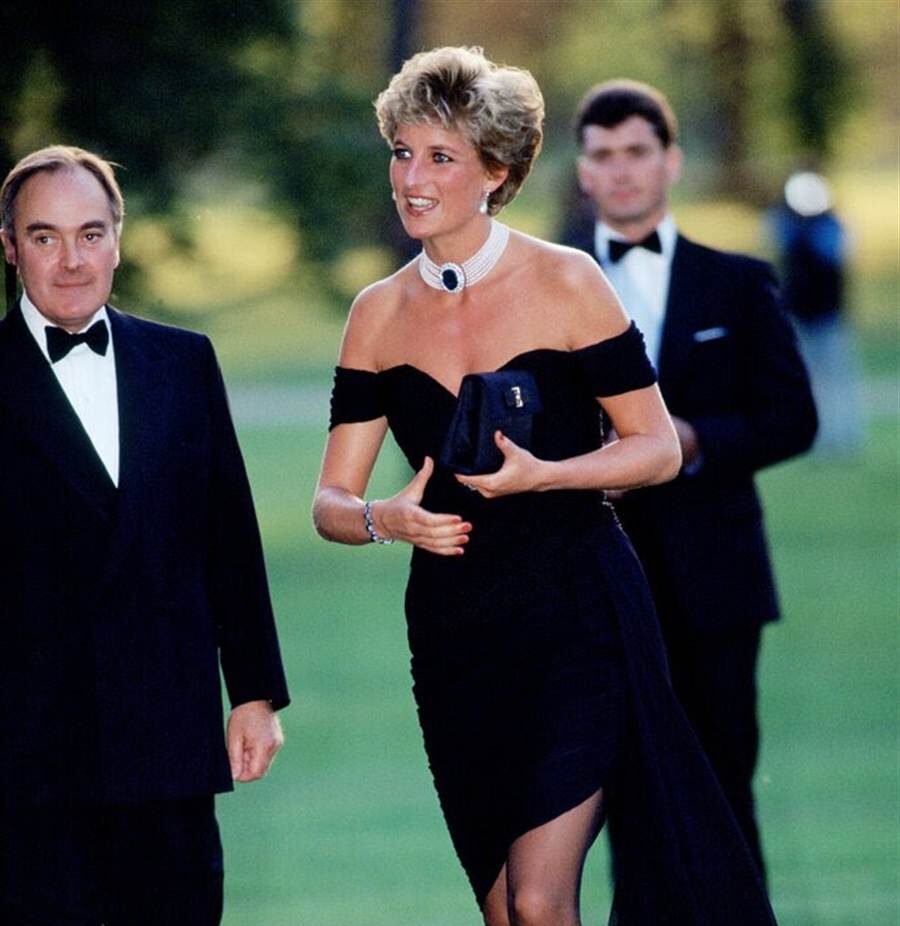
| Diana in London in 1994. Tim Graham Photo Library, via Getty Images |
Diana’s “revenge dress”
It was one of Princess Diana’s most enduring fashion statements. She wore the black cocktail dress to a party in London on the same day that Prince Charles, now king, obliquely admitted to an affair on national television. The so-called “revenge dress” is expected to fetch up to $300,000 at auction.
| MORNING READ |
 |
| Zunaira Saieed |
Wildfire smoke has been so severe in Malaysia in recent weeks that officials are trying to make rain to improve air quality.
The authorities recently sent a large transport plane to areas near the Indonesian border to find the perfect clouds for seeding. The crew sprayed a saltwater solution that helps droplets merge and fall as rain. Malaysian officials said the operation improved air quality, but scientists are divided about how effective cloud seeding really is. Read more and see the special aircraft.
| RECIPE |
 |
| Johnny Miller for The New York Times |
This raspberry and cream roulade is light and airy. You won’t even need to add sugar to the cream because the berries sweeten it perfectly.
