
| March 9, 2026 | By Katrin Bennhold |
Good morning, world. The war in Iran has become a high-stakes test of who will blink first.
Last week I wrote about how the Iranian government seems to be hoping the chaos and market turmoil resulting from a wider war in the Middle East will grind down President Trump’s willingness to continue the fighting.
Trump, in turn, is reportedly banking on at least some members of Iran’s Revolutionary Guards Corps — the main force protecting what remains of the regime — turning into pragmatic deal makers in the face of enough U.S. and Israeli airstrikes. (Neither option promises the kind of change many Iranians might be hoping for.)
Today, my colleague Neil MacFarquhar, who spent decades reporting on the Middle East, has a primer on the Guards Corps, or I.R.G.C., that helps explain why Trump’s gamble seems so risky.
Also:
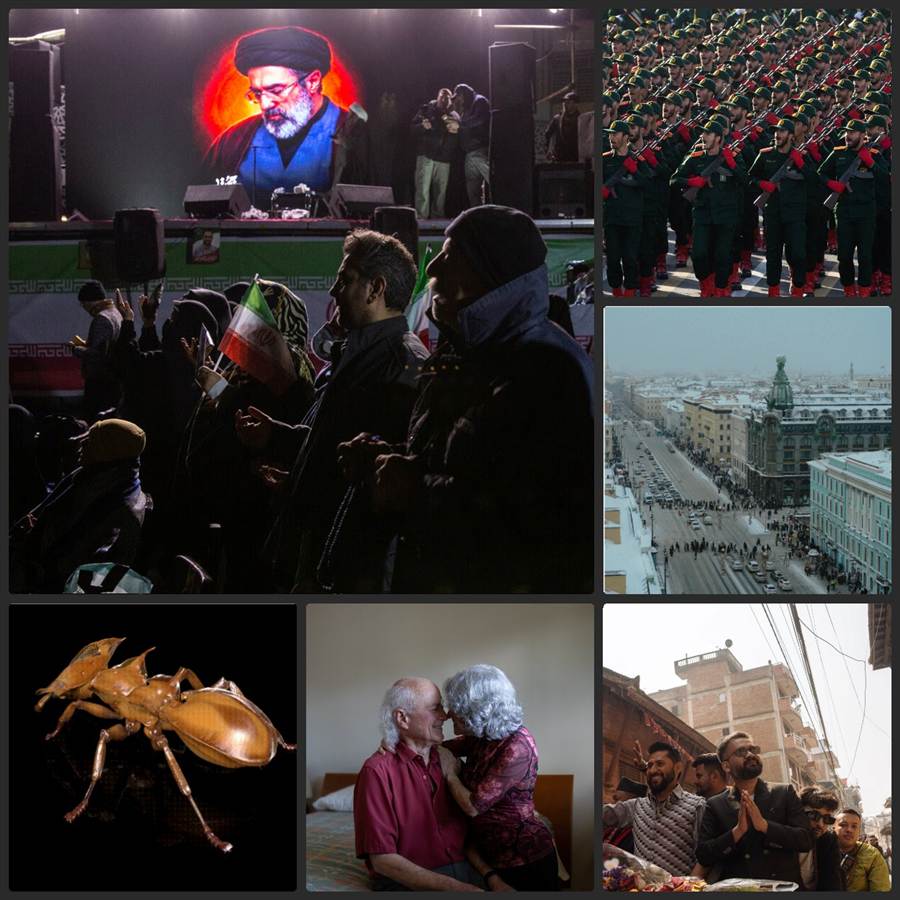
| Iran’s new supreme leader An ex-rapper set to lead Nepal The politics of fixing Russian buildings |
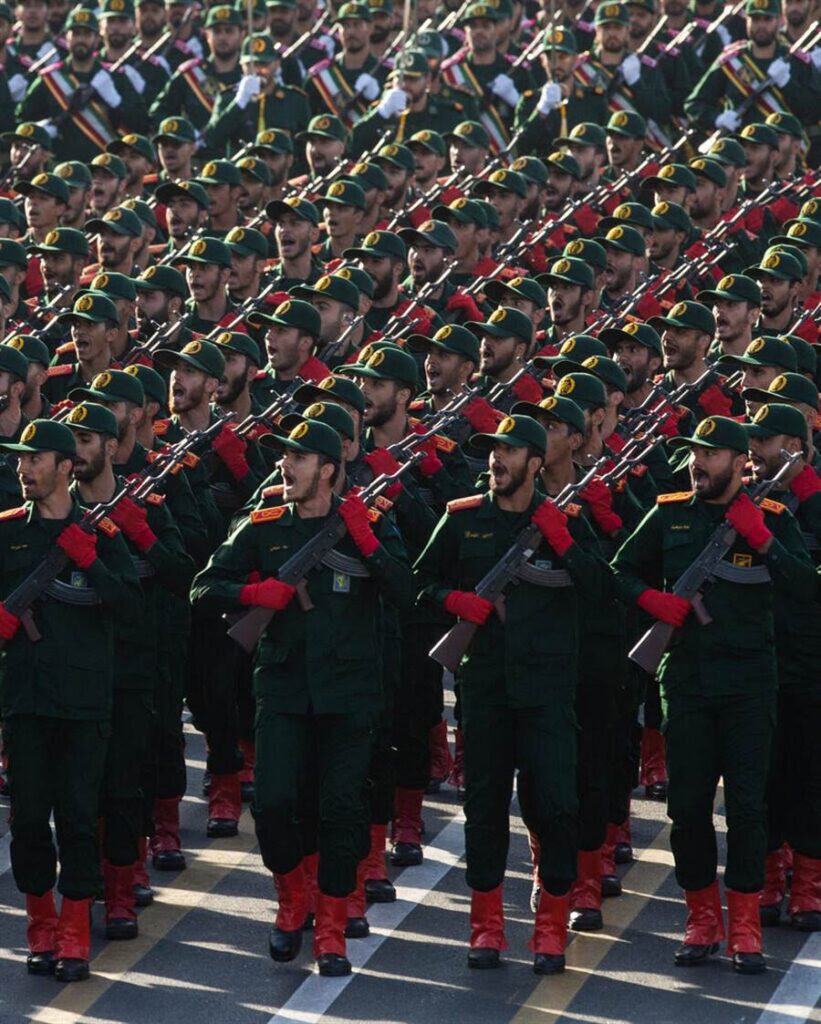
| I.R.G.C. cadets marched in a military parade in Tehran in 2024. Arash Khamooshi for The New York Times |
The military pillar of Iran
By Neil MacFarquhar
Within hours of the first Israeli and American airstrikes on Iran last weekend, militiamen from the Islamic Revolutionary Guards Corps deployed to neighborhoods across Tehran and other urban centers.
Witnesses and the occasional furtive video posted online depicted men in plain clothes, often armed with assault rifles, stationed at checkpoints where they searched cars and cellphones, alert for signs of support for the war. At night, buildings where residents shouted antigovernment slogans were sometimes targeted with gunfire. Militiamen roared through the streets in motorcades, using megaphones to bellow chants like “This army has come, for the love of the supreme leader!”
The Revolutionary Guards are the military spine of the Islamic republic. The Guards control the development and deployment of ballistic missiles and drones. They protect the country’s nuclear development facilities. They supervise proxy militias across the Middle East and also control a sizable portion of the economy.
“The I.R.G.C. is the regime,” said Afshon Ostovar, author of “Wars of Ambition: The United States, Iran, and the Struggle for the Middle East.” The government has two main parts, he added. “It is the supreme leader, who is the figurehead and the final decision maker, and the I.R.G.C. is basically everything else.”
Trump has suggested that the Guards might drop their weapons to buttress popular support for regime change. Alternatively, reports have indicated, the Trump administration envisions the Guards as a potential partner in its efforts to forge a more compliant Iran. A practical-minded faction of the Guards, the thinking goes, might drop Iran’s nuclear program to retain its interest in the oil industry, for example.
We can’t predict how events will play out. But many analysts I’ve spoken to suggest the very opposite: They view the Guards as the main barrier to regime change, or even any change, in Iran.
Safeguarding the revolution
In the early days of the 1979 Islamic Revolution, the republic’s founder, Ayatollah Ruhollah Khomeini, did not trust the armed forces, known as Artesh, a Persian word for army. He was said to have muttered, “Artesh has the shah in its blood.”
So he organized a parallel armed force, the Guards, charged specifically with preserving the revolution. The core consisted of neighborhood committees, often organized around a mosque, that had been established to protect their areas and to liquidate perceived enemies.
The eight-year war that started when Iraq invaded in 1980 molded the Guards into a more cohesive force that, given Iran’s international isolation, took on tasks like building a missile development program virtually from scratch.
After the death of Khomeini in 1989, the new supreme leader, Ali Khamenei, lacking popular support, turned the Guards into an elite force, marrying his office to the I.R.G.C.’s power, while allowing it to expand into politics and the economy.
The Guards established a separate wing to manage reconstruction after the Iraq war, parlaying that into a wider, more permanent stake in the economy. They still build roads, dams and other infrastructure. They also became adept at smuggling goods in and out of Iran, including oil, in response to Western economic sanctions imposed after 2002, when the country’s then-secretive nuclear development program was exposed.
Today, the Guards control at least 25 percent of the economy and perhaps twice that, one analyst told me.
By toppling Saddam Hussein in 2003, the U.S. created an opening for the Guards to expand across the Middle East, using the group’s Quds Force to build an axis of mostly Shiite Muslim militias in Lebanon, Syria, Iraq, Yemen and Gaza. With these militias under their control, the Guards became a foreign policy player, too.
A hard core
Today the Guards number between 125,000 and 180,000 members. They control various allied organizations including their own intelligence agency and the Basij neighborhood militias.
The Guards are not monolithic. Their militiamen were among those who mowed down protesters by the thousands in January, but they are also a conscript force, so their foot soldiers mirror Iranian society. Indeed, some disdain the Islamic republic.
But the core group consists of around 2,000 to 3,000 officers who are considered revolutionary hard-liners whose rank and wealth are tied to the I.R.G.C. Most analysts think they will fight to the bitter end. Within the overall blueprint for pursuing the war, the Guards have adopted a so-called mosaic strategy that gives local commanders in the 31 provinces autonomy to make decisions such as when to fire off drones.
In addition, analysts note that while the current Guards leadership is drawn from the aging ranks of Iraq war veterans, the next generation of commanders in their 40s and 50s is an unknown quantity. Some might consider bargaining with the U.S. as a pragmatic survival step. It’s equally possible that the current war will only cement hostility toward the U.S. and Israel, long a pillar of the regime’s ideology.
How long the U.S.-Israeli assault will endure is also unclear.
Should the U.S. and Israel keep at it long enough, the war could decimate enough layers in the Guards’ top ranks to prompt their disintegration and make whoever is left amenable to change. But the Guards strategy, first forged in the Iran-Iraq war, has always been to force the other side into an exhausting war of attrition. That seems to be the plan now.
The latest on the war
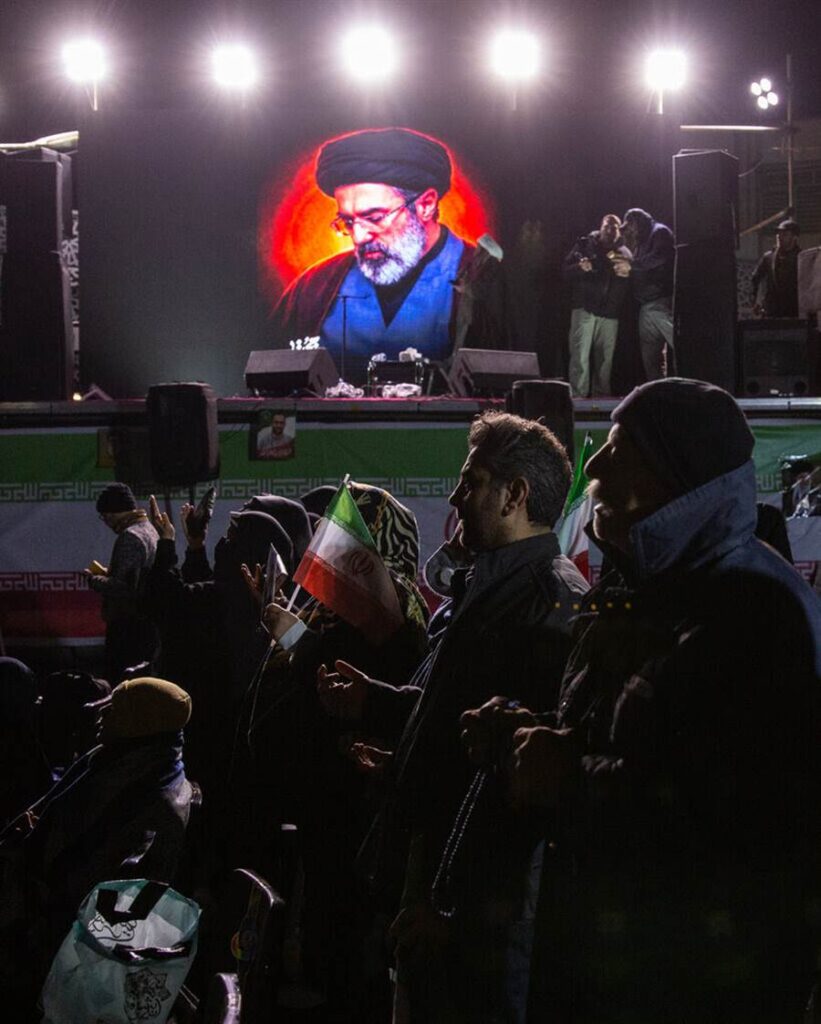
Iran this morning named Mojtaba Khamenei, a son of the country’s slain supreme leader, as his father’s successor, according to a statement from top clerics published in state media. His ascension signals the continuity of hard-line theocratic rule.
Khamenei, 56, is a mystery even within Iran — his personality or politics are not known outside of his father’s tight inner circle. But he has been an influential figure, coordinating military and intelligence operations at his father’s office. He is also known to have especially close ties with the Revolutionary Guards.
Oil prices surged above $110 a barrel for the first time in years. In Asia, where economies are heavily dependent on imported oil from the Middle East, stocks tumbled.
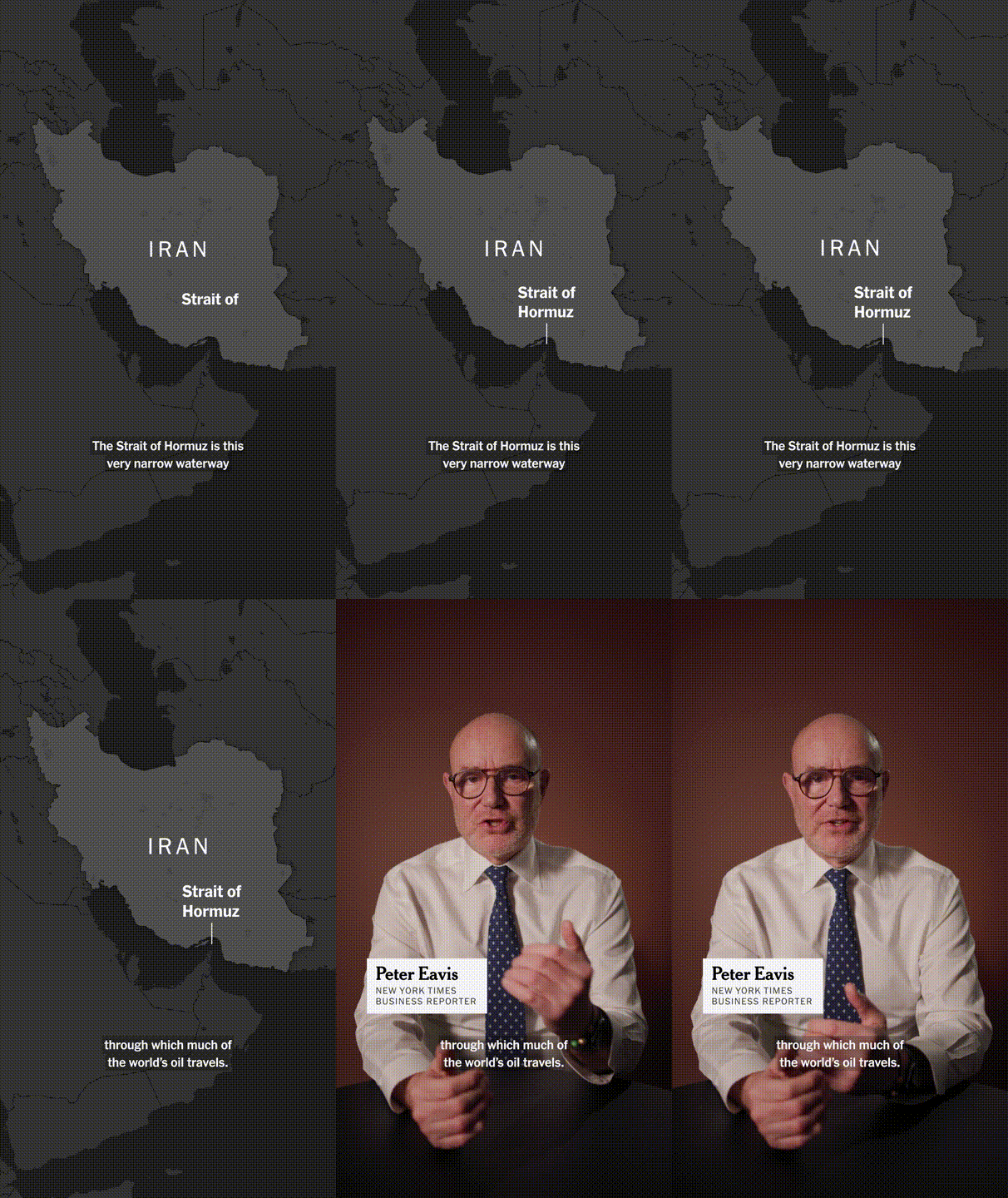
Watch: Our business reporter, Peter Eavis, explains how Iran’s chokehold on the Strait of Hormuz is affecting the price of oil. Click the video below.
For more:
| Israel’s military struck several fuel sites, including oil storage depots, in what appeared to be the first attacks on Iran’s energy infrastructure in the war.A newly released video — verified by The New York Times — adds to evidence that an American missile likely hit an Iranian elementary school where 175 people, many of them children, were reported killed.Israel hit a hotel in central Beirut and carried out heavy bombardments across Lebanon over the weekend. In a Lebanese village, residents gathered to bury those killed in ground fighting between Israeli forces and Hezbollah.Ukraine has sent interceptor drones and a team of drone experts to protect U.S. military bases in Jordan, President Volodymyr Zelensky said in a Times interview.See photos from across the Middle East as the war enters its second week. |
| From Opinion: Six writers weigh in on what’s next for Iran and its citizens. |
| MORE TOP NEWS |
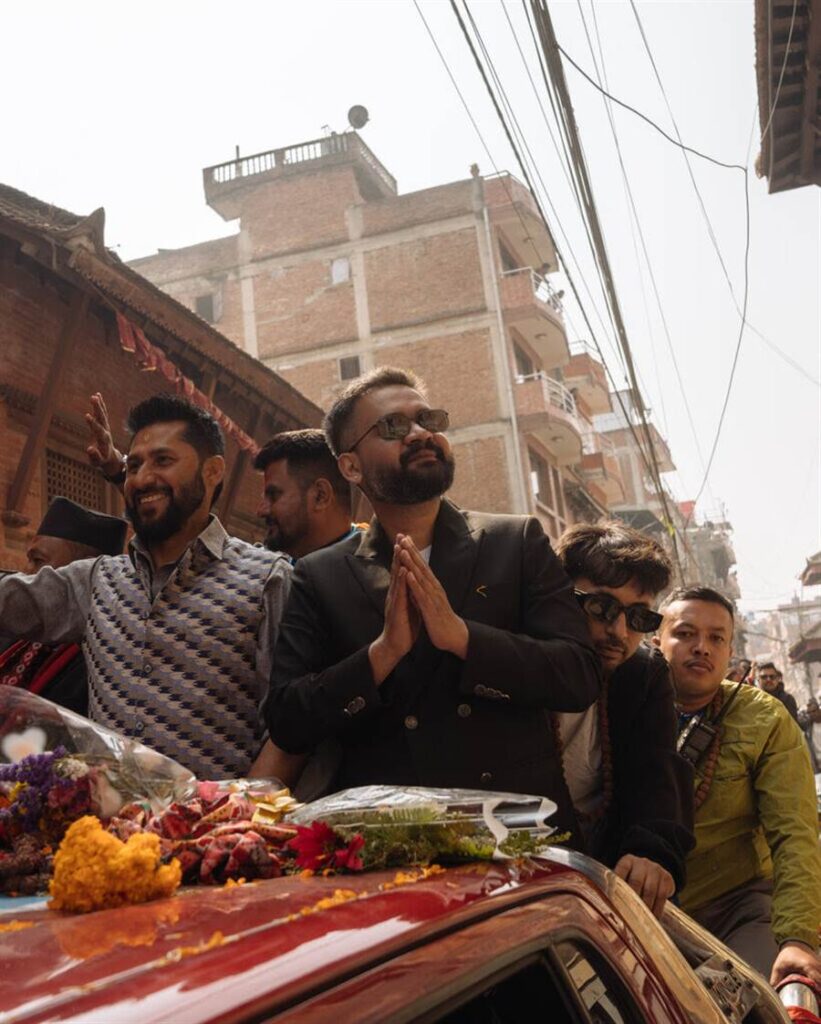
Ex-rapper’s party wins landslide in Nepal
Partial election results released yesterday showed the party of Balendra Shah, a onetime rap artist and former mayor of Kathmandu, winning 100 out of 165 directly elected parliamentary seats. The outcome is shaping up to be the biggest landslide in Nepal’s modern electoral history.
The election on Thursday was the first since a youth-led uprising last year toppled a government that was seen as corrupt. Now Shah, 35, is set to become prime minister. The average age of the candidates in his Rastriya Swatantra Party, or R.S.P., is decades younger than those of the big three parties.
| OTHER NEWS |
| An explosion damaged the U.S. Embassy in Oslo in what the police said appeared to be a “targeted attack.”Russia struck Ukraine with missiles and drones, killing at least 10 people in Kharkiv.Colombia held congressional elections after a spate of violence left many in the country on edge.In Turkey, the corruption trial of the former mayor of Istanbul begins today. His supporters say that President Recep Tayyip Erdogan is trying to eliminate a top political rival.Two Toronto-area synagogues were struck by gunfire, after another was damaged in a shooting less than a week ago.A large fire in Glasgow forced the closure of Scotland’s busiest train station, threatening havoc for commuters. |
WHAT ELSE IS HAPPENING
| Dozens of former employees of Noma, one of the world’s top restaurants, said its founding chef, René Redzepi, had inflicted physical and psychological violence on the staff for years.A woman fired several rounds at a mansion belonging to the pop star Rihanna near Beverly Hills.Top of The World: The most clicked link in your newsletter on Friday was about the rise and fall of Kristi Noem. |
| SPORTS |
F1: George Russell won the Australian Grand Prix for Mercedes.
Running: Jacob Kiplimo of Uganda broke the world record for the half marathon with a 57:20 run in Lisbon.
| INSECTS OF THE DAY |
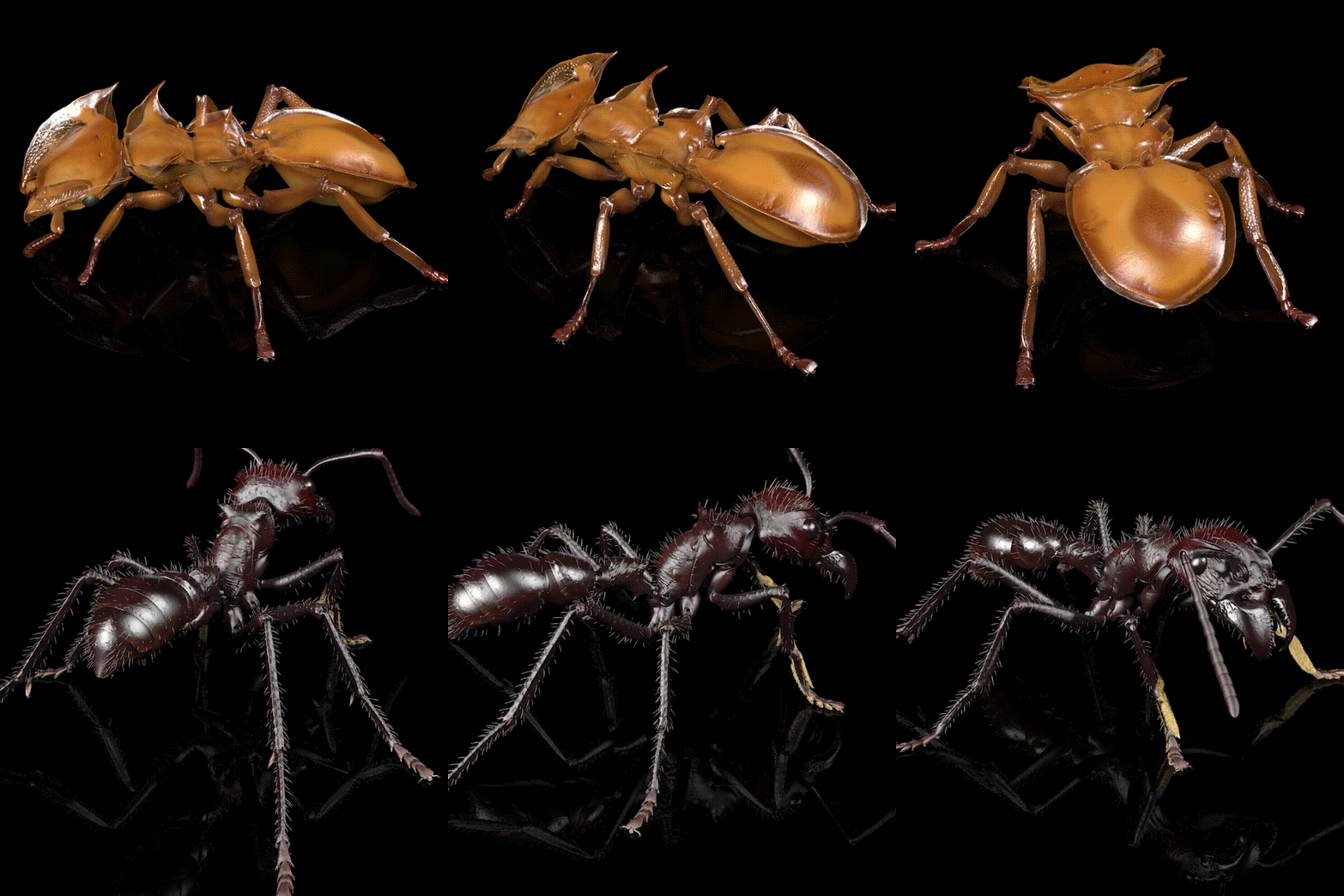
Ants
— They’re the stars of new high-resolution 3-D images that reveal their anatomical diversity in great detail. It would have taken years to create these images with traditional methods, but the nearly 2,200 specimens in a new database were X-ray scanned in a single week. Take a look.
| MORNING READ |

Just as longevity experts are concerned with “health span,” or the number of years you can remain truly healthy, some doctors and sex therapists have been studying “sex span,” or how long one can have a thriving sex life.
Experts say that people with sexual longevity have a willingness to stay open-minded and to let go of any rigid definitions of what sex should be. Read more about how older adults are improving their “sex spans.”
| AROUND THE WORLD |
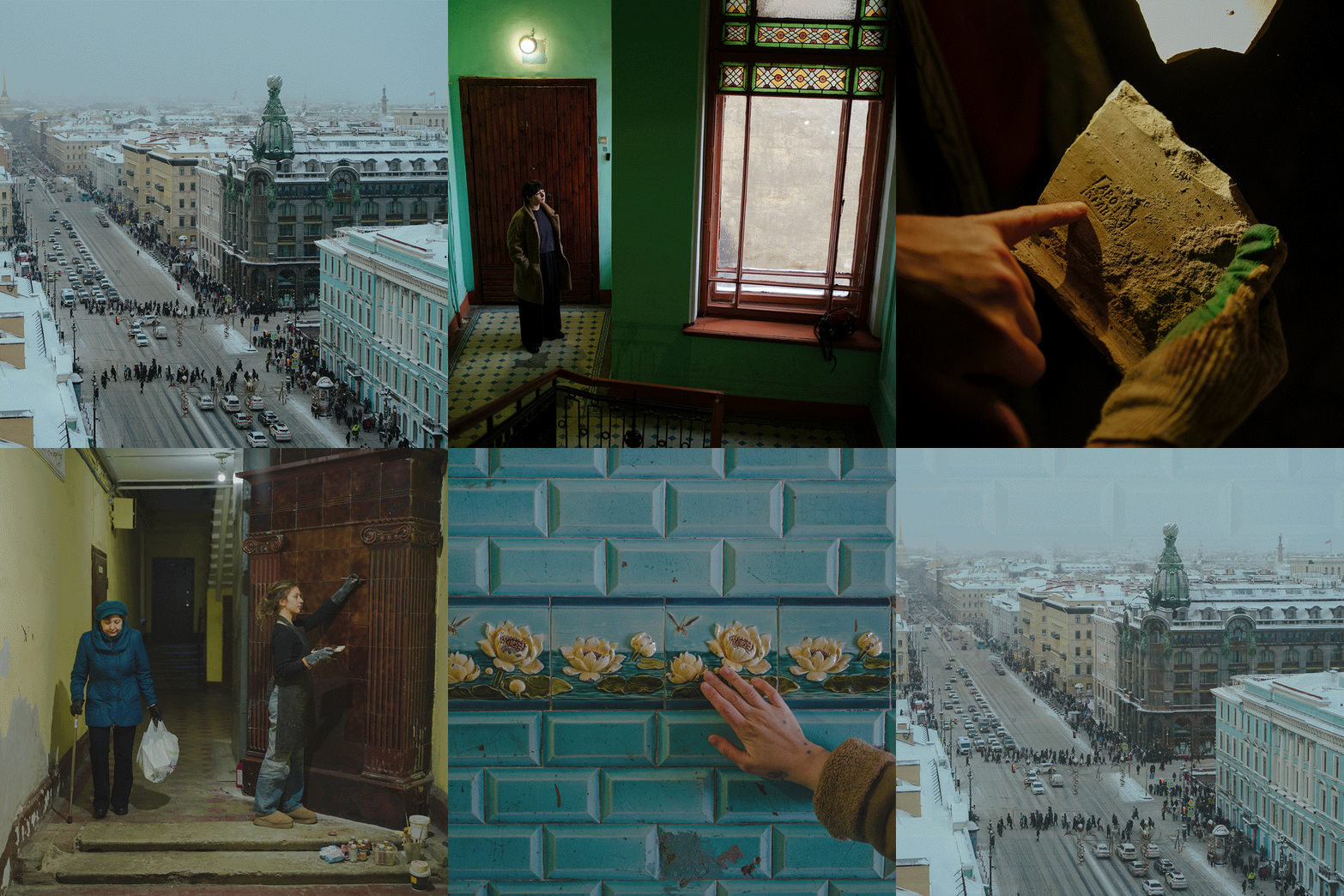
Restorations that are a form of protest in St. Petersburg
The grand residential buildings in St. Petersburg, Russia’s former imperial capital, suffered a long decline after the 1917 revolution. The Communist government subdivided them into communal apartments and allowed them to decay. But apartment owners, preservationists and volunteers are fixing them up again, using messaging apps that allow neighbors to organize.
With overt political protest off-limits, people are turning to architectural preservation as a subtle form of grass-roots activism. “The main thing is that it helps people feel a little better,” said Ksenia Sidorina, who founded a volunteer group that scrubs old tiles and repairs ornate doors. Read more about how Russians find solace in the “politics of small deeds.”
| RECOMMENDATIONS |
Listen: Spend five minutes with these tracks by Ray Barretto, who bridged jazz and Latin music.
Watch: Steve Carell plays a best-selling novelist caught up in campus politics in the new HBO comedy “Rooster.”
Escape: This tiny Czech cabin built in the woods taps into the rugged beauty of its site on the Sazava River.
| RECIPE |

Haemul pajeon, perfumed with savory seafood and scallion flavor, have crisp exteriors with soft, often chewy, interiors. Arguably the homiest of jeon — the vast category of Korean pan-fried fritters — they are surprisingly chill to make on a weeknight.
