

| March 3, 2026 | By Katrin Bennhold |
Good morning, world. It didn’t take long for the conflict in Iran to spill beyond its borders. Over the past few days, Iran has hit a five-star hotel in Dubai, an oil refinery in Saudi Arabia and a whole range of other targets across the Persian Gulf. At least one drone made it all the way to Cyprus. One of Iran’s proxies hit targets in Iraq. And Israel began striking Lebanon after Hezbollah launched attacks.
Is there a method behind all of this? Diplomats I’ve spoken to say there is. Today I’m writing about why chaos is the best, and maybe only, card Tehran has to play.
Also:
| France’s nuclear arsenal Mark Carney in India Priceless airline carry-ons |
 |
| Damage from U.S.-Israeli airstrikes in Tehran yesterday. Arash Khamooshi for The New York Times |
The spiraling Middle East conflict
A few weeks ago, when President Trump first began making comparisons between the Venezuela operation that took out Nicolás Maduro in January and what he might do in Iran, I wrote about how the two countries were very different targets.
Iran had ways of defending itself that Venezuela did not, our Iraq-Iran bureau chief, Erika Solomon, told me at the time. And it was preparing to use them.
Should the U.S. strike, Erika said, the Iranians “will do what they can to make this an all-out war in the region.”
We’re now getting a sense of what that looks like.
Iran cannot win militarily against the U.S. But it can create pressure on the Trump administration at home and abroad by throwing the region into a tailspin.
The war in the Gulf
The scope of the fighting has expanded rapidly since Israel and the U.S. first conducted airstrikes against Iran on Saturday. More than 550 people have been killed in Iran since then, the Iranian Red Crescent emergency service said Monday.
Iran responded as expected: with missile and drone strikes on Israel that have killed at least 10 people, and with attacks on U.S. military facilities in the Gulf region. At least six American troops have been killed.
 |
| A plume of smoke above the commercial port of Jebel Ali in Dubai on Sunday. Agence France-Presse — Getty Images |
But it has also struck civilian facilities like hotels and airports in the Gulf, killing at least six people. Footage on social media over the weekend included images of five-star luxury hotels in Dubai on fire. Trump’s allies in the Gulf are spooked.
In the past day or so, Iran has also stepped up its targeting of energy installations. It struck an oil refinery in Saudi Arabia and an energy facility in Qatar, shutting down liquid natural gas production. Iran hit an oil tanker off the Omani coast, killing one crew member, an Indian national.
The war in Lebanon and Iraq
One asset Iran has at its disposal that Venezuela didn’t is its proxy actors in the region.
It didn’t take long for Hezbollah to jump into the fray. The group said it launched rockets into Israel early Monday morning to avenge the death of Iran’s supreme leader, Ayatollah Ali Khamenei. In response, the Israeli military began launching strikes at Hezbollah targets on the outskirts of Beirut and in southern Lebanon, bringing a definitive end to a shaky cease-fire. At least 31 people have been killed so far in Lebanon, and more than 3,000 have fled their homes.
Another Iranian proxy, a pro-Iran militia based in Iraq, claimed responsibility for a drone attack against a U.S. military base at Baghdad International Airport, as well as an earlier attack on U.S. forces stationed in northern Iraq.
 |
| Israeli airstrikes hit the suburbs south of Beirut, Lebanon, yesterday. Diego Ibarra Sanchez for The New York Times |
The war everywhere else
Iran controls the Strait of Hormuz, a vital maritime artery on its southern border. Commercial ship traffic there has slowed to a trickle since Saturday.
It hasn’t blockaded the strait yet — a move that would hurt Iran’s own revenues — but oil prices rose nearly 10 percent on Monday, setting off concerns as far away as China, Japan, South Korea, Taiwan and India.
China imports a little over half of its seaborne crude oil from the Middle East, and around a quarter of that from Iran. Japan imports more than 90 percent of its oil through the strait; South Korea depends on the Middle East for about 70 percent of its crude imports.
These countries have stockpiles of oil and gas. Whether they run out depends on how long the conflict lasts. And how long the conflict lasts may depend on how widespread it becomes.
Chaos as strategy
So how is this helping Iran?
Analysts and senior diplomats I spoke to argued that Iran is pursuing a deliberate strategy of trying to expand the conflict, in order to create pressure on the Trump administration abroad and at home.
In the Middle East, Trump’s closest allies aside from Israel are in the Gulf, and they see the war as a disaster. As my colleague Vivian Nereim reports, attacks on airports and hotels shatter their carefully curated image as a safe haven in a troubled region.
One senior Western official traveling in the region put it this way: Pressure on the Gulf countries is the best avenue to pressure the White House.
Another vulnerability, analysts say, is that if the war leads to higher gas prices and lower stock market returns for Americans, it could hurt Trump in the run-up to the midterm elections.
The surviving leaders of the Islamic republic are playing for leverage. This approach comes with risks — Iran had worked hard to rebuild ties with its neighbors. But it’s the strategy being pursued by a regime that sees itself as having nothing left to lose.

The latest on Iran
Iran broadened its retaliatory strikes on American targets in the Gulf. This morning, the U.S. Embassy in Saudi Arabia was attacked by two drones, according to the kingdom.
Marco Rubio, the U.S. secretary of state, warned that “the hardest hits are yet to come” from the U.S. Trump said that America would continue attacking Iran for as long as it took to render it incapable of posing a threat.
Iran’s leaders remained defiant. The country’s top security officialdenied reports that Tehran was seeking to negotiate with Washington, denouncing Trump for “delusional fantasies.”
| Trump said yesterday that destroying Iran’s missile capabilities was one of America’s top objectives — doing so could be difficult.Cyprus, an E.U. member state, said a drone had hit a British air base.Spain refused to let the U.S. military use its bases for airstrikes against Iran.Trump’s path to war was encouraged by Benjamin Netanyahu of Israel, and by Trump’s own confidence after toppling Maduro.“I haven’t slept for four nights”: Many residents of Tehran have managed to leave. Some of those who could not spoke with The Times about living under bombardment.Follow our live coverage here. |
| OTHER NEWS |
| Prime Minister Mark Carney of Canada focused on business ties when he met his Indian counterpart, Narendra Modi, setting aside India’s suspected role in the shooting of a Sikh activist in Canada.President Emmanuel Macron said France would expand its nuclear arsenal and deepen cooperation with European neighbors to deter attacks.A congressional committee released full videos of the depositions of Bill and Hillary Clinton in the Jeffrey Epstein investigation. Here are takeaways.The U.S. imposed sanctions against Rwanda’s military, saying it sabotaged Trump’s peace deal in the Democratic Republic of Congo. |
Top of the world
The most clicked link in the newsletter yesterday was about Jeffrey Epstein’s stable of elite doctors.
| SPORTS |
Premier League: A player’s unusually flexible groin helped him score a unique goal.
Football: A new rule punishes players for covering their mouths when talking on the field. Here’s why.
Running: The distance runner Jess McClain was ahead of the pack at the U.S. Half Marathon Championships when she was led off course in a bizarre finish.
| CHALLENGE OF THE DAY |

Spend 10 minutes with a masterpiece.
— Take our focus challenge: Spend uninterrupted time looking at the Austrian painter Gustav Klimt’s “Portrait of Adele Bloch-Bauer I.” We’ll guide you with a few questions and reward you with some history afterward.
| MORNING READ |

The restrained style of Danish, Norwegian and Swedish performers is resonating, quietly.
Scandinavia’s intimate, darkly comic morality tales about flawed, relatable adults demand close attention. “We can’t afford big shootouts or C.G.I., so we focus on characters making difficult decisions under pressure,” one Danish actor explained.
“Sentimental Value,” the Norwegian drama nominated for nine Oscars, highlights the contrast between Scandinavian and American performance styles. Read more.
| AROUND THE WORLD |

An airline changes its tune
Boarding a flight home last year, the German violinist Carolin Widmann faced a conundrum: Lufthansa had deemed the case for her centuries-old violin to be too big for the cabin. To transport the priceless instrument, she had to remove the case, buy a second seat for it and hold it on her lap.
She filed complaints and shared her ordeal on social media, striking a chord with thousands of musicians who had faced similar challenges. On Sunday, citing “customer feedback,” Lufthansa Group said it would apply a “new, more generous” carry-on policy for small instruments. Read more.
| RECOMMENDATIONS |
Play: Rebuild a community in Pokémon Pokopia, a video game set in a world where humans have disappeared.
Groove: Dancing for fitness can improve mood and memory. And yes, anyone can do it.
Indulge: Revel in our favorite living rooms, including an austere seaside lounge in Japan.
Travel: Winter in Montreal is all about comfort food and coziness. Here’s how one airline pilot spends his 48-hour layover.
| RECIPE |
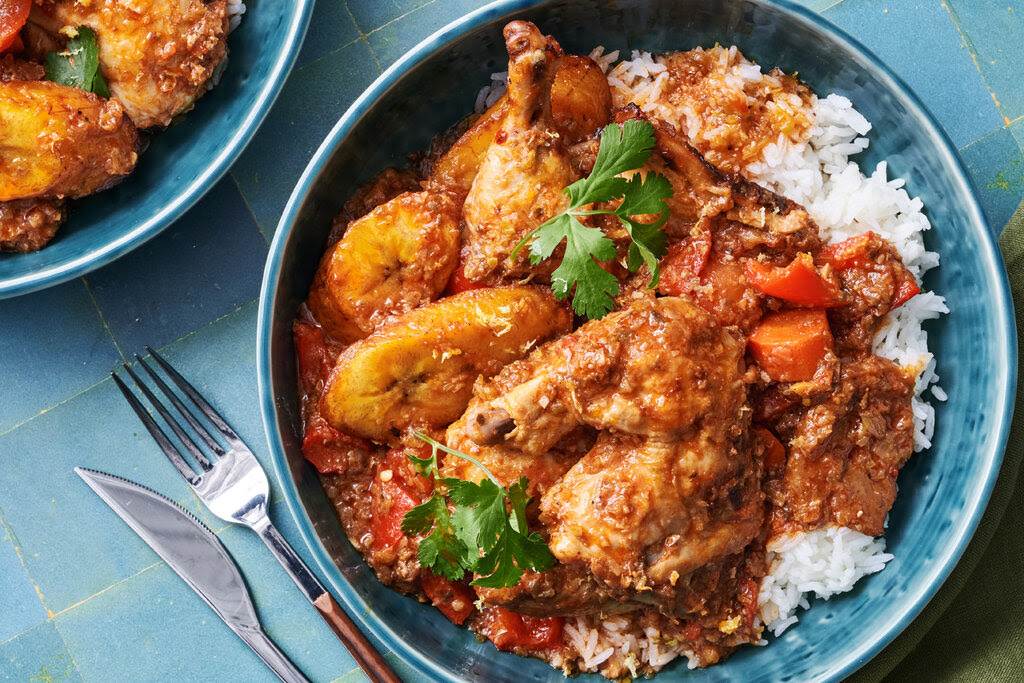
This Cameroonian dish is known in French as poulet directeur général (“chicken for the director general”) and in English as C.E.O. chicken, because it was often reserved for important guests. Made of chicken, plantains and vegetables bound in a fragrant tomato gravy, it emerged after Cameroon’s independence in the early 1960s and blends flavors from the country’s different regions.
